Sergei Krikalyov – Russian cosmonaut
A compilation of pages I kept on the famous Russian cosmonaut – a fan site. I have concatenated most pages, so some are quite large! (A lot of external links will break as time passes, unfortunately.)
- Awards & ranks
- Career
- News
- Photos
- Profile
- Sporting achievements
- Spaceflights
- Miscellaneous
This small fan site is a modest tribute to the greatest spaceman ever!! It provides an overview of his life and spaceflights, up to his retiring from the Cosmonaut Group in 2009. He has completed 6 spaceflights (two to the Mir space station, two Space Shuttle flights, two to the International Space Station). From 1 July 2009 to 2014 he became the first civilian Chief of the Gagarin Cosmonaut Training Center. As of 2017 he is Executive Director for manned space flight programs at Roskosmos.
He doesn’t seem to get the attention he deserves – certainly not in the West – so I hope this site can remedy things a bit. The information and photos on these pages are compiled from all that I could find on the Internet, and several helpful people. He has done so much in his life already, and there is plenty of material for a biography!
His name is often transliterated “Krikalev,” but is pronounced “Krikalyov.”
Awards and ranks
A listing of Sergei’s many awards and decorations. The medals are linked to external descriptions where available, mostly at Wikipedia.
Soviet awards
- Gold Star Medal of the Hero of the Soviet Union, Медаль «Золотая Звезда» Героя Советского Союза
- Hero of the Soviet Union, Герой Советского Союза. Awarded after his first flight to Mir. “The decree of the Presidium of the Supreme Body of the USSR from 27 April 1989 for the successful realization of 151 days’ space flight on the Mir orbital research complex and the courage and heroism shown during this time by Krikalyov, Sergei Konstantinovich appropriates a rank of the Hero of Soviet Union with delivery of an award of Lenin and the Gold Star medal (№11595).”
- Order of Friendship, Орден Дружбы. Awarded on 1 April 2005. Noted in the ESA News from Moscow newsletter (Issue 6, 2005), at the Expedition 11 press conference: “Before the press conference began, the GCTC Chief Vasili Tsybliyev presented to Sergei Krikalyov the Order of Friendship – an award given to the courageous cosmonaut by the government.”
- Order of Friendship of the Peoples, Орден Дружбы народов
- Order of Lenin, Орден Ленина
- USSR Pilot-Cosmonaut, Летчик-космонавт СССР
Russian awards
- Gold Star Medal of the Hero of the Russian Federation, Медаль «Золотая Звезда» Героя Российской Федерации
- Hero of the Russian Federation, Герой Российской федерации. Awarded after his second flight to Mir. “The decree of the President of the Russian Federation from 11 April 1992 for courage and heroism shown during this flight to the pilot-cosmonaut of the USSR, to the Hero of the Soviet Union Krikalyov, Sergei Konstantinovich, gives a rank of the Hero of the Russian Federation with delivery of the Gold Star medal (№1).” Sergei was the first to receive this medal.
- Order of the Pride of Russia, ордена «Гордость России». Awarded 30 July 2008 (see News item).
- Order of Honor, Орден Почета. Awarded on 15 April 1988 for successful participation and achievement of high sports results in the first world air games (aerobatics). (Thanks to Dmitry for info!)
Awards of scientific and social organizations
- Order of Eagle First Class (Association of the Russian Manufacturers), Орден Орла 1-й степени (Ассоциация промышленников России): I have no information available about this!
- Order/Decoration: «Ответственность и Благородство» (Responsibility and Generosity) and «Золотая звезда России» (the Gold Star of Russia) – awarded 21 November 2006 (see News item).
- Medal: «За Благородный Труд» (For Distinguished Work) – awarded 21 November 2006.
Sports
- USSR Master of Sports, «Мастер спорта СССР» по высшему пилотажу. Awarded in 1981 for aerobatic flying.
- International Class Master of Sports, Мастер Спорта международного класса. Awarded in 1986 for aerobatic flying.
Foreign awards and ranks
- NASA Spaceflight Medal (1994, 1998, 2001).
- NASA Distinguished Service Medal.
- NASA Distinguished Public Service Medal. “On 5 November 2002, the presentation of NASA rewards to Russian cosmonauts took place in Rosaviakosmos. The NASA Distinguished Public Service Medal was presented to Yurii Gidzenko, Yurii Usachyov, Vladimir Dezhurov and Mikhail Tyurin. (Sergei Krikalyov’s reward remained undelivered as he was then situated in the USA.) The medals and certificates were presented by NASA Deputy Director Michael Kostelnik for the cosmonauts’ contributions to the ISS program. (The NASA medal was presented to those who contributed to NASA’s mission, and is the highest NASA award for foreign citizens.)” Novosti Kosmonavtiki, №1, 2003.
- Officer of the Legion of Honor, L’Officier de la L’egion d’Honneur (France).
Miscellaneous
- Sergei was inducted into the International Space Hall of Fame in 1993, “for space flight bridging the Soviet and Russian nations.”
- Yuri A. Gagarin Gold Medal: In 2000 the Expedition 1 crew were each awarded this medal from the Fédération Aéronautique Internationale (FAI).
- Sergei was given the title of honorable citizen of St. Petersburg («Почетный гражданин Санкт-Петербурга») on 23 May 2007.
Gallery
Soviet awards

Gold Star Medal of the Hero of the Soviet Union

Order of Lenin

Order of Friendship of the Peoples

USSR Pilot-Cosmonaut
Russian awards

Gold Star Medal of the Hero of the Russian Federation

Order of the Pride of Russia

Order of Honor
Foreign awards

L’Officier de la L’egion d’Honneur

NASA Spaceflight Medal

NASA Distinguished Service Medal

A detail from a photo of Sergei wearing 3 of his medals at a press conference before his Expedition 11 flight, 29 March 2005: Hero of the Soviet Union; Hero of Russia; Order of Honor.
Links
- Medals of the World
- NASA Agency Honor Awards
- Novosti Kosmonavtiki, 29/3/2005: this photo gallery (and Archive.org link) shows Sergei wearing 3 of his medals at a press conference before his Expedition 11 flight, 29 March 2005: Hero of the Soviet Union; Hero of Russia; Order of Honor.
- The Soviet Military Awards Page
- Warheroes.ru: Крикалёв Сергей Константинович (in Russian)
- Wikipedia: Awards and decorations of the Soviet Union
Updated 12/7/2015
Sergei’s career
An overview of Sergei’s impressive career. The bulk of this is taken from Energiya’s biography as I couldn’t rewrite it any better. See also the Leaving Earth book extracts page for more details.
When he was young, Sergei decided that he would like to be a cosmonaut. This was not uncommon amongst young boys (this was the time when Yurii Gagarin made the first flight into space); the difference was that he actually attained this dream.
There was no easy path to becoming a cosmonaut though, and Sergei realized that it would be better to gain skills in a wide range activities that could be applicable towards going into space; that way he could still do interesting work even if he didn’t achieve his ultimate goal.
Some of these activities included athletics (he became a champion swimmer at school), engineering and learning to fly (he learned to fly at a Leningrad flying club).
On graduating high school he had to decide whether to become a professional pilot while trying to get some engineering qualifications, or get an engineering education while doing flying casually. He decided upon the latter, aware that there were two paths to becoming a cosmonaut: coming in as a military pilot, or alternately from the space industry. He thought that he would have more freedom of choice if he became a professional engineer with a degree in aeronautical engineering, then aim to become a pilot later (flying as a hobby in the meantime).
After graduating from the Leningrad Mechanical Institute in 1981 (he was first in his class), Sergei Krikalyov joined NPO Energiya’s PDB as an engineer. Having good grades meant he had more choice in where he could be assigned; he chose Energiya as many cosmonauts came from there.
He helped develop cosmonaut flight manuals, the proposals from operator’s data imaging on panels and displays of the Mir orbital complex, and updated flight documentation of the Salyut-7 space station’s life support systems. He was initially dismayed to be assigned to do what seemed like paperwork rather than working with hardware, but this gave him much experience with manned spacecraft equipment, enabled him to attend launches and to work on the problems encountered during the Salyut-6 and Salyut-7 space station missions.
In 1983 he passed the medical examinations needed to apply for cosmonaut training. He became senior engineer in 1985.
On 2 September, 1985, he joined the staff of NPO Energyia cosmonauts by the SIAC resolution. On 10 November he was appointed a test-cosmonaut candidate for Energiya’s cosmonaut team by the Order Number 384 of the GMM Minister.
In February 1987 he was appointed test-cosmonaut (космонавт-испытатель, kosmonavt-ispytatel’) of Energiya’s cosmonaut team. (Since 7 April, 1992, he has been instructor test-cosmonaut, NPO Energiya Deputy Head of Department.) He was employed at TsUP, Mission Control Center (MCC), at first as a radiogram developer, then as a specialist in crew actions and flight documentation throughout several long-duration expeditions. After loss of communication with the Salyut station in February 1985 he was involved in the team developing and testing the procedure to fly to the uncontrollable station. Before the prime crew (Vladimir Dzhanibekov-Viktor Savinykh) trainings started, he had tested various options of the procedures as part of the support crew (Aleksandr Viktorenko-Sergei Krikalyov). His impressive performance during Dzhanibekov’s risky docking with Salyut-7 saw Sergei’s cosmonaut application accepted within a year.
As part of his work in the Department, Krikalyov took part in cosmonaut training at CTC and Baikonur. After joining the cosmonaut team, he kept on working in the same Department as Team Lead and then as Deputy Head of Department. During 1985-1986 he took the course of basic space training at CTC after Yu.A. Gagarin. In 1986 he was qualified as test-cosmonaut by the IAQC solution.

A painting of what might have been – Buran docking with Mir – signed by Sergei. Painting originally published in a Soviet-era magazine.
In 1986-1988 he took part in the cosmonaut team training under the Buran program as a pilot; sadly, this program was canceled in 1993 as there was no money to maintain it.
On 22 March, 1988 as member of the crew (4th crew with Schukin) he replaced A. Kaleri (who was discharged from the training because of cardiac health problems), in the Soyuz TM-7 prime crew.
During 22 March, 1988 through 11 November, 1988 he received training as the Soyuz TM-7 prime crew (ЭО-4) flight engineer under the Prime Crew-4/Aragats Program at the Mir Orbital Station along with Aleksandr Volkov and Jean Loup-Chretien (France).
He got training as the main tester for the first test of Extravehicular Maneuvering Unit.
Together with A. Volkov he made arrangements for the new Kvant-2 module acceptance and initial operational use. Under the Flight Program they received training in space walks. His pioneer flight took place from 26 November, 1988 to 27 April, 1989. He flew as a flight engineer onboard the Soyuz TM-7 space vehicle and Mir OS under the Prime Crew-4/Aragats Program. The flight duration was 151 days.
In 1990 he got training as a flight engineer of the Soyuz TM-11 backup crew under the Prime Crew-8 Program and the Joint Soviet-Japanese flight onboard the Mir OS together with Anatolii Artsebarskii and R. Kikuti (Japan).
From December 1990 through April 1991 he received training as a flight engineer of the SoyuzTM-12 prime crew under the Prime Crew-9 (ЭО-9) Program onboard the Mir OS along with A. Artsebarsky and Helen Sharman (Great Britain).
From 18 May, 1991 through 25 March, 1992 he took part in his second spaceflight with a duration of 312 days as the Soyuz TM-12 and Mir OS flight engineer under the Prime Crew-9 and Prime Crew-10 Programs. During the flight he performed 7 space walks with a total duration of 36 hours 29 min.
From 1 November, 1992 through January, 1994 he got training at JSC as a flight expert of crew No 4 carried by the Discovery Orbiter under the STS-60 program. He completed the training and was certified to operate the Shuttle manipulator (for grappling free-flying satellite, including handling the satellite with loss of orientation).
From 3 February, 1994 to 11 February, 1994 he took part in his third spaceflight as an STS-60 crewmember onboard the Discovery Orbiter in the capacity of mission specialist for an 8-day period.
From April 1994 through January 1995 he got training at Johnson Space Center as a backup cosmonaut of Titov, flight specialist of the Discovery crew-4 under the STS-63 program. Concurrently with the trainings as a backup crewmember under STS-63, he, along with the NASA Astronaut Office, began work related to a new International Space Station. After studying the U.S. EVA spacesuit and passing the corresponding test, Krikalyov donned the spacesuit and worked in the Neutral Buoyancy Laboratory on developing the procedures to assemble the future station in space. Prior to flight, he was involved in MCC-Houston operations assisting in the cooperation with two MCCs (the other, TsUP in Moscow).
On 3 February, 1995 he was a backup specialist of the Discovery Orbiter flight 4 under STS-63. During the flight he was appointed Lead of the 1st Consultative Team (the group of experts from MCC-M intended to work at MCC-H). In the most critical flight phases he worked in the main operations management room assisting in establishing communication between the two MCCs and two crews. He performed similar services during flight STS-71, -74 and -76. As a representative of the Lead Operational Control Team he participated in the RSA/NASA talks on the work breakdown.
In January 1996 he was appointed Flight Engineer of the International Space Station (ISS-1) prime crew. The launch was scheduled for May 1998. From October 1996 he got training together with Yurii Gidzenko and William Shephard (USA) as a Flight Engineer of the ISS-1 prime crew.
On 30 July, 1998 he was assigned to the Endeavour Orbiter crew under the STS-88 program.
From 17 September through November 1998 he received training at Johnson Space Center (USA) as a crewmember under STS-88. From 2 December through 14 December, 1998 he performed his fourth spaceflight with a 12-day duration as a specialist of the Endeavour flight 4 under the STS-88 program. This was the pioneer manned flight under the International Space Station Assembly Program. During the flight toward the Zarya Functional Cargo Block the US NODE 1/Unity Module was docked. Sergei and commander Robert Cabana were the first to open the hatches of a new station.
In 1999 Krikalyov proceeded with his training as a Flight Engineer of the ISS-1 prime crew along with Yu. Gidzenko and W. Shepherd (USA) on what would be his fifth spaceflight. After delays on both sides, Expedition 1 finally launched on 31 October, 2000, on a Soyuz rocket, to dock with the ISS. They spent their stay preparing the ISS for future crews and departed on STS-102, landing in Florida on 21 March, 2001.
His sixth flight assignment was as commander of the Expedition 11 crew, which launched on 15 April 2005 and landed on 11 October of that year. During that time he surpassed Sergei Avdeev’s accumulated time in space of 747 d 14 h 14 m, and finished the mission with the all-time record of 803 d 9 h 39 m. The mission saw the successful Return-to-Flight STS-114 Discovery launch and docking; the first Shuttle flight since the Columbia disaster grounded the Shuttle fleet in February 2003.
His next space assignment was to be as the commander of Soyuz TMA-14, launching to the ISS in March 2009, but in December 2007 he was dropped from the list. In 2008 he was back on the flight list as part of the backup crew for ISS-21A; the prime crew will launch on Soyuz TMA-18 in March 2010.
On 5 February 2007 Sergei was was elected as Vice-President of Manned Flights at RSC Energiya. After a management restructure on 6 August 2007 he was removed from this position for some reason and then became “Deputy General Designer” – Заместитель генерального конструктора, Zamestitel’ General’nogo Konstruktora, assistant to the General Designer.
In December 2007 he was a candidate for the Deputies of the State Duma 5th convocation on the list of the All-Russia political party “United Russia,” the regional group №81 (St. Petersburg), but the group did not gain enough of a majority to get allocated seats.
On 27 March 2009 he was appointed the first civil head (Начальник) of the Gagarin Cosmonaut Training Center.
In early August 2014, after a long vacation, he began work as the first deputy director of FSUE TsNIIMASH, the head scientific organization of Roskosmos. His responsibilities included the development of plans for manned flights in the framework of the program for the development of outer space.
On 25 March 2016, at a meeting of the Supervisory Board of the State Corporation for Space Activity Roscosmos, he was appointed executive director for manned space programs and was elected a member of the Board of the State Corporation.On 5 March 2017 he was elected president of the Federation of Aircraft Sports of Russia.
From his Roskosmos biography (in Russian):
- 1981-2009: engineer, senior engineer, head of the group, Deputy Head of Office, candidate for test cosmonauts, test cosmonaut, 1st class instructor-test cosmonaut, vice president, deputy general designer of NPO (RSC) Energiya.
- 2009-2014: Head of Gagarin Cosmonauts Training Center.
- 2014-2016: Deputy General Director for manned space flight programs in FSUE “TsNIImash.”
- 2017: Executive Director for manned space flight programs (Исполнительный директор по пилотируемым космическим программам).
Links
- Encyclopedia ASTROnote biography (in Russian)
- Energiya biography
- JSC biography
- NASA preflight interviews for Expedition 1 and Expedition 11
- Molniya biography (this from Novosti Kosmonavtiki No..1, 1999)
- Wikipedia biography
Updated 22/3/2020
News
Sergei news, articles and sightings.
- 1990
- 2000
- 2001
- 2003
- 2004
- 2005
- 2006
- 2007
- 2008
- 2009
- 2010
- 2011
- 2012
- 2014
- 2015
- 2016
- 2017
- 2018
- 2019
- 2020
- To most recent ↓
1990
June/July
Air & Space Magazine: “Inside Star City,” James Oberg. (Printed with permission!) Features an early encounter with Sergei!
2000
1/2/2000
Space.com: “Cosmonauts Oppose Actor Aboard Mir For Movie”.
Cosmonaut Sergei Krikalyov shares his colleague’s point of view.
A veteran space explorer who has flown on both Mir and the U.S. space shuttle, Krikalev has the following suggestion: Let the moviemakers make do with the type of makeshift sets other actors and directors have relied upon to film space shows for years. “If all this project is about is filming a few episodes on Mir, then this could be done on the ground in the flight simulator or the zero-G aircraft,” Krikalev said. “Honestly, I see no reason for Steklov’s flight, especially taking into consideration that it will last 45 days. What will he be doing on the station for so long?”
30/9/2000
CNN: “Sergei Krikalev Discusses the International Space Station”.
2001
11/4/2001
«Красная Звезда» (Red Star): «С закалкой школы ДОСААФ».
With training school DOSAAF
Ekaterina Beloglazova
On 12 April 1961 our compatriot Yurii Gagarin opened the road to space to mankind. And almost 40 years after that historical event three Earthmen have greeted a new millenium in a circumterraneous orbit, onboard the International Space Station. They were the Russians Yurii Gidzenko and Sergei Krikalyov, and also American William Sheperd. All of them are courageous people and fine experts. But even among such people as cosmonauts, Sergei Krikalyov is really a unique person.
He participated in three long expeditions at the Mir station (in 1988-1989 and 1991-1992) and was the first Russian to launch on the American Shuttle in February 1994. Krikalyov again departed for space on the Shuttle in December, 1998 where the crew began the assembly of the ISS. Together with American Robert Kabana he opened the hatches of its first modules. And from October 2000 till March of 2001 he worked as the flight engineer of the first long expedition of the new “space house”.
In general he often became the first. The accomplished man Sergei Krikalyov has fully realized his talent and in sports. That is, however, quite clear. In fact for him, as well as for Yurii Gagarin and probably all domestic cosmonauts, the road into orbit began in the DOSAAF aeroclubs. There Sergei took a great interest in the skilled pilotage of planes, and in one and a half decades, having already flown three times in space, he became the trailblazer in the development of an aviation discipline new to Russians: the pilotage of gliders.
He has spent a total of more than 20 months in orbit, and has done 7 spacewalks. The hero of Soviet Union Krikalyov became the first cosmonaut to be awarded the ranks of Hero of Russia.
He decided during school to connect his life with astronautics. His first step towards this goal was to gain entrance to the Leningrad Mechanical Institute (nowadays the Baltic Technical University) in one of its main faculties. He combined his studies with aviation sports. Sergei appeared a capable pilot, and after a while he enlisted in the combined team of Leningrad, and by the time he completed high school he had attained the specification of Master of Sports.
As one of the best students, Krikalyov had the right to choose his future place of work and at his allocation he asked the KB to be assigned to the well-known company NPO Energiya. He spent his holidays as the USSR champion. In the aeroclub it was necessary not only to fly, but also to perform technical work, to twist nuts, to work with iron. How many then it will potter with different devices and systems in space!
In 1982 Krikalyov appeared at the USSR championships on behalf of the Central Aeroclub team and also received an invitation to train with the national team. In 1983 he submitted an application to join the Cosmonaut Group. Almost no time remained now for aerosports. Once, when we pilots gathered for the world championship in Switzerland, Sergei came to visit us and casually remarked: “And I will fly in in space one day.” Comrades on the command, known it first of all as sportsman, at once at all have not believed.
In November, 1988 he saw the Earth from a window of the ship for the first time. The Soviet-French crew replaced Vladimir Titov and Musa Manarov, who had finished their annual expedition.
His second flight could not be described as ordinary.
“In May, 1991 we launched together with Anatolii Artsebarskii and Helen Sharman as the crew of the 9th expedition,” says Krikalyov. “Six spacewalks were scheduled during the mission.”
In 1992 the heads of the space agencies have made a decision concerning exchange flights: a Russian would launch on the Shuttle, and an American would launch to the Mir Station. From six candidates for the first flight were selected Vladimir Titov and Sergei Krikalyov. Sergei then simply impressed the Americans with his professionalism, humour, free possession of English and especially the fact that during the flight he managed to repair a broken computer.
And soon after returning to the Earth Sergei Krikalyov again amazed all – already on a sports field. In fact, being constantly on preparation, on business trips or in TSUP, it is a miracle that he manages to find time for training flights and to be called out for competitions. And it is no easier to decide to participate in them, and to win. Then, in 1995, Sergei literally within several months “trained for a new profession” from a plane on a special flight glider which just appeared in the aeroclub, and as part of the ROSTO pilots’ team won a gold medal in the world championship!
To appreciate this achievement, it must be considered that the pilotage of a glider is an absolutely new sensation for the person who has come from powered sports planes. Almost the same set of “barrel rolls” and “turns” but as there is no engine, it is necessary to calculate and create in good time conditions for the performance of the next figure, and to consider the condition of the atmosphere.
Sergei Krikalyov explains his devotion to sports prosaically enough: “For quality rest after hard work I need to change to a different kind of activity.” He makes it sound so simple: to change and become the world champion!
And when it was decided who would render habitable the International Space Station no one had any doubts, that they should be the most skilled cosmonauts and among them would be Sergei Krikalyov.
Two years ago concerning such a question, on what dreams he still has, Sergei has answered:
“About much. Some things are not connected directly with me. For example, I do not want our astronautics to be shut down. Unfortunately, we are rapidly moving in this direction. If it happens, space researches will be strongly retarded, and not only at us because without competition the stimulus for development will disappear. Still I wish that there were 48 hours in a day – if there were, then it will be possible to achieve everything that I plan, and have some free time. Now I give too little attention to my family, and seldom see my friends. Happiness is a philosophical concept. There were moments when I understood that my efforts have not been in vain. But always there is some dissatisfaction, and this feeling forces me to go forward.”
What will he tell today, having returned after heavy work at the International Station? We congratulate him, as well as all the subjugators of the starry ocean, with the Day of Astronautics and the 40th anniversary of the flight of Gagarin and we wish that all plans and Sergei’s dreams will come true.
In the picture: Sergei Krikalyov in the cabin of a flight glider.

13/4/2001
Videocosmos: Photo Report – 13 April 2001. Sergei attended the Star City celebrations of the 40th anniversary of Yurii Gagarin’s flight on 13 April, 2001. Sergei photos direct links: 23536, 23578, 23582.
18/5/2001
Posting by Andy in the Controversial Flight Assignments/Bumpings thread at sci.space.history:
We attended a banquet (April 15) in the civilian cosmonaut complex (Khovanskaya) which followed a less-than-well-attended cosmonaut tennis tournament (yes, I’m still going to post the trip report … I had said Monday, but I didn’t say WHICH Monday :-)), where a toast was made to Krikalyov (who was in attendance, looking rather fit); the essence of the (Russian) toast was:
“We all know who the REAL commander of Ex. 1 was – so let’s toast to our intrepid young cosmonaut Sergei Konstantin’ich, commander of Ex. 1, for his efforts and for allowing the Americans to maintain the facade that Shep was in charge ….” (and this guy was serious)
I “boycotted” the toast, but had to make a serious effort to resist loudly voicing serious opposition to the suggestion …
10-11/11/2001
Sergei was the key speaker at the “Moon on a Stick” UKSEDS annual conference, 2001. Some young people from the BMSTU Youth Space Center attended the conference, and Sergei appears in their gallery. Sergei photos direct links: 31, 33, 36, 37, 38, 42, 43, 46, 47.
2003
20/12/2003
«Кубок мира по джиу-джитсу» | “Jiu-Jitsu World Cup”: Sergei attended this event, held in St. Petersburg on 20 December, 2003. Sergei appears to have been one of the officials at the event along with retired cosmonaut Musa Manarov; they both seem to be patrons of some sort (attending most years) and hand out prizes. (Photos found by Maryam!) Sergei photos direct links: 119, 143.
2004
Sergei news, articles and sightings for 2004, including Expedition 11 news.
January
Sergei trained as backup commander for the original Expedition 7 crew of Yurii Malenchenko, Aleksandr Kaleri and Edward Lu. After the Columbia tragedy in February 2003, though, crews were reduced to two, ferried up and back by Soyuz until the remaining Shuttle fleet was permitted to fly again – not until September or October of 2004. Sergei was initially assigned to be ISS Expedition commander on the first flight to take up an Expedition Crew (and I doubt his family are enthused about him flying on the Shuttle again …) but this was moved back; he is tentatively assigned to Expedition 12 or 13 (along with Sergei Volkov and John Herrington – John Phillips seems to have been taken off the crew).
Sergei is in training at Star City (Zvyozdyi Gorodok) and also working for Energiya in Korolyov. He will not fly again until 2005, at least. He only needs to train for 6 months (as opposed to 1.5 years) for an ISS mission as he has been into space so many times already and thus knows all the technology!
(Thanks to Marius Werner for the above information – he happened to meet Sergei when skiing in Austria in January 2004! O lucky him!)
18/1/2004
Raketenpost 2004: Sergei made an appearance at this ARGOS event in Switzerland, 18 January 2004. Sergei photos direct links:
- Sergei signs the rocket.
- Sergei launches the rocket.
- Screening of The Dream is Alive at an IMAX cinema.
- Herbert and Sergei.
23/2/2004
According to the latest schedule posted at Spacefacts, Sergei is on ISS Expedition 12, to be launched on 11 August, 2005 on STS-116. He seems to have been relegated to Flight Engineer again, though, :-( with William McArthur as ISS commander and Sunita Williams as FE-2. (What happened to Sergei Volkov?) Seems to keep changing all the time (*throw hands up in air with exasperation*).
Spacefacts schedule changed again … Sergei is now ISS commander of Expedition 11 :-), with John Phillips and Sergei Volkov. They will either go up on Soyuz TMA-6 or STS-121. Launch 13 June 2005.
On an irrelevant note, “Googling” Sergei’s name currently brings up 5840 hits!
7/7/2004
In the latest ISS crew roster, Sergei is assigned to crew ISS-11/МКС-11, along with Sergei Volkov and John Phillips. The launch of ISS-11 thus far is planned in 2 stages: Krikalyov and Phillips start on Soyuz TMA-6 during April 2005, and S. Volkov on STS-121 during May 2005. But if the Shuttle is detained again, then Volkov will not fly.
16/7/2004
The first Expedition 11 preflight training pages are up in the NASA Gallery, with new photos of Sergei – below, here he is doing medical training at JSC on 24 June. His hair really DOES look greyer. :-(

27/8/2004
A happy 46th birthday to Sergei!! С днём рождения!
21/10/2004
Sergei made an appearance at the Night of the Astronauts, in Cologne, Germany, on Friday 17th. I guess he doesn’t suffer from stage fright!

1-3/10/2004
Domodedovo 2004 | Радиолюбительский фестиваль «Домодедово-2004»: An amateur radio festival in Russia. Sergei (U5MIR) made an appearance at an amateur radio festival in the Russian city of Domodedovo, 1-3 October 2004. A gallery is available at the Russian UR7IWZ site. Cosmonaut Musa Manarov (U2MIR) also was there. (Be warned: there are 174 thumbnail photos on the page!) Sergei photos direct links: 64, 66, 68, 79, 80, 89, 160.
From the ISS On-Orbit Report for 2 October:
The crew conducted ham radio exchanges with attendees at the current 9th Festival of Ham Radio Operators in Domodedovo near Moscow, where over 350 of the most well-know amateur radio operators from Russia, USA, Germany, France, and former Soviet republics have gathered, holding competitions at HF and VHF. Cosmonauts Krikalyov, Manarov, Kaleri, and Treshchev were planning to attend also.
15/10/2004
Sergei will fly next year in April, along with astronaut John Phillips, on Soyuz TMA-6. The third passenger will be ESA/Italian Space Agency astronaut Roberto Vittori, making his second Soyuz taxi flight to conduct Italian experiments.
Sergei is flying to Houston this weekend and will return home to Moscow in December or January to continue flight preparations. When in space, he will operate the amateur radio equipment onboard the ISS, and plans to talk to schools all around the world.
(Thanks to Claudio Ariotti of the ISS Fan Club for this info! More details on this page.)
2/11/2004
Sergei is also involved in ESA’s Automated Transport Vehicle program, as described in “Astronauts: Key actors in ATV development program”. (Thanks to Pierre for this link!)
Although no Russian cosmonaut is based in Europe for supporting ATV, two space veterans Valeri Ryumin and Sergei Krikalyov are playing a key role on the Russian side of the ATV programme.
Ryumin, who flew in space four times, is the ISS and ATV integration manager of the Russian space company Energiya, in Korolev, near Moscow, where the ATV crew consoles, the docking mechanism, the refuelling system and the associated electronics are built. As for Krikalyov, a veteran of five spaceflights, he is working closely with his ESA counterpart Clervoy. Both Krikalyov and Clervoy are active astronauts.
26/11/2004
The Expedition 11 crew was officially named on 23 November, as described in this NASA press release (H04-383):
Next International Space Station Crew Named
Veteran NASA astronaut John Phillips and seasoned Russian Cosmonaut Sergei Krikalyov are the next crew of the International Space Station. Their six-month mission is set for launch in April 2005.
Phillips and Krikalyov are the eleventh crew for the orbiting research complex. Krikalyov will serve as Station Commander, and Phillips is Flight Engineer and NASA International Space Station Science Officer. Designated Expedition 11, they will be on board the Station when the Space Shuttle makes its first Return to Flight mission. The Shuttle is scheduled to dock with the Space Station in May 2005.
Both crewmembers have previously been to the International Space Station. Phillips flew to the Station aboard the Shuttle on the STS-100 mission in 2001. During that 12-day mission, the crew installed the Canadarm2 Station robotic arm.
In 2000, Krikalyov was a member of Expedition 1, the first International Space Station crew. Expedition 11 will be his sixth space flight and fourth long-duration mission. He has the most flights for any Russian cosmonaut.
Selected in 1985, Krikalyov flew aboard the Mir Space Station in 1988-89, 1991-92 and the International Space Station in 2000-01. He flew aboard the Shuttle on the first joint U.S.-Russian mission, STS-60 in 1994, and on the first International Space Station assembly mission, STS-88 in 1998. Krikalyov has accumulated 625 days in space. At the completion of a six-month stay aboard the Station on Expedition 11, Krikalyov will have spent more time in space than any other person.
The Expedition 11 backup crewmembers are astronaut Daniel Tani and cosmonaut Mikhail Tyurin.
See also this entry at collectSPACE.
Through this post at NASASpaceflight.com, found a document written by Sergei Krikalyov (27 December 2004), stored at the Русский фонд (Russian Fund) site.
The report on international programme for Earth defense from asteroid-comet threat is prepared under a Russian Federation patent from 27.12.2004 (RU 2243621 C1) “Method and device for generation of directed and coherent gamma-radiation”. In this patent under physico-mathematical and quantum analysis as well as work over constructional and technical details there is shown a unique and real way of defense a human civilization from a ruthless outer space.
2005
Sergei news, articles and sightings for 2005. This is mostly Expedition 11-related as he launched in April and returned in October.
17/1/2005
Sergei’s whereabouts, via the ISS Fan Club forum (Kenneth/N5VHO): “Sergei is in Russia right now and due back in Houston later this month (Jan) for his final U.S. training session. After that, it is back to Russia for final preparations for his launch in April.”
3/2/2005
Space.com: “Next Space Station Crew Ready for Shuttle’s Return”.
4/2/2005
NASA press release (thanks to Maryam for this!):
NASA announces media briefing & interviews with new Station crew
The next crew of the International Space Station will brief media at 2 p.m. EST, Feb. 3.
The briefing is live on the Web and NASA TV from NASA’s Johnson Space Center (JSC), Houston. Reporters will be able to ask questions from participating NASA centers. Expedition 11 Flight Engineer and NASA Station Science Officer John Phillips and Commander Sergei Krikalyov will discuss their upcoming six-month mission.
The mission is scheduled to launch on a Soyuz spacecraft from Kazakhstan April 15. European Space Agency Astronaut Roberto Vittori will launch aboard the Soyuz and spend about a week onboard as a visiting researcher before returning to Earth with Expedition 10.
Following the news conference, Phillips, Krikalyov and Vittori are available for interviews. To arrange interviews, media should call the JSC at: 281/483-5111 by 1 p.m. EST Feb. 2.
Phillips and Krikalyov will be on the Station when the Space Shuttle Discovery launches this spring, resuming flights following the Columbia accident. Discovery will dock with the Station, bringing supplies and a new gyroscope. The flight will test many new Shuttle safety measures, some of which will involve the Station crew.
NASA TV is available via satellite and on the Web in the continental U.S. on AMC-6, ransponder 9C, C-Band, at 72 degrees west longitude. The frequency is 3880.0 MHz. Polarization is vertical, and audio is monaural at 6.80 MHz. In Alaska and Hawaii, NASA TV is available on AMC-7, Transponder 18C, C-Band, at 137 degrees west longitude. The frequency is 4060.0 MHz. Polarization is vertical, and audio is monaural at 6.80 MHz. The news conference will be available live on the Internet at: http://www.nasa.gov/ntv
5/2/2005
Photos of the press conference are now up in the NASA photo gallery. A preview of the mission patch can be seen on this page at collectSPACE.
7/2/2005
From Novosti Kosmonavtiki news release №453 (an approximate Babelfish translation):
07/02/2005/15:47 – Sergei Krikalyov does not believe the ISS is suitable for a refuge
Sergei Krikalyov, one of the most experienced Russian cosmonauts who will take command of the International Space Station this spring, stated that he doubts the that the ISS can be used as a refuge in the case of a Shuttle emergency, reports Lenta.ru (with reference to Associated Press).
In Krikalyov’s opinion, the chances that the shuttle Discovery will be irreparably damaged at takeoff and then be forced to dock with the ISS, while the second shuttle is prepared for the evacuation, are evaluated as minimum.
Nevertheless, the cosmonaut said, since the launch of the Shuttle was assigned for May, any similar possibility must be examined with entire seriousness, and he already discussed this question with NASA management.
The launch of the space shuttle planned for spring will indicate NASA’s return to the flight program of the shuttles, stopped after the catastrophe of 2003. All this time NASA specialists attempted to solve the problem of the flaking of heat insulation from the fuel tank during launch, which led to the shuttle catastrophe in 2003.
If the shuttle is similarly damaged during takeoff, and it is impossible to repair, then the crew of Discovery will be forced to remain on the ISS and to wait until the arrival of the shuttle Atlantis.
In this case the ISS’s inhabitants will total 9 people – 7 shuttle astronauts and 2 people composing the ISS crew (in this case, Sergei Krikalyov and American John Phillips, who will arrive on the ISS during April).
In Krikalyov’s words, this quantity of people at the station will put a serious load on the resources. “One month,” said Krikalyov, “is tolerable. But if this is prolonged more, then problems will arise.”
Russian version, Русская версия: Сергей Крикалев Не Хочет, Чтобы Мкс Использовали Как Убежище.
8/2/2005
“Next Space Station Crew Ready for Shuttle’s Return,” by Tariq Malik at Space.com. From the 3 February press briefing. (Thanks to Pierre for this link!)
16/2/2005
Energiya photo-report: February 16, 2005 Baikonur Cosmodrome. “Manned transportation spacecraft Soyuz TMA-6 has been delivered to the Baikonur launch site where it will undergo final operations to prepare it for launch.”
17/2/2005
Energiya photo-report: February 17, 2005 Baikonur Cosmodrome. “Assembly-and-test building on site 254 of the Cosmodrome was used to open docking interface of Instrument Compartment, assemble service lines of Soyuz TMA-6 spacecraft and ground network, as well as carry out the required scope of checks.”
19/2/2005
Alex Panchenko, who runs the USSR-Russian Aviation & Space Collectibles site, is a friend of Sergei’s; check out the photos on this page at his site from when Sergei visited him this month (in L.A.)! (Alex also mentions my site! :-))

25/2/2005
From Novosti Kosmonavtiki news release №457:
25/02/2005/12:14 – Spacesuit will become Earth satellite
In orbit an old spacesuit will be soon discarded for scientific purposes, says the website www.km.ru. In this spacesuit they will place equipment, created by the students of the Baumanskogo (Бауманского) university. Cosmonaut Sergei Krikalyov – the most experienced in the world – and American astronaut John Phillips – also not a novice – conducted training in the “pond” (hydrolab) before their flight to the ISS.
In the pond half of the station is placed freely, and the weightless water substitutes for the weightlessness of space. They learn to work here as they will in open space.
“This is hard work. And to me it is difficult to understand all the technicalities – this, possibly, is the most complex aspect,” acknowledges NASA astronaut John Philips.
Phillips once flew on the Shuttle, but has not visited the station and has not yet done a spacewalk, in contrast to Sergei Krikalyov. For Krikalyov, the forthcoming expedition will be his sixth, and in cosmonautics today there is no person equal to him in experience.
The spacesuit has been thoroughly prepared for the deorbit and spacewalk. Only cosmonauts this make independently, true, at the station helps weightlessness, and on the training – instructors and doctors. This is a real spacesuit for the spacewalk. Together with a man inside it weighs more than two hundred kilograms and for its displacement a crane is necessary. When submerged in water it is almost as weightless as in space.
This is actually similar to space. In contrast to the actual conditions for cosmonauts it only is necessary to overcome resistance of water; therefore the instructors in the underwater equipment help to be moved by it. For an experienced commander such as Sergei, it is important to assess how John will perform in space, and to understand when assistance is necessary. Naturally, he prompts also when training. However, John appeared very involved and acted with intelligence.
Meanwhile into the pond they today immersed one additional empty spacesuit. Instructors pushed it into the docking module. There they left it, and Sergei (with John) took the spacesuit outside. These actions were not completely senseless. The fact is that at the station there is an old spacesuit, in which no one no longer works. And from it was decided to make a satellite. Training. In this spacesuit they will place the scientific gear, created by the students of the Baumanskogo University, and will then leave it in orbit. This they rehearsed today.
Russian version, Русская версия: Скафандр Станет Спутником Земли.
2/3/2005
Space Review.com: a mention of Sergei in this article, “Action-reaction in space: the ‘gyrodine war’ heats up,” by James Oberg:
In a pre-flight interview February 3, veteran Russian cosmonaut Sergei Krikalyov, commander of the next space station crew, told me that he did not believe the American theory about the Russian spaceship design causing the disturbance. “I have made seven spacewalks on Mir with that spacesuit,” he insisted, “and if there had been any thrust large enough to push the space station, I would have felt it.”
(James Oberg got to INTERVIEW Sergei. I am sooo jealous.)
9/3/2005
The Expedition 11 crew page is now up at NASA Human Spaceflight! Be sure to check out Sergei’s interview. He and John Phillips are scheduled to do two spacewalks at this stage: one spacewalk in a Russian Orlan spacesuit, the other in a U.S. EMU suit.
11/3/2005
From Novosti Kosmonavtiki news release №460:
11/03/2005/15:47 – On the ISS they will try to grow crunchy radishes
The next ISS crew, which launches to the station during April 2005, will try to grow under weightlessness conditions the juicy, crunchy radish.
“A unique experiment on the study of the morphology of radish under the conditions of a half-year space flight will be initiated by the ISS crew of Sergei Krikalyov and John Phillips,” reported RIA Novosti, quoting the manager of the laboratory of the Institute of Biomedical Problems (IMBP), Vladimir Sychev.
According to him, for cosmonauts one must control, as the process of the entering of nutrients from leaves to the root-crops under weightlessness conditions will be developed.
After the first harvest will be grown and assembled in orbit, into the capacity with the same substratum, or with a soil substitute, it is planned to plant a second generation of radish.
“A question stands so – how often we will be able to use one and the same substratum for obtaining the valuable root-crops, that it is necessary to consider with the design of the onboard hothouse of a manned ship for a flight to Mars,” explained Sychev.
Radishes for the future “orbital bed” will be delivered to the ISS by the voyage of sequential cargo ship Progress.
Russian version, Русская версия: На Мкс Попробуют Вырастить Хрустящую Редиску.
15/3/2005
Be sure to keep visiting the Energiya website also, for Expedition training news and photos (their Expedition 11 crew pages won’t be up until a week or so before launch). Sergei is an employee at Energiya, as a test-cosmonaut (космонавт-испытател, kosmonavt-ispytatel).
Energiya news: March 15, 2005. Korolev Moscow region.
On March 2-3 next practice training within the plan of the International Space Station Expedition 11 (ISS-11) crew preparation was performed at S.P. Korolev RSC Energiya.
Under the direction of Corporation specialists, Russian cosmonauts Sergei Krikalyov and Mikhail Tyurin (RSC Energiya test-cosmonauts) and their US colleagues John Phillips and Daniel Tani (NASA astronauts) worked through operation techniques with flight video and photographic apparatus, as well as performed training in operations required to implement space experiments Matreshka and RadioSkaff aboard the ISS.
Activities on the Russian-European Matreshka experiment are underway once Alexander Kaleri and Michael Foale have installed an analog of a human body in spacesuit on the Zvezda service module surface during extravehicular activity on February 27, 2004, under the ISS-8 expedition program.
The RadioSkaff experiment performance is scheduled within the ISS-11 expedition program. During crew EVA the Russian Orlan-M spacesuit, which spent its life and into which the crew will install appropriate equipment while being aboard the ISS, should be launched from the station to free flight in a near-Earth orbit. It is expected that the spacesuit-satellite will send voice messages in several languages in amateur band every 2 minutes for no less than two months, as well as Earth or space images taken by the WEB-camera installed by the crew. The action is timed to the 175th anniversary of the N.E. Bauman Moscow State Engineering University and the 75th anniversary of the S. Ordzhonikidze Moscow Aviation Institute students of which participate in the support of the experiment.
18/3/2005
Novosti Kosmonavtiki gallery: 18 March 2005. “Anniversary of Roskosmos, dedicated to the flight of Voskhod-2 and to the first exit of man into open space. 18 March 2005 | Юбилей в Роскосмосе, посвященный полету «Восхода-2» и первому выходу человека в открытый космос. 18 Марта 2005г.” Sergei images direct links: 2190, 2213.
22/3/2005
ESA News From Moscow issue 5: 22 March 2005
Visit to Star City and RSC Energiya
On March 9-10, 2005 a group of European journalists visited Star City and RSC Energiya to witness the training and preparation for the next flight to ISS. ESA astronaut Roberto Vittori of Italian nationality will take part in the next mission to ISS. He will be a flight engineer on board the Soyuz spacecraft for the flight to the Space Station and the return flight. From the European side many journalists have shown their interest in participating in the Press Trip to Star City and RSC Energiya, for instance, La Republica (Italy), RAI (Italy), Finish Broadcasting company (Finland), Focus Photoagentur (Germany), ANSA (Italy), representatives of Lazio region (Italy). The trip was led by Franco Bonacina (ESA/HQ) and Franca Morgia (ESA/ESRIN).
Star City
On March 9, 2005 we arrived in Star City. First of all we went to the Centrifuge facility where astronauts were training. The Centrifuge simulator is a very important stage in flight preparation. It gives an understanding for the specialists what kind of impact G-loads have on each astronaut. They check all the medical parameters. Specialists from GCTC gave a very detailed explanation on the Centrifuge simulator.
Roberto Vittori himself was showing step by step all the actions he had to perform during this test. This test is compulsory for all cosmonauts who are training in Star City. They have to go through it twice a year, despite the fact that before each flight they have to perform this test twice: one – simulating the G-loads during the launch and the other one – for the landing.
The Russian specialists allowed our group to go upstairs on the second floor and we could see how the astronauts were actually entering the Centrifuge capsule. On the third floor we saw the Soyuz onboard computer simulator. It reminds very much a play station with a joystick. But the only difference is that it is not a game, by means of this simulator the astronauts prepare for the future flight, they can simulate a lot of non-standard situations that may occur during the launch and landing.
There was a unique possibility to meet with Sergei Krikalyov, a Russian cosmonaut. The total duration of all his flight exceeds 600 days, and plus his next mission with Mr. Phillips that will last for 175 days.
Roberto Vittori and Sergei Krikalyov were talking in an informal manner. They were telling about their future flight, their expectations and hopes. They both expressed their admiration of each other’s experience and they are really looking forward to work together onboard of the Space Station.
At the Hydrolab facility the Russian specialists from Star City showed our group the Russian Module Zvezda. Astronauts perform different tasks at the Hydrolab that allows them to prepare for an Extra Vehicular Activity. The Russian specialists say that if an astronaut is able to perform these entire tasks on Earth at the Hydrolab then it will not be a problem for them while they are in the outer space. Mr. Yuri Gidzenko, a Russian cosmonaut and a crew member of the previous Vittori’s Mission Marco Polo came to the Hydrolab. He gave several interviews to our group. Most of the questions were about the future flight to Mars. He said that psychologically we were prepared for this mission but we did not have a technical basis to accomplish this flight yet.
We also had an opportunity to visit the training facilities with Zarya and Zvezda modules. Roberto Vittori dressed in the Sokol spacesuit and showed some elements of his training at these modules.
RSC Energiya
The next day the group of European journalists visited RSC Energiya. First there was a briefing with Mr. Alexander Derechin, Head of External Economic Relations and Marketing Department at RSC Energiya. He told about the history of the corporation and gave a detailed explanation about the experiments that will be carried out during this mission. The journalists were very interested in the Clipper project. Mr. Derechin disclosed some interesting details about the possibilities of realization of this project. For now Clipper is planned to be launched with the Zenit launcher. There was a proposal from the Russian side to their European partners to participate in this project. European side did not confirm their participation yet. The Federal Space Agency will start financing this project from 2006.
During our discussion with Mr. Derechin journalists saw great possibilities of Clipper and they have decided to tell more about this project in Europe. Derechin said that, of course, it would be very nice if there will be an international cooperation in this project, especially with Europeans. After the briefing we had a chance to visit the unique RSC Energiya’s museum where we were briefed on the history of all spaceflights starting with Sputnik.
(By Albina Valeeva, ESA Moscow Office)
23/3/2005
Some news sent to me by Cezy: Sergei Volkov will not be joining Expedition 11 via STS-121 after all; astronaut Tracy Caldwell will be in his seat instead. Expedition 11 will thus consist only of Sergei Krikalyov and John Phillips. Bad luck for Sergei V.; he must be disappointed. I am not yet sure of the reason for his being removed.
24/3/2005
ESA: “Italian prepares for a second ride up to the Space Station”. No sign of an Eneide mission page there, yet!
From Novosti Kosmonavtiki news №463:
24/03/2005/09:36 – The Expedition 11 crews will undergo their final training exams
The basic and duplicate crews of the 11th ISS expedition on Thursday morning approached the fulfillment of final complex trainings, reported RIA News. Cosmonauts at the examination drew tickets, in which were contained questions concerning the procedures of contingency situations on the ISS.
“We always insert into the ticket on four ‘neshtatki’ – on the systems of vital activity, communications and the thermal control, medicine and actions in the case of possible fire aboard or the toxicities of the atmosphere. We also monitor the actions of crew in the case of injuries and cuts,” explained Andrei Kuritsyn, section head of instructors on the ISS Russian segment.
On Thursday, Russian Sergei Krikalyov and American John Phillips, and also ESA astronaut Roberto Vittori, will undertake tasks on the trainers of the ISS Russian segment. The duplicating crew – Mikhail Turin, Daniel Tani and Robert Thirsk on this day passes examinations in the ground-based Soyuz TMA trainer. On Friday the crews interchange the position themselves.
On the sums of the delivery of examinations all will obtain estimations and recommendations regarding the “work on errors”. Then interdepartmental commission will have to affirm the composition of the basic and duplicating crews of the 11th Expedition. The decision of the experts will be proclaimed on 29 March at the preflight press conference of cosmonauts, to which specialist space reporters are also invited, according to tradition.
Russian version, Русская версия: Экипажи 11-Й Экспедиции На Мкс Начали Сдавать Экзамены.
Soyuz TMA preparations continue at Baikonur
On 23 March at the spaceport Baikonur there began leak checks of the manned spacecraft Soyuz TMA. The day before, the ship was transported into the altitude chamber and the evacuation of air was carried out from the vacuum chamber. In the course of pneumo-vacuum tests, the airtightness of automatic spacecraft will be determined and its separate it is main. It is planned, that the pneumo-vacuum tests will be prolonged to the end of the week. The launch of the carrier rocket Soyuz FG with the manned ship Soyuz TMA is planned on 15 April.
– The press-service of FKTS “Baikonur”.
Russian version, Русская версия: На Байконуре Продолжается Подготовка Корабля «Союз ТМА-6».
25/3/2005
From Novosti Kosmonavtiki news №463:
25/03/2005/00:05 – The crews’ final training began at TsPK
On 24 March, 2005, in the Russian state scientific research test center of training the cosmonauts named after Yu.A. Gagarin, passed the first day of the final complex training of the basic crew of the Soyuz TMA spacecraft (Sergei Krikalyov, John Phillips and Roberto Vittori). According to tradition, in the presence of center management and representatives of the media were proposed to cosmonauts the control questions, sealed up into the envelopes.
Besides the the photo- and tele-survey, for journalists it was possible to ask the crew several questions. Spaceship commander Sergei Krikalyov briefly described the special features of preparation for this flight into the cosmos and programs of expedition. “During the change of shift of the crews, an international program will be carried out with equipping of Italian equipment”. Sergei Konstantinovich noted that “on the second shuttle is planned the delivery in orbit of an ESA cosmonaut”. The duration of work in orbit of this crew in many respects depends on the flights of the American spacecraft. It was emphasized that the renewal of the Shuttle flights will give new impetus of the international collaboration in the cosmos.
The specialists of the center of training cosmonauts described some procedures of training the crews.
On 25 March the second day of complex final training before leaving for the spaceport Baikonur for conducting the training on the combat apparatus and fitting of equipment.
– The Roskosmos press-service.




Russian version, Русская версия: В ЦПК Началась Зачетная Тренировка Экипажей.
25/03/2005/00:05 – The basic and duplicate crews are prepared for the flight to the ISS
The launch of the 11th expedition to the International Space Station, comprising Russian cosmonaut Sergei Krikalyov and American John Philips, is planned from the spaceport Baikonur on 15 April of this year.
With them, on his second week-long space mission in orbit, will travel the European Space Agency astronaut Roberto Vittori, who during May 2002 already flew on the ISS as a flight engineer.
As during his first ISS flight, the sponsor of Roberto’s expedition is the government of the territory of Italian province Latsio, where many enterprises in the space field are concentrated. Roberto Vittori has the title of Colonel in the Italian Air Force. He flew about 2000 hours on different type aircraft, among them: F-104, Tornado Gr-1, F-18, AMKH, M-2000, 0-222 and R-180. During July 1998, Roberto Vittori was selected by the Italian space agency, together with ESA, and in that month were included in the composition of the force of European astronauts, which is located in the European center of astronauts in Cologne, Germany.
In the duplicating crew are included Russian Mikhail Turin, who worked at the Russian station Mir, and American Daniel Tani, who flew on the Shuttle. On 24 March of this year, the basic and duplicating crews of the 11th ISS expedition approached the fulfillment of their final complex training. The cosmonauts will learn to master actions in contingency situations: on the systems of vital activity, communications and thermal control, medicine and in the case of possible fire aboard or the toxicity of the atmosphere.
Besides this basic crew – S. Krikalyov, J. Phillips and R. Vittori, who will master tasks on the trainers of Russian segment ISS. The duplicating crew – M. Tyurin, D. Tani and R. Thirsk are occupied in the ground-based trainer of the Soyuz TMA spacecraft. Then crews interchange the position themselves.
Interdepartmental commission will have to affirm the composition of the basic and duplicating crews of the 11th Expedition. The resolution of commission will be proclaimed on 29 March at the traditional preflight press conference of cosmonauts.
– The Roskosmos Press-Service.
Russian version, Русская версия: Основной и Дублирующий Экипажи Готовятся к Полету на Мкс.
26/3/2005
«В Смольном побывал знаменитый космонавт Сергей Крикалев», Официальный портал Администрации Санкт-Петербурга, St. Petersburg administration official portal.
Famous cosmonaut Sergei Krikalyov visited Smolnyy
Today, on 26 March, the governor of city met in the Smolnyy with the Hero of the Soviet Union, hero of Russia, airman-cosmonaut Sergei Krikalyov. This outstanding cosmonaut, who during April will be the first among the domestic cosmonauts will complete the sixth flight into space, was born in Saint Petersburg. Here, on the Petrograd side, he grew and learned, here he joined the aero club and completed his first flight. In Petersburg, the parents of Sergei live. the city governor invited Sergei Konstantinovich into the Smolnyy, in order to entrust to him a medal dedicated to the memory of the 300th anniversary of Saint Petersburg, a valuable gift-panel with an image of Petropavlovsk fortress, and also a photograph with the forms of the northern capital, which the cosmonaut in the very near future will take up to the International Space Station.
“To me it is infinitely pleasant to entrust today an anniversary medal and symbols of our city to a man, who by the entirety of his biography, by his deeds and simply by the charm of his personality, confirms the proud title of ‘Peterburzhtsa’. Undoubtedly, Saint Petersburg is worthy so that the symbols of city would visit space.”
V.I. Matviyenko wished the honorable guest new achievements to the glory of national and world cosmonautics.
“You know, whatever difficulties to you were encountered, your Petersburg was with you. We remember and we love you,” she said, completing the encounter.
Sergei photos direct links:: 7E1D2372, 7E1D2402, 7E1D2430, 7E1D2444, 7E1D2460, 7E1D2486, 7E1D2513.


28/3/2005
Energiya official press release: March 28, 2005 Korolev, Moscow Area. “At Korolev RSC Energiya a regular session of the Board of Chief Designers on the Russian Segment of the International Space Station (ISS) was held that was dedicated to the next phase of the flight program of the station and the Soyuz TMA-6 manned spacecraft launch processing.”
ESA News from Moscow, 28 March:
ISS General Designers’ Review
On Monday 28/03/2005, an ISS General Designers’ Review took place at RSC Energiya. The review was chaired by Deputy General Designer Nikolai Zelenchshikov, due to the illness of the General Designer Yu. Semenov, President of RSC Energiya. In addition to management representatives of all major RSC Energiya sub-contractors, Roscosmos (N. Moiseev, A. Krasnov), IBMP, GCTC (V. Tsibliyev, Korzun), NASA (P. Newman) and ESA (A. Fournier-Sicre, T.Suslova) were represented.
Topic of this GDR was the launch readiness review of the Soyuz TMA-6 spacecraft with its ISS Main Crew №11 and the ESA astronaut R. Vittori (Visiting Expedition №8) onboard.
In his opening statement Zelenchshikov informed that in December RSC Energiya was forced to change its servicing bank (Editor’s note: Before it was Sobinbank) and since then the procedure of payments has not yet been fully established with the new bank. Therefore he kindly asked the sub-contracting companies not to bring forward the issue of old debts of Energiya trailing since 2004. At the same time he assured that all the 90% of advance payments to the subcontractors for the activities previewed in 2005 will be made by April 1. N. Zelenchshikov expressed his pleasure that the US Shuttle is returning to flight, with at least two flights planned in 2005.
N. Zelenchshikov recapitulated the achievements since the last GDR in October 2004 (Soyuz TMA-4 landing, Soyuz TMA-5 launch, 2 Progress launches) and pointed out the specifics of the upcoming Soyuz TMA-6 mission with NASA and ESA as participating parties.
Concerning the Soyuz TMA-6 readiness N. Zelenchshikov informed that during the testing of Soyuz TMA-6 in Baikonur there were 4 minor problems;
- An electrical trouble with the antenna of the Kurs system supplied by NII TP – antenna had to be brought back to the manufacturing plant, repaired and then shipped back to Baikonur;
- A defect of the on-board TV camera to be tested in preparation for the ATV operational phase – mended on-site;
- Two software problems on the on-board computer (SUBK) – eliminated on-site;
- Faulty device (lamp) in the lighting system – replaced .
Mr. Zelenchshikov said that important experiments in preparation to the first ATV flight will be carried out during the TMA-6 flight, involving sophisticated navigation equipment. He also stated that a dedicated European- Russian review meeting would be held prior to the first ATV flight. The number of experiments to be carried out on board of the ISS during the coming Eneide mission is 23, while the total number of experiments carried out with the Europeans on board of the ISS is 76, he said.
The following outline of the launch preparation activities was given:
- Crew fit-check (03 – 05/04/2005)
- Fuelling operations (05 – 06/04/2005)
- Assembly of upper composite (7 – 11/04/2005)
- Docking of upper composite with launcher (12/04/2005)
- Activities at launch pad (13 – 15/04/2005) Launch time: 15/04/2005, 05:46 Moscow time (07:46 Baikonur time).
Management representatives (Chief Designers) of all main RSC Energiya subcontractors, RSC Energiya Department Heads, IBMP, GCTC, as well as representatives of TsNIIMash, KBOM (responsible for the readiness of launch site) and Russian military gave positive reports on the readiness for the Soyuz TMA-6 launch.
Specifically Mr. Tsibliyev, Head of GCTC, and the representative of the IBMP, reported that all cosmonauts have passed their exams with excellent marks and are in good health condition. The only remark was made in respect to the US astronaut J. Phillips who has gained weight during his training and was forced to lose a few kilograms to fit into the standard 95 kg required for Soyuz TMA.
The Russian specialists assessed the present status of the ISS systems as satisfactory despite the continuing difficulties with the Elektron system providing oxygen. The problem was partially solved by delivering on board the ISS a number of spare items with the Progress M-52 (see NFM №5). Another spare kit will be sent with the next Progress early in June this year.
The specialists of RSC Energiya reported also on the readiness of the Soyuz TMA-5 for landing. The reserve battery of the vehicle has low capacity due to a malfunction, however the main battery operates well. By the estimate of the specialists, even in case the landing is performed using the reserve battery, its present capacity should be enough for successful landing.
Based on these reports N. Zelenchshikov formulated a GDR proposal to the Roscosmos “Kollegium” board to give green light for the final launch preparation of Soyuz TMA-6 with a planned launch date on 15/04/2005.
(By Tatyana Suslova, ESA Permanent Mission in RF)
Some items from Novosti Kosmonavtiki news release №463:
28/03/2005/13:53 – St. Petersburg symbols will be delivered to the ISS
On Saturday, on 26 March, in the Smol’nom the governor of Petersburg, Valentina Matviyenko will meet with airman-cosmonaut Sergei Krikalyov and will present to him a souvenir with the symbolism of the northern capital, which he will deliver to the international orbital station ISS.
As reported RIA News in the press-service of municipal administration, on 15 April, 2005, the sequential launch is planned of the manned Soyuz spacecraft to the international orbital station. The crew includes the Hero of the Soviet Union, the hero of the Russian Federation, airman-cosmonaut Sergei Krikalyov.
“Sergei Krikalyov was born in Petersburg; here he finished at the military-mechanical institute, and in the city on the Neva live his parents,” they noted in the press-service.
The colleague of press-service recalled that in 2003, the year of the 300th anniversary of the northern capital, because of Sergei Krikalyov the flag of Petersburg was delivered to the ISS, and it is now displayed the museum of cosmonautics and by rocket the technicians of name Glushko in the Petropavlovsk fortress.
Russian version, Русская версия: Символика Петербурга будет доставлена на МКС.
29/3/2005
- “Next ISS Crew Excited By Discovery’s Progress,” Space.com.
- “New station crew to roll out welcome mat,” MSNBC.
Items from Novosti Kosmonavtiki news release №464.
29/03/2005/11:23 – The composition of the 11th ISS expedition is confirmed
This morning in Star City took place the session of the interdepartmental commission, during which was affirmed the composition of the crew of the 11th expedition to the ISS. As it was assumed, they announced: Sergei Krikalyov, John Phillips and Roberto Vittori.
Russian version, Русская версия: Утвержден состав 11-й экспедиции на МКС.
29/03/2005/10:11 – The head of Roskosmos will meet the cosmonauts and astronauts
Today in the Federal Space Agency the head of the Russian space department, Anatolii Perminov, will meet with the basic and duplicating crews (Prime Expedition-11 and Visiting Crew-8). The launch of the Soyuz-FG carrier rocket with the spacecraft Soyuz TMA-6 is scheduled for 15 April of this year from the Baikonur spaceport.
According to tradition, Anatolii Perminov will appear before the cosmonauts and the astronauts, then he will listen to their observations and proposals about the system of preparation for the flight, its quality and results. Sergei Krikalyov, Soyuz and ISS-11 commander, will brief him on this. The chief problem, which interests the management of Roskosmos: is the crew ready for flight?
Joint tea drinking takes place on the completion of encounter and exchange of opinions, and the head of Roskosmos will present memorable gifts to the basic and duplicating crews. For the basic crew – cosmonaut Sergei Krikalyov, and the astronauts John Phillips and Roberto Vittori – “Fortis” watches were specially ordered and prepared in Switzerland; these have been the official chronograph of cosmonauts. Today these are single copies, released only for the Expedition 11 crew and visiting crew.
To the encounter are invited the representatives of the media, the management of RGNII TSPK (named after Yu.A.Gagarin), and the management and colleagues of Roskosmos.
– Roskosmos press-service.
Russian version, Русская версия: Глава Роскосмос примет космонавтов и астронавтов.
29/03/2005/10:09 – The council session of the chief designers took place
As reported at the RKK Energiya website, the current council session of chief designers took place for the Russian segment of the International Space Station (ISS) about the readiness for conducting of the sequential stage of the Station flight program and the preparation for the launch of the manned ship Soyuz TMA-6.
They came out with the reports:
- Yu.I. Grigor’ev (deputy design project leader OF RKK Energiya) – about the basic sums of the flight of the ninth and tenth expeditions to the international station (ISS-9 and ISS-10), about the proposals according to the flight program of the eleventh expedition (ISS-11) and of the eighth expedition of visit (EP-8 – Visiting Crew-8), about the launch preparation ship Soyuz TMA-6, the technical state of station and ship Soyuz TMA-5, which works in its composition and on which will carry out a return to the Earth of the ISS-10 crew and EP-8;
- The chief designers, the responsible representatives of developer enterprises and the producers of the component parts of the rocket-space complex and onboard systems – on questions of the technical readiness of ship, carrier rocket and launching system for the starting;
- V.V. Tsibliyev (chief of RGNII TSPK named after Yu.A. Gagarin) – about launch readiness of the crews of expeditions ISS-11 and EP-8;
- V.V. Bogomolov (deputy director of the Institute of Biomedical Problems, IMBP) – about the status of the health of crews ISS-10, ISS-11 and EP-8;
- V.A. Solov’ev (leader of the main operations group of control – GOGU, the deputy design project leader of RKK Energiya, airman-cosmonaut) – about the motion of flight ISS, of readiness of documentation on the flight control, the readiness of GOGU personnel, and of crews for the forthcoming works on the docking of Soyuz TMA-6 with the station;
- A.T. Goryachenkov (deputy of the general director of TSNII – the Central Scientific Research Institute of Machine-building) – about the conclusion of Roskosmos concerning the technical state of the ISS and the readiness for launch of Soyuz TMA-6.
The basic ISS-11 crew is prepared for the flight, consisting of two people: Russian cosmonaut Sergei krikalev (commander ISS-11, the craft Soyuz TMA commander) and American astronaut John Phillips (Soyuz TMA ship flight engineer, flight engineer ISS-11). In the composition of crew of ship – astronaut of the European space agency (YEKA) of the citizen of Italy Roberto Vittori (Soyuz TMA flight engineer-2). He will work at the station according to the EP-8 program and return to Earth with the ISS-10 crew aboard Soyuz TMA-5.
Mission objectives of the ISS-11 crew are:
- the maintenance operations of the undocking of Soyuz TMA-5, Progress M-52, to docking and undocking of Soyuz TMA-6, to docking, unloading and to joint operation on the Station with the ships Progress M-53, Progress M-54, and docking of Soyuz TMA-7;
- the maintenance of the fitness for work of Station;
- the fulfilment of one “exit” into open space;
- the execution of the program of applied-scientific studies;
- return aboard the ship Soyuz TMA-6.
The program of applied-scientific studies in the stage ISS-11 includes fulfilment of approximately 40 experiments, including according to the Russian program, and also contract works.
In the course of EP-8 is provided for fulfilment of approximately 20 experiments, including visual observations, medicine, biotechnology, technology, photo- and video recording.
During Expedition ISS-11, the American side plans to renew the flights of the reusable ships: Discovery STS-114 (15-25 May) and Atlantis STS-121 (12-21 July). Moreover, during the second flight it is intended to begin the long-duration flight of an ESA astronaut for the purpose of checking installation and readiness of the equipment of Zvezda for the joint operation with the first European cargo ship ATV Jules Verne.
The council of chief designers, after examining technical ship state Soyuz TMA-5 and stations, the state ship readiness Soyuz TMA-6, the motion of the preparation of carrier rocket Soyuz-FG and launching system, the readiness of personnel of the Russian and American ground environment of preparation and services of the flight control, the readiness of crews for the implementation of the ISS flight program and of the ship, and also taking into account the positive conclusions about the readiness for the work of ship and station as a whole, made the decision to approve:
- the sums of the execution of the program of works on ISS during preceding period;
- the results of tests and the plan of forthcoming work on the preparation for launch of Soyuz TMA-6 for the planned replacement at the station of Soyuz TMA-5 and the realization of the expedition EP-8 with the return to the Earth of Russian cosmonaut S. Sharipov (ISS-10 flight engineer, Soyuz TMA-5 commander), NASA astronaut L. Chiao (ISS-10 commander, Soyuz TMA-5 flight engineer) and ESA R. Vittori (Soyuz TMA-6 FE-2, EP-8 FE);
- the study program and experiments in the stage of Expedition ISS-11 with the duration of 175 days;
- the program of conducting the EP-8 expedition with a duration of 11 days, which foresees the flight of ESA astronaut R. Vittori and fulfilment of experiments and studies, developed by the scientists of Russia and participating countries of ESA, and also contract works.
The council session of chief designers was conducted under the chairmanship of N.I. Zelenshchikova (first deputy design project leader at RKK Energiya). In this session participated the representatives of Roskosmos, NASA, ESA, enterprises and organizations of branch, which participate in the realization of project.
The launch of Soyuz TMA-6 is scheduled for 15 April, 2005, 04:46 Moscow time.
Russian version, Русская версия: Состоялся Совет Главных.
30/3/2005
Items from Novosti Kosmonavtiki news release №464.
In this report Anatolii Perminov met the Expedition 11 crew and describes the magnitude of the tasks ahead of them:
30/03/2005/09:43 – The head of Roskosmos has the traditional meeting with the cosmonauts
At 17 hours on 29 March of this year in the Roskosmos headquarters, Anatolii Perminov began the traditional meeting with the cosmonauts. This time, the head of the Federal Space Agency met with the members of the basic ISS Expedition 11 crew (Russian cosmonaut Sergei Krikalyov, American astronaut John Philips, and European Space Agency astronaut Robert Vittori) and the members of the duplicating crew (Russian cosmonaut Mikhail Tyurin and American astronaut Daniel Tani).
On the eve of both crews passed final complex training in RGNII TSP (named after Yu.A. Gagarin), in course of which they learned to master actions in different contingency situations.
According to tradition, Anatoliy Perminov listened to Soyuz and Expedition 11 commander Sergei Krikalyov report the readiness of the crew for flight, and also observations and the proposals about the system of preparation for the flight, its quality and results.
Great interest caused the Roskosmos leader’s contact with the members of basic and duplicating crews and the representatives of the media, also invited to this encounter. For the media representatives, there was pleasant unexpected contingency news concerning the fact that the birthday of American astronaut John Phillips coincides with the Soyuz TMA-6 launch, and Sergei Krikalyov will celebrate his birthday [47th] while on the ISS.
Speaking about the magnitude of the tasks entrusted to Expedition 11, A. Perminov, turned to the basic crew and noted: “For you one must twice leave into open space, complete 39 experiments, 4 of which are new. Their directions are the most different: space technology and materials science, geophysical studies, biomedical problems, the analysis of the natural resources of the Earth and ecological monitoring, space biotechnology and many others. But, besides this entirety, you await the additional work, connected with the return to the flights of the American Shuttles. Already during May you must assist Discovery, beginning from detailed photography and concluding by loading-unloading operations. During July you must accept Endeavour, after which your crew will increase by one member: European astronaut Thomas Reiter. You must accept 2 Russian Progress cargo ships and 1 manned Soyuz when your crew changes over. Briefly, it is not necessary for you to sit idly for half a year. The flight program is very intense, very critical and, without exaggeration, the attention of the entire world will be riveted to it.”
Joint tea drinking took place on the completion of encounter and exchange of opinions and the head of Roskosmosa presented memorable gifts to the basic and duplicating crews. For the basic crew – cosmonaut Sergei Krikalyov and the astronauts John Phillips and Roberto Vittori – were given specially-ordered and prepared steel Swiss “Fortis” watches, which are the official chronograph of cosmonauts. Today these are unique copies, released only for the Expedition 11 crew and 7th visiting crew. To the duplicating crew were presented watches decorated with the symbols of the Federal Space Agency.
– Roskosmos press-service.
Russian version, Русская версия: Традиционная встреча руководителя Роскосмоса с космонавтами.
30/03/2005/00:02 – A German astronaut will possibly become a member of Expedition 11
With the renewal of the flights of shuttles to the ISS a third member of crew may arrive on the ISS: German Thomas Reiter, reports RIA www.rian.ru. On this reported the commander of the 11th ISS long-duration expedition, Russian cosmonaut Sergei Krikalyov. European space agency astronaut (ESA), Thomas Reiter of Germany, is planned to be delivered to the station with the second shuttle flight (after the Columbia catastrophe) in the middle of July 2005. As it is expected, Reiter will return to Earth together with the crew of the 11th expedition – by Russian Sergei Krikalyov and American John Phillips (who launch to the ISS on 15 April 2005 from the Baikonur spaceport.
Russian version, Русская версия: Немецкий астронавт, возможно, войдет в состав экипажа МКС.
1/4/2005
ESA News from Moscow issue 6: 1 April 2005
Expedition 11 Press Conference In Star City
On March 29 the Yu.A. Gagarin State Science and Research Cosmonaut Training Center hosted a press conference of the International Space Station Expedition 11 main and backup crews and Visiting Crew 8.
Accredited journalists, representatives of leading electronic media and popular printed press took part in the event. The press conference was moderated by Col. Tofrov.
Before the press conference began, the GCTC Chief Vasili Tsybliyev presented to Sergei Krikalyov the Order of Friendship – an award given to the courageous cosmonaut by the government.
Traditionally, the first question was asked by the veteran journalist Vladimir Bezyayev of the Mayak Radio Station. Commander Sergei Krikalyov gave a very detailed description of the pending mission. The mission will include a total of 42 scientific experiments.
Many questions were asked about life conditions and leisure time on board the station. The Crew Commander’s answers indicated that he was rather in the mood for serious and productive work in orbit. The cosmonauts did not intend to take any movies with them into orbit: “It is not a visit to a movie theater.”
Of course, souvenirs and mascots will accompany the cosmonauts, for example, Roberto Vittori will have a little bunny with him – a souvenir from his wife Valeria.
Several times Sergei Krikalyov helped his foreign colleagues out during their communications with the journalists despite the fact that Roberto Vittori and John Phillips have a good command of Russian. Vittori pointed out: “He is a good commander and a good interpreter.”
John Phillips recalled that when he was 10 years old, Yuri Gagarin made his historic flight into space, and it was then that John had made a firm decision to become an astronaut. During his training to prepare for his second space mission, the 401st astronaut of the world J. Phillips visited the office of the man who had called everybody into space.
After the press conference was over, the crewmembers visited the memorial office of Yuri Gagarin, signed the Visitors Book and had an exchange with the museum guides. Sergei Krikalyov showed John Phillips on the Gagarin’s map hanging on the wall the place from which they would be launched into space – the Baikonur cosmodrome. The crews made a brief tour of the museum and took photos in front of the docking mechanism that was used in the Soyuz-Apollo experimental mission 30 years ago.
Editor’s note: This press conference was held after the traditional meeting of the commission in charge of evaluating the crew preparedness for the mission. R. Vittori passed all the exams with excellent results. A. Fournier-Sicre was present at the commission meeting.
3/4/2005
Energiya photo-report: April 3, 2005. Baikonur Cosmodrome. “The prime crew (Sergei Krikalyov [Russia], John Phillips [USA], Roberto Vittori [Italy]) and backup crew (Mikhail Tyurin [Russia], Daniel Tani [USA], Robert Thirsk [Canada]) of the Soyuz TMA-6 transport spacecraft arrived to the cosmodrome to accomplish training and accept the spacecraft.”
4/4/2005
Energiya photo-report: April 4, 2005. Baikonur Cosmodrome. “In the Cosmonauts Preparation Room. Russian cosmonaut Sergei Krikalyov (Soyuz TMA-6 Commander, ISS-11 Commander), American astronaut John Phillips (Soyuz TMA-6 Flight Engineer, ISS-11 Flight Engineer) and visiting crew participant ESA astronaut, Italian citizen Roberto Vittori (Soyuz TMA-6 Flight Engineer 2) during a fit-check of the space suits and individual seat liners.”
“As One ISS Crew Prepares for Landing, Another Gears Toward Launch,” Space.com.
From Novosti Kosmonavtiki news №465:
04/04/2005/00:02 – Runway icing interferes with departure to the spaceport
Because of extreme icing of the takeoff and landing strip (VPP) at the airfield, the departure of Expedition 11 to Baikonur has been delayed. From the Moscow area the cosmonauts were to depart in Sunday at 10:00 MSK, reported Interfaks. The previously representative of the Zvezdni Gorodok reported that the cosmonauts in Baikonur will study the “fitting” of the spacecraft, in which they will conduct the flight to the station.
Russian version, Русская версия: Вылету на космодром мешает обледенение полосы.
5/4/2005
Energiya photo-report: April 5, 2005. Baikonur Cosmodrome. “Fueling of the Soyuz TMA-6 transport spacecraft with propellants and compressed gases is under way.”
7/4/2005
Energiya Photo Report: April 7, 2005. Baikonur Cosmodrome. “Soyuz TMA-6 spacecraft was docked with the transfer compartment in the Spacecraft Assembly and Testing Facility.”
8/4/2005
Johnson Space Center: ISS Status Report: 8 April.
Energiya photo-report: April 8, 2005. Baikonur Cosmodrome. Designers’ inspection of the Soyuz TMA-6 spacecraft was completed. Payload shroud roll on to the spacecraft was performed.
10/4/2005
Energiya photo-report: April 10, 2005. Baikonur Cosmodrome. “The Soyuz TMA-6 prime and backup crews inspected the transport spacecraft in its launch configuration in the Assembly and Testing Facility.”
From Novosti Kosmonavtiki news №465:
04/04/2005/14:56 – The crews arrive in Baikonur
To the spaceport Baikonur on Saturday in the second half of the day arrived the basic and duplicating crews of the 11th expedition to the International Space Station (ISS), reports Interfaks. Cosmonauts and their accompanying assistants arrived flying from the Zvezdni Gorodok on two aircraft of the center of training cosmonauts.
Answering questions of journalists in the airport, the member of the basic crew of spacecraft Soyuz TMA, Russian cosmonaut Sergei Krikalyov said: “We are in the mood for work. The crew is ready. Are still somewhat dash here at the spaceport – and we will be completely ready to flight”.
“Together with Sergei Krikalyov we were prepared for the flight of more than three and one-half years in Zvezdni Gorodok and in our center in Houston (USA). We are ready for the flight and to work on the maintenance of station, start and landing aboard the transport Soyuz spacecraft,” said astronaut NASA John Phillips.
In turn the astronaut of European space agency (ESA) Italian Roberto Vittori, who flies into space for a second time, expressed the hope for the success of expedition and emphasized: “The program of my expedition is large – Italian and European scientists prepared 22 experiments, and it is necessary to have time to do everything”. At the spaceport Baikonur the crews will conduct the second training in the descent vehicle of space ship Soyuz and will pass the final stage of prelaunch servicing procedure. The launch of the 11th basic expedition and 6th expedition of visit is planned on 15 April from Baikonur.
Russian version, Русская версия: Экипажи прибыли на Байконур.
11/4/2005
Energiya photo-report: April 11, 2005. Baikonur Cosmodrome. “Orbital module of the Soyuz-FG launch vehicle, containing Soyuz TMA-6 spacecraft was transported from the Spacecraft Assembly and Testing Facility to the Launch Vehicle Assembly and Testing Facility for integration.”
From Novosti Kosmonavtiki news №467:
11/04/2005/00:03 – Russian cosmonaut will work on the ISS in the Bordeau red suit, and American – in a grayish-green
The crew of the forthcoming expedition to the International Space Station (ISS), which will leave for space on 15 April, selected for their work in orbit suits of grayish-green and Bordeau-red in color, reported Interfaks.
“The cosmonauts ordered for themselves overalls of a light grey color with bright red finishing. The second pair of working overalls they ordered differently: Krikalyov selected a suit of a Bordeau-red color, and Phillips a suit the color of sea waves with the figure on the motives of American flag on the breast,” Aleksandr Varov, the director of enterprise Kentavr, “Centaur-Science,” which creates clothing for cosmonauts, told Interfaks.
According to him, on all suits will be embroidered the emblem of the eleventh expedition and embroidered name and the surname of cosmonauts.
In the selection of remaining items for the work in orbit are shorts and polo shirts, the jackets and the sports shirts, the underwear and other – the cosmonauts left this to the discretion of the Russian “space designers”.
The specialists of enterprise prepared for the cosmonauts also several complete sets of jackets and linen.
Russian version, Русская версия: Российский космонавт будет работать на МКС в бордовом костюме, а американский – в серо-зеленом.
12/4/2005
- Energiya photo-report: April 12, 2005. Baikonur Cosmodrome. “Orbital module of the Soyuz-FG launch vehicle, containing Soyuz TMA-6 spacecraft was integrated with the launch vehicle in the LV Assembly and Testing Facility.”
- Energiya photo-report: April 12, 2005. Baikonur Cosmodrome. “A meeting of the Governmental Commission and the Technical Management was held where a decision was made to roll out the launch vehicle carrying Soyuz TMA-6 to the launch pad.”
13/4/2005
- Energiya photo-report: April 13, 2005. Baikonur Cosmodrome. “At 5:00 a.m. Moscow Time, the transporter with the Soyuz-FG launch vehicle and the Soyuz TMA-6 transport spacecraft left the Assembly and Testing Facility and arrived to the launch pad for the final pre-launch processing. The Soyuz-FG-Soyuz TMA-6 system was erected on the launcher. First launch day activities began.”
- “Russian Rocket Ready to Launch Next ISS Crew“, Space.com.
14/4/2005
- Johnson Space Center: Station Status Report: 14 April.
- Energiya press release: April 14, 2005. Baikonur Cosmodrome. “A meeting of the State Board was held at which the Soyuz TMA-6 and ISS-11 prime and backup crews were approved, as well as a decision was made to continue the Soyuz-FG/Soyuz TMA-6 rocket & space complex processing for filling and launch within the scheduled time – on April 15, 2005, at 4:46 a.m. Moscow time.”
- ESA: “Final countdown to the Eneide Mission”.
- Space.com:
- ISS Fan Club reports:
- Roberto Vittori on the air soon
ik1sld writes “Sergei told us, also, that he will help Vittori, IZ6ERU, to do other contacts after the two scheduled with Italian schools. He can’t promise that but he will try for sure.” - Exp. 11 on its way to the ISS. Voice operations expected soon.
iz6byy writes “Expedition 11 has just took off from Baikonur onboard the Soyuz capsule. Sergei told us on the phone that he wants to do voice contacts … let’s hope he will have time to do so!”
- Roberto Vittori on the air soon
Sergei is also involved in this Russian children’s charity; unfortunately the bad Babelfish translation makes it difficult to understand what it is about, and doesn’t do it justice! (“Mir” means both peace and world, so I am not sure which meaning to use.) From Novosti Kosmonavtiki news №468
14/04/2005/00:03 – The All-Russian charitable action is conducted
On the initiative of a number of authoritative Russian public organizations, regional and political leaders, will be carried out All-Russian charitable action “By the roads of fathers. Increasingly better – to children!”.
The action obtained the wide support of V.V. Putin, the President of the Russian Federation; Deputies of the State Duma the federal meeting of the Russian Federation; the ministry of formation and science; the Moscow municipal duma, government of Moscow; the administration of Saint Petersburg; and has obtained the blessings of the holiest Patriarch of Moscow and all Russia, Aleksei II.
The action started on 9 May, 1999, by overflight to “Peace – yes!” on Russia hero-cities on the only flying Li-2 veteran aircraft in the world.
Thus it happened, that the action had very interesting continuation. It began to with great interest include the children, and their organizers only supported.
Memorial overflight along the route of lend-lease “Alaska-Siberia,” action the “Voyage of victory,” program “Difficult adolescent,” the festivals of children’s creation is “increasingly better – to children!” competitions “Merry starts,” program “Start in life,” competitions in go-carting, all this was for the children – orphans and the difficult adolescents, whom our Russian hero-cosmonauts fell in love with and they solved …
On the threshold of 45-1 anniversary of the first launch of man into space to say to entire peace: “Cosmos – for the peace in entire peace!” and to begin within the framework of action to form international children’s and youth movement “New World”. The movement gained support from the Federal Space Agency, the Energiya corporation, the Yurii Gagarin Cosmonauts’ Training Center, the TsUP Mission Control Center, the K.E. Tsiolkovskii Russian Academy of cosmonautics, and a number of other organizations.
Today, on the 15th of April flies into space the President of action “By the roads of fathers. Increasingly better – to children!” Hero of the Soviet Union, the hero of Russia Sergei Konstantinovich Krikalyov, who will work at exhibition for entire world “View from space”. The materials of exhibition will be used for creating a computer game “New World,” developed by the pilot-cosmonaut, Hero of the Soviet Union Aleksandr Nikolayevich Balandin.
The creative union of cosmonauts Sergei Krikalyov and Aleksandr Balandin, who heads the organization committee of action, calls for the economic independence, the ecological safety and the health of the nation. This is an idea of all measures of the programs of children’s and youth motion – the subject of games, stage productions, mode, competitions, festivals and, certainly, the history of Russian cosmonautics with the cycle of programs “Dialogue”.
The project starts today; its President Sergei Krikalyov flies away for the sixth time in space, thus steps over the boundary of the human possibilities of the inhabitants of planet the Earth. This not simply a symbolic event – this is that boundary, which will become the beginning of his not less high professional orbit in the public and public activity together with our action, but subsequently together with the international public children’s and youth movement “New Peace”.
Photo exhibition is “View from Sergei Krikalyov’s space” within the framework of All-Russian charitable action “By the roads of fathers. Increasingly better to children!” – the start of a dialogue with humanity of the planet and basis for the cycle of children’s and youth programs “Dialogue” – “Road into the peace penetrates space!”. But in the consequence as the symbolic directions of subject photo-installations for conducting the international exhibitions, conferences, press-stages, etc.
During November 2005 we plan a solemn charitable concert in the state Kremlin palace on occasion of the return of the international space crew [Expedition 11], the celebration of the cosmonaut-researcher and author of unique photos-essay “Dialogue” – “Road into the peace penetrates space”. To the concert will be invited child-orphans, the veterans of World War II, Soviet and Russian cosmonauts, prominent state and political figures.
On the initiative of organization a committee will be declared and introduced the record of most prolonged space the Odyssy into the list of the Guinness Book of Records, international federation of the aeronautics, book of the records of Russia [Sergei gets into the Guinness Book of Records after his 6th flight!].
This is a sequential step in the mastery of the spaces of distances, cultures, and mutual understanding between the inhabitants of our overall “space house”. We completely sincerely hope that on the return precisely our President of action will personify the words of the prophecy of Tsiolkovskiy and “… will clear the consciousness of Earthlings, the inexhaustible source of knowledge will transmit to them and to the end of the life he will remain the messenger of space reason”!
We, the organizers of the action, will impatiently await the return of Sergei to the Earth.
– The press release of the organization committee of action “By the roads of fathers. Increasingly better – to children!”
Russian version, Русская версия: Проводится Всероссийская благотворительная акция.
15/4/2005
Prelaunch/2005
- Energiya photo report: April 15, 2005. Baikonur Cosmodrome. “The prime crew is donning flight spacesuits and performing their leak checks.”
- ESA: “The last hours before launch”.
-

- The Moscow Times: “Mona Lisa goes traveling”. “‘Single Mona Lisa 1:1,’ a painting by the Belarussian-born artist Georgy Puzenkov, rests in front of a Progress [Soyuz!] rocket at the Baikonur Cosmodrome in Kazakhstan. On Friday, Italian astronaut Roberto Vittori will take the painting on a trip to the International Space Station. The cosmic happening is part of Puzenkov’s ongoing project called ‘Mona Lisa Goes Traveling,’ in which the artist has attempted to have his painting photographed in as many unusual locales as possible. Friday also happens to be the birthday of Leonardo da Vinci, who painted the original ‘Mona Lisa’ some 500 years ago.”
From Novosti Kosmonavtiki news release №468:
15/04/2005/00:03 – Last launch preparations are concluded in Baikonur
At the spaceport Baikonur are concluded the last preparations for the launch of carrier rocket Soyuz-FG (11A511U-FG) №0014 with the spacecraft Soyuz TMA-6 (11F732 №216).
On the prevailing tradition, in the evening on 14 April the crew viewed the film White Sun of the Desert, and already they arrived at 254-Yu, the area of the spaceport where donning of the spacesuits will occur.
Below is a table of the final stage of prelaunch preparation (according to the data of the center of the operation of the objects of ground-based space infrastructure).
| 14/04/2005, 20:15 UTC (15/04/2005, 00:15 MSK) | Servicing RN with product 099 (by oxygen) |
| 14/04/2005, 20:20 UTC (15/04/2005, 00:20 MSK) | Cooling and servicing RN with product 100 (by nitrogen) |
| 14/04/2005, 20:20 UTC (15/04/2005, 00:20 MSK) | Servicing block “I” RN by product T-1 (kerosene) |
| 14/04/2005, 20:30 UTC (15/04/2005, 00:30 MSK) | Servicing packet RN with product T-1 (kerosene) |
| 14/04/2005, 21:10 UTC (15/04/2005, 01:10 MSK) | Servicing packet RN with product 030 (hydrogen peroxide) |
| 14/04/2005, 21:30 UTC (15/04/2005, 01:30 MSK) | Equalizing product 030 (hydrogen peroxide) |
| 14/04/2005, 21:45 UTC (15/04/2005, 01:45 MSK) | The report of crew to the chairman of state commission |
| 14/04/2005; 21:50-22:11 UTC (15/04/2005, 01:50-02:11 MSK) | The passage of crew on SK |
| 14/04/2005, 22:11-22:16 UTC (15/04/2005; 02:11-02:16 MSK) | Crew are taken up on the elevator |
| 14/04/2005; 22:16-22:41 UTC (15/04/2005, 02:16-02:41 MSK) | The embarkation of crew in the spacecraft |
| 15/04/2005; 00:46 UTC (04:46 MSK) | Launching RKN |
Russian version, Русская версия: На Байконуре заканчиваются последние приготовления к старту.
LAUNCH DAY!!!! Reports to follow as soon as I can get them.
10:29 a.m.: I am at the library; there is just 15 minutes or so until launch! Can’t get NASA TV or anything though, unfortunately. Energiya has put up photos that show crew getting ready and boarding the rocket.
10:45 a.m.: T-minus 1 minute and counting. Launch sequence start.
10:43 a.m.: T minus 3 minutes and counting …!
| 0046:25 GMT (8:46:25 p.m. EDT Thurs.) | Liftoff! Liftoff of the 11th Expedition crew to the International Space Station! |
| 0046 GMT (8:46 p.m. EDT Thurs.) | T+ 30 seconds. The Russian Soyuz is maneuvering to the proper heading. All engines are up and running. |
| 0047 GMT (8:47 p.m. EDT Thurs.) | T+ 60 seconds. A beautiful dawn blastoff of Soyuz on its trek to space. |
| 0048 GMT (8:48 p.m. EDT Thurs.) | T+ 2 minutes, 15 seconds. The four strap-on boosters of the first stage have separated as planned. The second stage core motor continues to fire. |
| 0049 GMT (8:49 p.m. EDT Thurs.) | T+ 3 minutes. The safety escape tower and launch shroud have been jettisoned from the atop the Soyuz capsule. |
| 0049 GMT (8:49 p.m. EDT Thurs.) | T+ 3 minutes, 30 seconds. No problems have been reported in this climb to orbit. |
| 0050 GMT (8:50 p.m. EDT Thurs.) | T+ 4 minutes, 30 seconds. About one minute remains in powered flight for the second stage. |
| 0051 GMT (8:51 p.m. EDT Thurs.) | T+ 5 minutes, 10 seconds. The second stage of the Soyuz rocket has shut down and separated. The third stage will complete the job of injecting the Soyuz capsule into Earth orbit. |
| 0052 GMT (8:52 p.m. EDT Thurs.) | T+ 6 minutes. Third stage continues to fire. |
| 0053 GMT (8:53 p.m. EDT Thurs.) | T+ 7 minutes. Cameras mounted in the crew module of Soyuz showing the three men as they follow checklists and enjoy the ride. |
| 0053 GMT (8:53 p.m. EDT Thurs.) | T+ 7 minutes, 30 seconds. Mission control reports that roll, yaw and pitch is normal as the third stage continues to fire. |
| 0054 GMT (8:54 p.m. EDT Thurs.) | T+ 8 minutes. Flight remains normal. |
| 0055 GMT (8:55 p.m. EDT Thurs.) | T+ 8 minutes, 50 seconds. The third stage engine cutoff has occurred. |
| 0055 GMT (8:55 p.m. EDT Thurs.) | T+ 8 minutes, 55 seconds. Capsule separation! The Soyuz spacecraft is flying free after separation from the spent third stage for the journey to the International Space Station. |
| 0056 GMT (8:56 p.m. EDT Thurs.) | Russian flight controllers and the crew are exchanging congratulations following an apparent smooth trip to orbit for the Expedition 11 crew. |
| 0057 GMT (8:57 p.m. EDT Thurs.) | The Soyuz capsule’s power-generating solar arrays and antennas for navigational and communication systems have been deployed. |
11:51 a.m.: I hoped to watch streaming video of the launch on the local library computer network, but forgot it had a firewall blocking this! So the best I could do was go to the Expedition 11 mission status center at Spaceflight Now and refresh the launch page every minute or so for live updates, copy these to my own page and upload it! I had to leave at 11 a.m. so that’s as far as I got. Everything appears to have gone well, so far.
Launch/2005
Energiya photo report: April 15, 2005. Baikonur Cosmodrome. “Soyuz TMA-6 manned spacecraft was launched carrying Expedition Eleven crew to ISS.” Check out the beautiful dawn launch photos!
Novosti Kosmonavtiki №06, 2005: “In flight: Soyuz TMA-6”.
16/4/2005
As the crew are now in orbit, see the Spaceflight section for ISS-11 news.
Expedition 11 returned safely to Earth after a successful mission, so the news continues here.
4/10/2005
Angela at the Sergei Krikalev.com forum writes:
Sergei’s post-Expedition 11 rehabilitation
Saw a panel discussion on NASA TV that featured the Expedition 11’s flight surgeon.
He said that the crew will land on the 11th of October, and then spend a few weeks recovering in Russia.
On October 28th, the crew will return to the United States (most likely Johnson Space Center in Houston, Texas) for a mission debrief and further physiological testing.
Around November 7th, the rehabilitation program ends, and both men are released to go back to their families.
Russian doctors will monitor Sergei’s long-term health and care upon his return to Earth
10/10/2005
Now that Expedition 11, Sergei Krikalyov and John Phillips, have landed safely, they have a lot of readjusting to do.
Spaceflight Now.com: from the ISS-11 Mission Status Center, 10 October:
A group of Russian military helicopters carrying the recovery forces, including a U.S. flight surgeon and astronaut support personnel, should arrive soon after landing to help the crew exit the capsule.
Each crew member will be placed in special reclining chairs near the capsule for initial medical tests and begin readapting to Earth’s gravity. They will be transferred into a portable medical tent erected near the touchdown point where the three men can remove their spacesuits.
Post-landing plans call for the crew to be flown from the site in helicopters within two hours of landing. They will be taken to the city of Kustanai for an initial welcoming ceremony. Then a Russian military transport plane will fly the crew to the Gagarin Cosmonaut Training Center in Star City, Russia, where their families will meet them.
NASA TV schedule (times are Eastern Daylight Time – GMT −4):
- 2 p.m. – Expedition 12/11/Spaceflight Participant Farewell Ceremony – JSC (hatch closure scheduled at approximately 2:40 p.m. ET) (Mission Coverage)
- 5 p.m. – Expedition 11/Spaceflight Participant Undocking from ISS (undocking scheduled at 5:45 p.m. ET) – JSC (Mission Coverage)
- 7:45 p.m. – Expedition 11/Spaceflight Participant Deorbit Burn and Landing (deorbit burn scheduled at 8:19 p.m. ET; landing scheduled at 9:10 p.m. ET) – JSC and Kazakhstan (Mission Coverage)
11/10/2005
NASA TV schedule:
- 5:30 a.m. – Expedition 11/Spaceflight Participant Landing Site and Welcoming Celebration Footage B-Roll – JSC via Kustanai, Kazakhstan (Mission Coverage)
- 12 p.m. – Video File B-roll of Expedition 11/Spaceflight Participant Return to Chkalovsky Airfield, Russia – JSC via Star City, Russia (Mission Coverage)
12/10/2005
From the Russian Federal Space Agency (FKA):
12/10/2005 – The flight of the 11th basic expedition is completed
Yesterday, on 11 October, the crew of the 11th basic expedition – Sergei Krikalyov John Phillips, and space flight participant Gregory Olsen – returned to Zvezdni Gorodok, Star City, after a successful landing. At present the cosmonauts are situated in the dispensary of Yu.A. Gagarin TsPK for rehabilitation after flight. The leader of Roskosmos, Anatolii Perminov, highly praised the work of the crew members, after expressing that only this critical and selfless labor in orbit increases the significance of the International Space Station as one of the largest international projects.
Russian version, Русская версия: Полет 11-й основной экспедиции завершен.
13/10/2005
- 13/10 On-Orbit Status Report. “RSC-Energiya and a special Russian Commission are investigating a slight pressure drop of the Soyuz TMA-6 spacecraft’s atmosphere at the time of undocking on 10/10, reported by the crew via radio. Since no telemetry could be received during the usual time of plasma blackout, data stored in the Soyuz DM (Descent Module)’s recorder are being awaited.”
- Energiya photo-report: October 13, 2005. Star City, Moscow Region. “The House of Cosmonauts in Star City hosted the first press conference of the crews of Expedition 11 and the ninth taxi mission to ISS after their return from orbit.”
From the Russian Federal Space Agency:
13/10/2005 – Press conference of the participants in the 11th basic expedition and ninth expeditions to the ISS
On 13 October of this year, in Zvezdni Gorodok, took place the first postflight press conference of the eleventh basic expedition to the ISS in which participated crew members Sergei Krikalyov, John Philips a participant in space flight of the ninth expedition of Gregory’s visit Olsen. Doctors permitted crew to associate with the journalists only for an hour. Answering a question from the journal Russian Space, Sergei Krikalyov reported that to experience all difficulties of flight it helped the work, and, first of all, work. Gregory Olsen noted that he greatly fell in love with the Russian language, and in his Russian man nature draw force, endurance and intellect.
To the best “space” journalists was presented the book “In Gagarin’s name ….,” which the Russian state scientific research Yu.A. Gagarin cosmonauts training test center released, with the support of “Vneshtorgbank – Foreign Trade Bank”.
Russian version, Русская версия: Пресс-конференция участников 11 основной экспедиции и девятой экспедиции посещения на МКС
From Novosti Kosmonavtiki news №506:
13/10/2005/17:10 – After returning from the ISS, Sergei Krikalyov is not unwilling to fly to the Moon
The returning ISS record holder for the accumulated duration of flight into space, Sergei Krikalyov, is not unwilling to fly to the Moon, reports RIA Novosti.
The commander of ISS Expedition 11, who completed a total of six space flights, reported on this, answering the questions of journalists at Zvezdni Gorodok (Star City).
“The mastery of the Moon is a serious task, and if this program eventuates, I will, with pleasure, participate in it,” he said.
“For me it transpired that I was first of the Russian cosmonauts who participated in flights on the American shuttle. I was fortunate to visit the ISS on the first expedition, and also to begin my flight time at the Russian station Mir,” he continued, after adding that “for the cosmonauts to visit space is only part of the work, and much is still necessary to have time to make on the Earth.”
Russian version, Русская версия: Вернувшийся с МКС Сергей Крикалев не против слетать на Луну.
13/10/2005/17:10 – The ISS crew members described their plans for postflight leave
The members of the crew who returned from the ISS described their plans for postflight leave at the first postflight press conference in Zvyozdnyi Gorodok in Moscow. RIA Novosti reported about this.
Cosmonaut Sergei Krikalyov most likely will conduct it in Kislovodsk, Кисловодск, and space tourist Gregory Olsen – at his own farm.
“As shows my experience of the previous flights, it is good to conduct leave in the foothills; therefore most likely I will be in Kislovodsk,” noted Sergei Krikalyov.
“But now the postflight process of rehabilitation has only begun, we are found under the observation of doctors, and for us much is in prospect to still write reports,” he added.
“We have the responsibility to write reports about our space flight both in Russia and in the USA. After an endurance flight, American astronauts are given four weeks’ leave,” noted from their side the crewmate of Krikalyov, American astronaut John Phillips.
“I will return to my native city and I will inspect the photographs, which I took in orbit, and then I will go to rest at my farm,” the third space tourist, Gregory Olsen, shared his plans for his leave.
Answering a question from RIA Novosti about which, of the outlined scientific experiments, he had succeeded in carrying out in orbit, Olsen said: “I was very upset that I could not bring my infrared camera to the station. However, I conducted experiments for the European Space Agency on the tolerance of vestibular apparatus, and this experiment will be continued by me in Europe on the centrifuge with the overload into ZZh[?].”
Speaking about the biological experiments, carry out for half a year during his work in orbit, the commander of Expedition 11, Sergei Krikalyov, spoke: “We planted radish two times and gathered the harvest two times, which has already been returned to Earth. And our scientists will explain, does approach this vegetable culture for the cultivation in the course of prolonged space flights.”
Krikalyov explained, that the cultivation of vegetable cultures on ISS will help to select the most suitable vegetable cultures for future flights to other planets.
“This is very important for flights to other planets. The plants grown in orbit could supplement the ration of crews with fresh vegetables,” he explained.
“On board we even had snails, which lived in a special container. But into our task it entered to only ensure the simple with the standard conditions of life in the course of flight, and all further studies with them will be carried out on the Earth – in the course of our work from us the dissection of the simple did not be required to carry out, they simply lived under our observation,” described Krikalyov.
As he added from his side, the third space tourist Gregory Olsen, intended to attract his grandsons to the study of the outer space.
“I am very happy that my daughter and grandsons were in Baikonur during my launch into space, and I hope that I will find motivation for my grandsons so that they also, possibly, would fly to space,” he said.
- Russian version, Русская версия: Члены экипажа МКС рассказали о планах на послеполетный отпуск.
- Kislovodsk web page.
13/10/2005/14:31 – Cosmonauts of the 11th ISS expedition described the problems with pressure during their return to the Earth
With the return to the Earth of the cosmonauts Sergei Krikalyov, John Phillips and Gregory Olsen, on board the descent vehicle were problems with pressure and airtightness, cosmonaut Sergei Krikalyov reported to journalists on Thursday. Interfax reports about this.
“There were small difficulties with the pressure before undocking and problems with airtightness in the process of descent. In principle this was a contingency situation of average complexity,” said Krikalyov during the first press conference of cosmonauts at Zvezdni Gorodok (Star City) after their return from space.
The participants in the press conference noted the clear work of all ground-based services. Soyuz TMA-6 landed flawlessly at the estimated time and in the assigned region. Rescue aircraft and helicopters accompanied the descent vehicle while it was still in the air.
In turn, astronaut NASA John Phillips reported to journalists that his health is improving with each day. “After landing I felt dizzy, although I felt in itself forces. Yesterday I was considerably better, today I am better than yesterday, tomorrow everything will be normal,” said Phillips.
Russian version, Русская версия: Космонавты 11-й экспедиции на МКС рассказали о проблемах с герметичностью при возвращении на Землю.
13/10/2005/00:01 TsPK head physicians: cosmonauts feel normal
The cosmonauts who returned from the orbit the day before delight in the charms of terrestrial life in the company of relatives and close ones. “After Sergei Krikalyov, John Phillips and paying visitor Gregory Olsen were taken the day before into the dispensary of the Zvezdni Gorodok, they were immediately allowed visits from all relatives,” reported Valerii Morgun, the head physician of the center of training cosmonauts (TSPK). Relatives and friends can visit the cosmonauts each day, he refined.
According to the head physician of TsPK, “the rehabilitation occurs according to the plan, all three feel themselves normally.” “Phillips, who endured a rough landing, is somewhat weaker than the rest,” noted Morgun. In contrast to his of associate Krikalyov, the NASA astronaut, who worked in orbit half a year, did not use the Russian means of preventive maintenance before the landing, in particular, the special Chibis pnemovacuum suit. “In American doctors their requirements for the preventive measures; however, astronauts can at will employ Russian means,” emphasized Morgun. Thus acted, in particular, experimental Michael Foale and novice Michael Finke, which as a result returned to the Earth in a good state.
According to the TsPK head physician, the 60-year-old tourist Gregory Olsen, “feels magnificent.” He demonstrated this immediately after the landing, when he ate a pear with pleasure and simultaneously gave a brief interview. The rehabilitative period for Olsen, who stayed in space for 10 days, will be brief – about two weeks.
But doctors will monitor Krikalyov and Phillips in the dispensary for three weeks, after which three weeks of postflight leisure awaits them. The descent ship vehicle Soyuz TMA-6 with three cosmonauts aboard landed on 11 October at 05:09 MSK (Moscow Summer Time). ITAR- TASS reports about this.
Russian version, Русская версия: Главврач ЦПК: космонавты чувствуют себя нормально.
14/10/2005
MSNBC.com: “Space crew weathers a scare during re-entry”.
Cosmonaut Sergei Krikalyov, the just-returned veteran Russian space traveler who had been the space station’s commander for the past six months, discussed the problem openly during a Moscow news conference on Thursday.
“We had certain problems with pressurization before undocking,” Krikalyov said. He added that there had also been problems with the craft’s airtightness during the descent: “In principle this was an anomalous situation of medium complexity … In fact, it was a fairly serious situation.”
24/10/2005
Expedition 11 will have the traditional meeting at Star City with various officials, journalists and inhabitants on the 27th. From Novosti Kosmonavtiki news №509:
24/10/2005/13:41 – Traditional encounter in Zvezdni Gorodok
On 27 October of this year in Zvezdni Gorodok, in the house of cosmonauts, will take place the traditional encounter of cosmonauts, who returned from flight recently, with the leaders of the space branch, journalists, participants in the prelaunch activity and with the inhabitants of Zvezdni Gorodok.
Russian version, Русская версия: Традиционная встреча в Звёздном.
27/10/2005
Energiya photo-report: October 27, 2005 Star City, Moscow Region. “The Star City situated near Moscow hosted the solemn event devoted to meeting with the crew of the 11th Expedition to the International Space Station (ISS-11): Russian cosmonaut Sergei Krikalyov and NASA astronaut John Phillips, as well as Gregory Olsen, US citizen, another participant of this space flight, who had returned with them to Earth and worked on the ISS under the 9th Visiting Crew (VC-9) Program.”
28/10/2005
From Novosti Kosmonavtiki news №510:
28/10/2005/00:01 Krikalyov: the Expedition 11 Crew worked well and orderly on the ISS
In spite of technical complexities, the crew of the 11th expedition on the ISS worked well and orderly, noted Sergei Krikalyov, the commander of the 11th expedition to the ISS, appearing at Zvezdnyi Gorodok in Moscow.
“We did everything possible so as to improve work and life at the Station. And in spite of the technical complexities which periodically appeared, the crew worked well and orderly,” emphasized Krikalyov.
According to him, the original plans with respect to the flight program were “somewhat over-ambitious.” “The work was sufficiently stressful, but we worked with that safety factor, which made it possible to carry out our entire flight program,” said Krikalyov.
In turn, John Phillips, the flight engineer of the 11th ISS crew, noted that “we were capable of solving the enormous tasks, when we work together, in spite of national and linguistic differences.”
“We carried out traditional chemical and biological experiments, but ISS itself is already an experiment. Our experiment passed successfully,” he added.
Finally, Gregory Olsen, the third space tourist, emphasized: “I will never forget Zvezdnyi Gorodok. I love Russia and the Russian people.”
At the formal encounter of the cosmonauts of the 11th ISS crew and the third space tourist, various rewards and gifts were presented to Krikalyov, Phillips and Olsen. In particular, to them were presented certificates of honor, Gagarin emblems, memorable gifts on behalf of the head of the VVS, Vladimir Mikhaylov; a NASA medal; badges of the Russian Federation of Cosmonautics and medals of the Russian Federation of Cosmonautics, which were in honor of cosmonaut German Titov’s 70th anniversary. About this reports RIA News.
Russian version, Русская версия: Крикалев: экипаж 11 экспедиции на МКС работал хорошо и слаженно.
From the Russian Federal Space Agency site:
28/10/2005 – Communication of the press-service of Roskosmos: The crew activity of Basic Expedition 11 on the ISS is acknowledged to be excellent
On 27 October 2005, in the Yu.A. Gagarin Cosmonaut Training Center, the crew members of ISS-11 – Sergei Krikalyov, John Philips and space flight participant Gregory Olsen – met with the management of the rocket-space branch of Russia, the ISS partners representatives from NASA and ESA, TSPK specialists and representatives of the media. At the encounter Aleksei Krasnov, the chief of the administration of the manned programs of Roskosmos, noted the clear and well-coordinated crew activity in orbit. After which he awarded commemorative emblems of the Federal Space Agency to the crew members of ISS-11 and third “space tourist”.
Russian version, Русская версия: Сообщение пресс-службы Роскосмоса: Работа экипажа 11 основной экспедиции на МКС признана превосходной.


1/11/2005
MSNBC.com: “Dangling strap to blame for scary space leak?,” James Oberg. “Russian space officials are unofficially blaming the alarming pressure drop during last month’s landing of the Soyuz TMA-6 spacecraft on a dangling strap and crew error.” The insulation blanket strap apparently accidently got caught in the descent module hatch, and the crew overlooked this as they were in a hurry due to pressure from specialists back on Earth, who wanted some frozen biological payloads (normally brought back via Shuttle) returned before these thawed out.
3/11/2005
From Novosti Kosmonavtiki news №511. Sergei apparently did appear in that noodle ad, after all :-(:
03/11/2005/11:50 – A “space advertisement” was shown on Japanese television with the participation of Krikalyov
An advertisment, taken on board the International Space Station, was shown today on Japanese television, writes http://news.izvestia.ru. Russian cosmonaut Sergei Krikalyov played the main role. Opposite the window with a view of the Earth, he catches clusters of the dissoluble noodles with his mouth, extracting them with a fork from a small packet. The advertisement was taken for the food company “Nisshin” with the aid of a special camera. It was brought to the ISS at the beginning of October on board the manned Soyuz spacecraft, which delivered in orbit the new basic expedition crew.
During the year it is planned to still make several reels, on each of which has been expended about a million dollars. With surveys deals the Tokyo firm Space Film with the support of the Japanese National Aerospace Agency JAXA.
The President of this company, Satosi Takamatsu said the scene with the fork took more than 30 takes. “He did not think that it would come out so flawlessly. Krikalyov operated at 150%,” he said.
Already, three years ago in Japan an advertisement was transmitted, which was taken in the ISS Russian module for the “Otsuka” pharmaceutical company. They advertised then a tonic beverage produced by it.
Russian version, Русская версия: На японском телевидении вышла «космическая реклама» с участием Крикалева.
22/12/2005
From Novosti Kosmonavtiki news №522:
22/12/2005/00:01 – The Governor of Leningrad region has met Sergei Krikalyov
On 20 December in St.Petersburg, in a building of the government of the Leningrad region, governor Valery Serdjukov met space pilot Sergei Krikalyov, who is undergoing rehabilitation after his recent spaceflight. During the meeting, Sergei Krikalyov returned to the governor of Leningrad region a pendant with the arms of region which was flown into orbit, where it had been stamped with a special emblem. Sergei Krikalyov also put an orbital stamp on a photograph of Serdjukovyh’s family with his full compliments.
As “Businessman,” Valentin Matvienko, the governor of Petersburg, also tried to hand over to the cosmonaut in the spring of this year a souvenir for sending into orbit. But the bronze medal with the image of the Peter and Paul Fortress was too heavy for this purpose. In this sense, regional authorities have appeared more far-sighted, having chosen a souvenir that was lighter.
- Russian version, Русская версия: Губернатор Ленобласти встретился с Сергеем Крикалевым.
- «Сергей Крикалев рассказал Валентине Матвиенко о космосе»: Original article.
“Russians Sponsor Space Patrol,” eHam.net.
For the 25th, hams and cosmonauts will operate HF radios. They will use the call sign R3K at the Korolev-based station near Moscow in the Rocket and Space Corporation, Energiya, and RK3DZB at the Yuri Gagarin Cosmonaut Training Center ham shack in Star City near Moscow, RK3DZB. Some of the cosmonauts who plan to be at the microphone are Sergei Krikalyov, U5MIR; Yuri Usachev, RW3FU; and Alexander Kaleri, U8MIR.
23/12/2005
From Novosti Kosmonavtiki news №522:
23/12/2005/11:53 – Sergei Krikalyov described space to Valentina Matviyenko
Cosmonaut Sergei Krikalyov, who recently returned to Earth from his spaceflight, gave Valentina Matviyenko a photograph and symbols of Saint Petersburg, that had been flown in orbit. On this to the correspondent of the agency of national news they reported in the Smolnyy press-service. The cosmonaut described to the governor about the difficulties of life at the orbital station, where it is sometimes even complicated to drink a cup of coffee.
“All Petersburgians attentively followed your flight,” said Valentina Matviyenko. “You are hero not by title, but in spirit. I do not doubt, that the features of Petersburg, which are placed in you from childhood, helped you to carry out the heaviest work in orbit. New heroes and idols are necessary to our country today, and Russian cosmonauts are the best example for the generation growing up”.
Valentina Matviyenko also supported the proposal of the North Western department of the federation of cosmonautics of Russia about the creation of the “Ravelin” interactive museum of science and technology in the Petropavlovsk fortress.
Russian version, Русская версия: Сергей Крикалев рассказал Валентине Матвиенко о космосе.
28/12/2005
A posting by Claudio in the “I hope Sergei’s okay!” topic at the Sergei forum:
Hi girls, all well for Sergei.
After the trip in S. Petersburg, Sergei arrived at home in Moscow on December 26.
I have spoken with him yesterday in the evening and he says he is so busy as always. Sergei don’t know the krikalev site but since a long time he don’t use internet. He says “probably they know me more than myself :-)”.
– Ciao Claudio
29/12/2005
Sergei was at the opening of the MIR Orbital Station Museum Exhibit in the RKK Energiya museum at Korolev, Moscow. He appears in photos 1 and 3.
Energia press-release: “OFFICIAL PRESS RELEASE about building of Mir Orbital Station Museum Exhibit”.
30/12/2005
Sergei was also at TsUP where various officials wished Expedition 12 a Happy New Year during a video conference between TsUP and the ISS. (Sergei appears in the left-hand photo, wearing a grey sweater.)
Energiya photo-report: December 30, 2005. Korolev, Moscow region. “Top managers from the Federal Space Agency and leading companies in the Russian space industry extended their New Year’s greetings to the International Space Station (ISS) Expedition 12 crew – Russian cosmonaut Valeri Tokarev and US astronaut William McArthur, who have been working on board the space station since October 3, 2005.”
2006
1/1/2006
Сергей Крикалёв.«Сам человек в полете тоже объект исследования» (Sergei Krikalev: ‘The person in flight is also an object of research’”), Roskosmos Russian Space magazine Sergei interview, in Russian.
30/1/2006
From the Astroaddies mailing group:
In the magazine of the Gmünder Weltraumfreunde, Walter Hopferwieser (who is a member of this list too), their chairman, mentioned that Sergei Krikalyov would be his guest for a skiing holiday this spring.
He did not mention any specific date, though.
I hear from another source that Krikalyov will also visit Germany, but in early summer.
– Jürgen
3/2/2006
«Сергей Крикалев: «Космос — точка зрения на Землю» (“Sergei Krikalyov: ‘Space provides the only other view of Earth’”). Short interview at Aloepole.ru, in Russian.
Sergei says he read a lot of fantastic/science fiction literature in his youth, and this helped him decide on his future profession. The most realistic writer were the Strugatskii, Стругацкий brothers. There are elements of showbusiness in being a cosmonaut or astronaut, in that they often appear before television cameras, or help film documentaries themselves. The most simple tasks on Earth, such as drinking water, become difficult in microgravity, though one adjusts to them. He thinks a project to go to Mars would be international and it would take about ten years to develop such a project and launch the space vehicles.
9/2/2006
Sergei apparently got roped into yet another promotion during Expedition 11, this for the “Golf Shot Around the World” mission, as described in this collectSPACE posting: Fore! ISS launched golf shot to go miles and miles …
He appears in two promotional photos with a golf club in the Zvezda module: Photo 1 and Photo 2.
12/4/2006
Kommersant: “Putin Shows His Star Cards to America”. Sergei was at the Kremlin along with Anatolii Perminov and four other cosmonauts (Sergei Volkov, Viktor Savinykh, Vasily Tsibliev and Alexey Leonov) who, with President Putin, did a live video linkup with Expedition 13 for Cosmonauts’ Day. Sergei photos direct links: 33856, 33857, 33858, 33861.
13/4/2006
Kremlin.ru: “Russia remains a recognised leader in the exploration of outer space” and “Extracts from Transcript of Meeting with Cosmonauts and Heads of the Space Sector”.
30/4/2006
Sergei presented prizes at the FOTO.RU Open ju-jitsu Moscow international tournament, along with cosmonaut Musa Manarov (who was the chairman of the tournament’s organizing committee). He appears in the photogallery:
- 593: The tournament participants are welcomed by the president of the Foto.ru company, Paul Morozov; to the left of him is MFD president Sergei Krutovskikh, on the right is the guest of honour of tournament and old friend of the MFD, pilot-cosmonaut, the Hero of Soviet Union, and the Hero of Russia Sergei Krikalyov; further on are RFD vice-president Georgii Kukoverov and the chairman of the tournament organizing committee – the pilot the cosmonaut, the Hero of the Soviet Union Musa Manarov.
- 594: Pavel Morozov and Sergei Krikalyov – fans of ju-jitsu with the greater experience, this meeting at competitions is not the first.
- 595: Sergei Krutovskikh, the main judge of the Foto.ru Open 2006, informs of the subtleties of rules of JJIF competitions.
- 609: Sergei Krikalyov hands over the award to the tournament winner, Ol’ga Pastushenko (Moscow).


7/5/2006
“Russia’s ISS crewing plans”: a posting by Bart Hendrickx at FPSpace, lists Sergei as being backup (along with Maksim Sura’ev) for EO-17 (Soyuz TMA-12 N° 222 – March 2008) and crew for EO-19 (Soyuz TMA-14 N° 702 – March 2009). This is of course only a preliminary plan.
10/5/2006
Rusk.ru: Звездный императив: Беседа с летчиком-космонавтом | Star imperative: Conversation with a space pilot. Interview in Russian.
16/5/2006
Universe protects the World Wildlife Fund: At a meeting of the WWF-Russia Board that took place in Moscow, Sergei Krikalyov, pilot cosmonaut and Hero of Russia, was chosen as a new member of the Board.

23/5/2006
Sergei attended the celebrations for the 40th anniversary of the Energiya Cosmonaut Group. Flowers were laid at Sergei Korolyov’s monument, then there was a gathering and celebration that included Energiya cosmonauts and various dignitaries. The current ISS crew (Expedition 13) made a videolink appearance.
- Energiya photo report: May 23, 2006. Korolev, Moscow Region.
- Federal Space Agency: Празднование 40-летия отряда космонавтов РКК «Энергия» им. С.П.Королева.
- Novosti Kosmonavtiki gallery: Празднование 40 летия отряда космонавтов в РКК «Энергия». 23 мая 2006 г.
Celebration of the 40th anniversary of the RKK S.P. Korolyov Energiya Cosmonaut Group
On 23 May, 2006, at 14:00 began the celebration of the 40th anniversary of the creation of the RKK S.P. Korolev Energiya Cosmonauts Group. During the celebration, speeches were presented by Roskosmos management, organizations of the rocket-space industry, veterans of the Cosmonaut Group and representatives of the space agencies of the USA and Europe.
Sergei appears in these photos, in a steel-grey suit: photo_05-23-03, photo_05-23-04, photo_05-23-05, photo_05-23-06, photo_05-23-16, photo_05-23-20, photo_05-23-21.


24-25/5/2006
“May 25, 2006. Korolev, Moscow Region. At Korolev Rocket & Space Corporation Energia the routine training sessions were held under the crew training program for the International Space Station (ISS).” Sergei appears in one photo, helping with photography training for Expedition 14.

30/6/2006
Novgorod Gazette Online: Sergei Krikalyov: “Boys do not want to, and can not be cosmonauts any more ….” | Сергей Крикалёв: «Мальчишки уже не хотят и не могут быть космонавтами … ». Interview (yet to be translated) with Elena Kuz’mina.
7/8/2006
Some lucky Russian schoolchildren got to meet Sergei as part of a Meade.ru telescopes competition.
Children have learned what cosmonaut Krikalyov dreamed of becoming in his youth
On 3 August in Moscow, in the Silver Pine forest, took place a meeting of the young winners of the competition “Expedition MIDlandiyu, МИДландию,” the MEADE company and the cosmonaut Sergei Krikalyov, the hero of Russia, and the holder of the record for the most time spent in orbit.
It is necessary to note a growing interest in space and astronomy in the upcoming generation. This event is an illustrious example – the joint competition of the companies MEADE Instruments (USA) and the magazine “GEOlyonok,” «GEOлёнок» for which the Pentar company acted as an organizer. More than 200 talented children from different cities of Russia and the CIS participated in the competition. The real opportunity to look through MEADE telescopes together with an eminent cosmonaut was received by the 10 best experts on space.
For the space holiday, schoolboy space enthusiasts from 7 to 11 years had assembled. The young talents showed such a profound knowledge of astronomy that the journalists could only shake their heads in surprise. It is not surprising that such well-versed experts wanted to talk to Sergei Krikalyov. The cosmonaut told a lot of interesting stories about his life and work in space and noted that like millions of his contemporaries, he too dreamed of becoming a cosmonaut and has never regretted the decision. S. Krikalyov was frankly surprised at the fact that, for quite some time now, astronomy has been excluded from the compulsory school program and remarked that “it is impossible to speak about the normal outlook of a person if he has no perception of his surroundings. To distinguish stars from planets and to understand why the sun rises and sets. It is especially relevant for the upcoming generation.”
Besides the interview with Krikalyov, the winners of the competition “Expedition MIDlandiyu, МИДландию,” constructed a scaled-down breadboard model of the Solar System at a scale of 15 million to one, and estimated the capabilities of the MEADE telescopes in this designated space. The weather did not allow the viewing of heavenly objects, but the MEADE telescopes were suitable for terrestrial observation, and therefore to understand their construction, it was possible by means of imagined planets to practise automatic celestial navigation. All the participants in the holiday received a true space meal as a gift – cookies, chocolate and fruit in briquettes – the same foods which are delivered by Progress ships to the cosmonauts on the ISS.
Russian version, Русская версия.
10-13/8/2006
Found by Pat Palazzolo: A hot air ballooning competition called the “Sergei Krikalyov Cup” takes place in Lithuania on these dates! From the Kalenteri (Calendar) 2006 page at the Pallo.net site (a Finnish ballooning site), a Word document can be downloaded (listed under that date):
Dear Pilots,
We are glad to inform you that Nemunaitis Balloon Club organizes a hot air balloon competition “Sergei Krikalev Cup 2006.” You are invited to join friendly atmosphere of fiesta and to have a good time together with Sergei Krikalev and his family.
Sergei Krikalev is a famous Russian cosmonaut. He has taken part in six international astronautic expeditions and has the longest total time spent in space. Sergei has been the member of honour in Nemunaitis Balloon Club from 2002.
The competition will be held from the 10th to the 13th of August in Alytus.
The competition center will be in Nemunas Park Residence Hotel. The hotel is located on the bank of the Nemunas River in a peaceful Nemunaitis village in the Southern part of Lithuania 16 km from Alytus.
We will use simplified rules but one special task will give you a sense of space.
An international symposium of the painters (pleinair), an exhibition, an auction and World Cannon Championship will be held for your pleasure at the same time in Nemunaitis village too.
There is no entry fee and all teams are welcome to take part in “Sergei Krikalev Cup 2006.”
The organizers will provide maps, GPS loggers, meteo information, morning coffee, welcome and farewell parties for the teams (pilot + 3), diplomas for the pilots and unique cup for the winner.
Accommodation is available in Nemunaitis and Alytus from 10–30 EUR for a double room.
Official language is English.
Attached you will find more information on the event and accommodation. Please fill in the entry form and return it preferably till the 1st of August.
We are looking forward to meeting you in Lithuania!
Sincerely yours,
Jolanta Šuopyte, Event Coordinator
27/8/2006
С днём рожденья, Сергей! Happy birthday, Sergei! 48 today!
14/10/2006
As noted at CollectSpace, Sergei was to attend the annual German space travel exhibition meeting in Morgenröthe Rautenkranz, Germany as mentioned on their site (I couldn’t figure out their proper name): Deutsche Raumfahrtausstellung Morgenröthe-Rautenkranz. Czech space writer Tomáš Přibyl got to interview him!

Photo at CollectSPACE: Sergei Krikalev, October 14, 2006, Morgenröthe - Rautenkranz, Germany. (Credit: Christoph Kaspari)
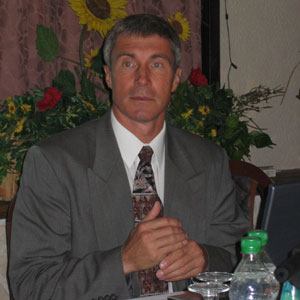
17-18/10/2006
Sergei (along with some other cosmonauts) was in attendance at the “Grounds of the Future” symposium in Moscow on the 40th anniversary of Russian-French space cooperation. He is in this photo, indicated by an arrow (from the PDF document News From Moscow 24/10/2006 in the News List for that month).

12/11/2006
Sergei was in the UK as a “Keynote Speaker” for the annual UKSEDS National Space Conference 2006 from 10-12 November. (Thanks to Peter Thornton for alerting me about this!) It is at the National Space Center in Leicester. He was a replacement for cosmonaut Aleksandr Kaleri, as described in the news item below:
20 October 2006 – Cosmonaut Change
Alexandr Kaleri unfortunately has some cosmonaut business to attend to in the US, and therefore won’t be able to make our conference.
However, we now have the pleasure of another cosmonaut, Sergei Krikalyov joining our conference.
With just over 803 days in space, Krikalyov is certainly a cosmonaut with an incredible wealth of experience, onboard Mir, Soyuz, the Space Shuttle, and the International Space Station.
The conference committee look forward to welcoming Sergei Krikalyov.
| Time | Track A: Science | Track B: Engineering |
|---|---|---|
| 09:00 | Introduction and Registration | |
| 09:30 | Workshop Slot 1 | Lecture: Russian Delegation |
| 10:05 | Workshop Slot 2 | Lecture: Dr. Julia Tizzard |
| 10:40 | Highlight Lecture: Sergei Krikalyov | Refreshment Break & Workshop Slot 1 |
| 11:30 | Refreshment Break & Workshop Slot 3 | Highlight Lecture: Sergei Krikalyov |
| 12:20 | Lecture: Russian Delegation | Workshop Slot 2 |
| 12:55 | Lecture: Dr. Julia Tizzard | Workshop Slot 3 |
| 13:30 | Lunch | |
| 14:00 | Workshop Slot 4 | Lecture: Mr. Jerry Stone |
| 14:35 | Workshop Slot 5 | Lecture: Mr. Oliver Finn |
| 15:10 | Lecture: Mr. James Penson | Workshop Slot 4 |
| 15:45 | Workshop Slot 6 | Lecture: Mr. James Penson |
| 16:20 | Refreshment break | |
| 16:45 | Lecture: Mr. Jerry Stone | Workshop Slot 5 |
| 17:20 | Lecture: Mr. Oliver Finn | Workshop Slot 6 |
| 17:55 | Bus | |
(Another reason I wish I lived in Europe …)
Krikalev UKSEDS Visit: Posting at CollectSpace.com by Nick, 13 November:
This leads nicely into the highlight of Sunday for me “Sergei Krikalev”. Great presentations, an obvious in-depth knowledge of spaceflight today and tomorrow and a living example of a very modest man who takes major accomplishment in his stride.
He explained on his first mission the apprehension he felt when he and Cosmonaut Volkov were left behind on the Mir and only then realised the enormity of the responsibility of caretaking a space station (which of course was a national treasure). He explained that although ground control were in charge/control for the most part should something go wrong it would come down to split-second decisions made in space by humans. This was one of the many reasons he cited for manned exploration and that the best route forward was a combination of both manned flights and robotic/automated methods of achieving objectives.
With 17 years between his first and last mission … so far (803 days in space in total), he had seen changes to the Earth some natural but mostly man-made, the smoke plumes thousands of kilometres long from the burning oil wells in the Middle East, the melting snow cap on Mt. Kilimanjaro and the increasing awareness of the fragility of the thin layer of atmosphere around the planet on which we all depend.
Photo at CollectSPACE: Sergei Krikalev with Bryar Deakin, November 12, 2006, Leicester, UK. (Credit: Nick Deakin)
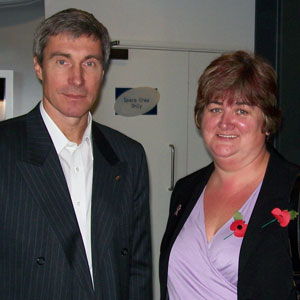
26/11/2006
Премия Национальное Величие - 21 ноября 2006 года 6 Церемония Награждения (6th National Greatness Awards honor ceremony – I can’t figure out the proper translation). Another award for Sergei! This took place at the “New Opera” Moscow Theatre. The awards were for contributions to various social services. The Orders/Decorations were «Ответственность и Благородство» (Responsibility and Generosity) and «Золотая звезда России» (the Gold Star of Russia), and the medal was «За Благородный Труд» (For Distinguished Work). Photos: Sergei in the audience; Sergei accepts the award (and a statue).


2007
10/1/2007
Sergei attended the presentation of the new edition of the book Korolyov by Y.K. Golovanov; he appears in photo 41. (Location not given – looks like the Energiya Museum?)
Via Monica: Sergei and Pavel Vinogradov are to go on a skiing holiday in Austria in two weeks with Walter Hopferweiser (Sergei did this last year).
5/2/2007
Newsweek/MSNBC: “Race to the Moon”. Starts off with a none-too-flattering remark about Sergei, much to our indignation! As the article goes on, it seems that Sergei is (not surprisingly) unhappy with the chronic underfunding of his country’s manned space program, which is bad for morale. (He isn’t the only cosmonaut who is: Pavel Vinogradov lamented the current malaise in the Russian program in a candid interview with Novosti Kosmonavtiki (in Russian); summarized in “Death throes and grand delusions” at The Space Review).
For a space hero, Sergey Krikalev is something of a grump. Krikalev holds the world’s record for time spent in outer space – he has logged an incredible 803 days, including time on Russia’s Mir space station back in the 1980s, when the International Space Station was still a distant dream. Between flights, Krikalev works at Energiya, which makes some of the biggest and most reliable rockets in the world. Despite these accomplishments, however, Krikalev, like many of his colleagues in Russia’s space program, seems to spend much of his time complaining about a lack of funds. He may have a point. Energiya’s glass and concrete offices outside Moscow are drab 1970s retro. Salaries at Energiya average a mere $400 a month, though Krikalev, at the top of the scale, gets $1000.
This legendary stinginess is the bane of Krikalev, and Russia’s ace in the hole. Although it lost the moon race in the 1960s, since then Russia’s space program has made a habit of performing heroic deeds on a shoestring – in many respects besting its well-heeled U.S. rival. While NASA struggled with its unreliable and fabulously complex space shuttle, Russia was racking up the mileage with its simple, durable Proton boosters – even during the chaotic years following the Soviet Union’s collapse. Now, despite Krikalev’s complaints, Russia’s space program is emerging from the lean years.
Energiya official press release: February 5, 2007. Korolev, Moscow region. “New appointments have been recently made in the S.P. Korolev Rocket and Space Corporation Energia Management.” Sergei has a new assignment: Vice-President of Manned Flights. He appears on the S.P. Korolev RSC Energiya top management page. Update 10/8/2007: photo removed after management restructure on 6 August 2007
In order to implement long-term space programs it is necessary to promote young managers.
Following the discussion of the personnel problem at the Board of Management, the Corporation’s Management has resolved to accept the applications for resignation of the managers who were older than 65 years, namely: First Vice-President N.I. Zelenschikov; Vice-President V.N. Branets and Vice-President A.L. Martynovskiy.
Also it was resolved to make new appointments:
- S.Yu. Romanov as Vice-President in charge of Manned Space Complexes (49 years);
- N.A. Brukhanov as Vice-President in charge of Advanced Projects (49 years);
- R.M. Samitov as Vice-President of Onboard and Ground Control Systems (50 years);
- S.K. Krikalev as Vice-President of Manned Flights (48 years).
Sergei’s flight status is still unchanged (he was assigned last year as backup for Soyuz TMA-12 to launch in March 2008, and commander of Soyuz TMA-14 [March 2009]). (Discussed in this thread at NASASpaceflight.com.)
1/3/2007
Energiya photo-report: “S.P. Korolev RSC Energia. City of Korolev, Moscow region. Boris Yevseevich CHERTOK accepts congratulations from S.P. Korolev Rocket & Space Corporation Energia management and staff, managers and specialists of Rosaviakosmos and allied enterprises, branch-veterans and friends.” Sergei is just visible in this photo at the celebrations of Boris Chertok’s 95th birthday. There is also a photo gallery, Празднование 95-летия Б.Е.Чертока в РКК «Энергия». 01 марта 2007 г. (Celebration of the 95th birthday of Boris Chertok at Energiya, 1 March 2007), at Novosti Kosmonavtiki; Sergei appears in photos 5, 8, 9, 10, 11, 21, 22.

Charles Simonyi writes in his blog for March:
Mr. Sevast’yanov was a gracious host and briefed us – the main and backup crews and the American members of Expedition 15 – on the progress of the preparations, and presented us with beautiful commemorative medals. Among his executives was Cosmonaut Sergei Krikalev with a record six missions in space, whom I met before in Star City, and is now a Senior VP at Energiya. The company is a major player in space today, and I am sure it will be an even more important player in this extremely difficult business.
26/3/2007
NASASpaceflight.com – information via Anik:
New information from Sergey Shamsutdinov (one of editors of Novosti Kosmonavtiki magazine): […] Also the new commander for the backup Expedition 17 crew is Gennadii Padalka now (instead of Sergei Krikalyov) …
He is still commander of ISS-19, but does not want to train in the backup crew (too busy).
27/3/2007
Energiya photo-report: March 27, 2007. Baikonur Cosmodrome, RSC Energia’s branch. Sergei was at the Baikonur cosmodrome Krainii, Крайний airport with other Energiya managers to greet the Soyuz TMA-10 prime and backup crews. He appears in photos 3 and 6.


28/3/2007
Energiya photo-report: March 28, 2007. Baikonur launch site, S.P.Korolev RSC Energia branch office. The crew report on their readiness to proceed with their final training phase to General Designer N.N. Sevast’yanov and other managers. Sergei appears in photos 4 and 13.


A photo from Charles Simonyi’s site (which is Flash-animated so I can’t link to photos *grumble*): “Pavel Vinogradov (in the middle) flew one year ago. Sergei Krikalyov (on the left) are briefing us on what to expect up there. Now we are just drinking to Pavel’s anniversary. Suit 306 is now for Fyodor and Oleg, but Pavel stayed there before his flight, and his signature is on the door by tradition.”
3/4/2007
«Столичные новости»: «Альфа»? На орбите земли такой космической станции не существует» (“‘Alpha’? In Earth orbit this station does not exist”). Interview in Russian with Capital News (#12/449, 3-9 April).
The interviewer comments that Sergei has just passed 48 years and he still looks fit and well. The interviewer remarks that Sergei’s opening statement about the Station’s name of Alpha sounds odd. Sergei replies that the name was a politically-inspired one and that it is only informal; not the official name of the ISS (which remains nameless). The Russian side is indignant at the choice of the name (meaning “first”) as it negates the achievements of Mir and the Salyut stations. Sergei does add that he would choose the name Alpha as it is the first letter in both the English and Cyrillic alphabets (originating from the Greek) so it is neutral. It also symbolizes the U.S. and Russian station components. The Russian segment of the ISS was originally intended for the Mir-2 station; after this was not to be, it was nicknamed Mir-1½. In the quality and quantity of research, the ISS in its seventh year will equal that of Mir.
The next question was whether Sergei had any religious beliefs:
No. I was brought up as an atheist. Moreover, it seems to me, that the Christianity, Moslem and Buddhism religious are external forms which often coincide with the private world of the person who believes in them. Therefore I do not recognize any religions. God should reside in the heart. The sacred concepts of “mother” and “native land” should live in each part of the body. I trust in the universal precepts and I adhere to them. But the universal principles which exist in any religion are present in our life and so.
Sergei is not interested in the making of money in the business sense. “I am a civil servant and I work for the state.” A half-year flight in the Soviet era earned a cosmonaut from 10 to 15,000 rubles and a Volga motor car. Now, 5000 dollars are paid for launch and landing, plus 100 dollars allowance for each day of flight. A spacewalk earns a bit extra.
Sergei was awarded the Hero of the Soviet Union for his first flight, and the Hero of Russia medal №1 for his second, but nothing for the third and fourth flights. During his fifth flight there was talk of giving him a “for the merit of the Fatherland 4th degree” award.
He considers himself lucky to have begun his career during a high point in the Soviet space program, participating in the beginnings of the Mir and Buran projects. It was, however, the end of a great epoch. The Energiya corporation was shaped by Sergei Korolyov and his legacy fortunately remains in the various reliable systems and tests used.
He thinks the space program should follow a progressive path, going to the Moon first before attempting Mars.
Energiya photo-report: April 3, 2007. Baikonur Cosmodrome, RSC Energia’s branch. The Soyuz TMA-10 crew make an inspection of their spacecraft, and the Progress M-60 in the assembly-test facility, Building 254. Sergei Krikalyov appears in photo 2. He also appears in this photo in the «Плановая подготовка к запуску «Союз ТМА-10»» (Scheduled preparation for the Soyuz TMA-10 launch) report at the Russian Federal Space Agency site.


From Charles Simonyi’s blog for 3 April:
It is always exciting to be near flight hardware, even when it is just an unmanned freighter. Everywhere there is an orderly chaos of fine tubes, red-painted temporary brackets, and black space cloth that is secured sometimes with wide strips of Velcro. Sergei Krikalev and Pavel Vinogradov explain to us what’s where. Sergei is now senior VP of Energia so he is a company officer and a top cosmonaut at the same time—one could not ask for a better briefing than this.
6/4/2007
Energiya photo-report: April 6, 2007. Baikonur Cosmodrome, RSC Energia’s branch. Sergei appears in photos 1, 7, and 9 at a meeting of the State Commission the day before launch of Soyuz TMA-10.


7/4/2007
Energiya photo-report: April 7, 2007. Baikonur Cosmodrome, RSC Energia’s branch. Sergei appears in photos 14 and 16 at the final meeting of the crew and the State Commission.


Novosti Kosmonavtiki photo gallery: Перед стартом 15-й экспедиции на МКС (Котов, Юрчихин, Симоньи) (Before the launch of the 15th Expedition to the ISS). Sergei appears in photos 4, 5.

A photo from Charles Simonyi’s site: “The Commission handed down the final decision about the crews and the flight program. According to the decision, I am spaceflight participant in the primary crew. We are now really ready to fly.” Sergei is standing at far right.
12/4: Cosmonautics Day, День космонавтики/2007
“S.P. Korolev RSC Energia, the city of Korolev, Moscow Region. RF First Vice-Premier S.B. Ivanov is congratulating the ISS crew on the Cosmonautics Day. RF First Vice-Premier S.B. Ivanov, Head of Federal Space Agency A.N. Perminov, the President, RSC Energia’s General Designer N.N. Sevastiyanov congratulated the International Space Station (ISS) crews on the Cosmonautics Day during communication session being held in MCC-M.” Sergei appears in this photo.

Novosti Kosmonavtiki photo gallery:
- День космонавтики в Театре Российской Армии (Cosmonautics Day in the Russian Army Theatre). Sergei appears in photo 5.
- С.Иванов в ЦУПе в День космонавтики (S. Ivanov at TsUP on Cosmonautics Day). Sergei appears in photos 2, 3, 6, 7, 8, 9, 10, 11.
19/4/2007
“April 19, 2007. S.P. Korolev RSC Energia, Korolev, Moscow region. S.P. Korolev RSC Energia’s conference hall hosted the grand meeting held to celebrate the 60th anniversary of the Check and Testing Facility (KIS) of the Corporation Experimental Machinebuilding Plant.” Sergei appears in photos 3, 10.


4/5/2007
S.P. Korolev RSC Energiya, Korolev, Moscow region: a meeting took place between Expedition 14 (Mikhail Tyurin and Michael Lopez-Alegria) and the President, N.N. Sevast’yanov. Sergei appears in this photo.

22/5/2007
On 23 May the legislative assembly of Saint Petersburg will approve the selections of 2 new honorable citizens of the city. 10 candidates are under consideration, including Sergei Krikalyov. This tradition was revived 14 years ago after the demise of the USSR; it first appeared in the 19th century when the city parliament selected worthy candidates who were then approved by the Tsar.
23/5/2007
Today the deputies of the legislative assembly of Saint Petersburg revealed the names of the two new honorable citizens of the city («Почетный гражданин Санкт-Петербурга»): Sergei Krikalyov (42 votes) and conductor Valerii Gergiev (29 votes). The ceremony of the presentation of the associating title regalias takes place on 27 May, during the city’s official day. The honorable citizens have the right to introduce laws for examination by the urban parliament, their pensions will be increased, and they do not have to pay public transport fares.
27/5/2007
Photos (low-resolution only) of the presentation of the “Honored Citizen” award presentation are available at the Official Portal of the Administration of St. Petersburg website. Photos showing Sergei (note the tie he is wearing!): 2, 8, 9, 10. Governor V.I. Matviyenko thanked cosmonaut Sergei Krikalyov for his help to St. Petersburg, his support of many undertakings and projects, and active participation in the public life of his native city.


Energiya press release (and portrait photo): “St. Petersburg. S.K. Krikalyov On May 27, 2007, in the framework of City Day celebration in St. Petersburg in the solemn atmosphere Petersburg Parliament Speaker Vadim Tyulpanov presented Korolev RSC Energia Vice-President, pilot-cosmonaut Sergei Konstantinovich Krikalyov with St. Petersburg Honorary Freeman diploma and certificate.”

31/5/2007
Energiya photo report: S.P.Korolev RSC Energiya – MCC-M, Korolev, Moscow Region. “The Russian cosmonauts, ISS-15 expedition crewmembers Fyodor Yurchikhin (commander, Korolev RSC Energia test-cosmonaut), Oleg Kotov (flight engineer, Gagarin TsPK RGNII test cosmonaut (Cosmonaut Training Center)) conducted the first spacewalk over the station surface planned in the flight program.” Sergei appears in this photo at TsUP, attending the Expedition 15 spacewalk being directed from there.

5/6/2007
Energiya photo report: “RSC Energia after S.P. Korolev, the city of Korolev, Moscow Region. S.P. Korolev Rocket and Space Corporation Energia hosted the meeting between the Corporation President, General Designer N.N. Sevast’yanov and NASA Deputy Administrator Shana Dale.” Sergei appears in photos: 1, 4, 5, 6.


13/6/2007
Energiya photo report: “Korolev RSC Energia, Korolev, Moscow Region. S.P. Korolev Rocket and Space Corporation Energia took part in the activities of the 11th St. Petersburg International Economic Forum. N.N. Sevast’yanov, President, General Designer of S.P. Korolev RSC Energia, made a report during the ‘round table’ discussion on the subject ‘Made in Russia’, and participated in the press conference.” Sergei appears in photos: 4, 6 (he seems to have become Nikolai Sevast’yanov’s shadow!).


15/6/2007

At TsUP a press conference was held concerning the situation in the Russian segment of the International Space Station of the failure of the on-board computers. The deputy head of the manned programs Technologies A.G. Botvinko, President and Chief Engineer of RSC Energiya N.N. Sevast’yanov, and the Vice-Presidents of RSC Energia – the leader of the flight of the Russian segment of the ISS V.A. Solovyov and S.K. Krikalyov – appeared before the TsUP-accredited journalists. They described the failure of the on-board computers on June 12 during the deployment and connectivity in the American segment of the ISS’s new solar panels. As N.N. Sevast’yanov explained, there was a static level of more than nominal value. This affected the secondary power supply of computers, causing irregularities in their work. Although there are three separate channels, the interference was so strong that it impacted on all three channels. Analysis of the situation continues, and a series of tests are scheduled with the ISS crew. An option is being considered to transfer a reserve kit to the itinerary in the cargo ship Progress M-61. Its scheduled launch is on 6 August, but it may be moved to 23 July. There are sufficient reserves of oxygen on the Station for 90 days of flight, without activating the Elektron oxygen generator, which is activated with the computers. Nevertheless, the opportunity to use this system independently is being considered. The evacuation of the crew is not being considered.
18/6/2007
Pierre Jullien spotted Sergei at the 47th Paris Airshow! He was with Nikolai Sevast’yanov. Russia had a display pavillion.

Max Planck Institute for Extraterrestrial Physics, Plasma Crystal experiment, July 2007 news.
Prof. Gregor Morfill, Director at MPE and head of the Theory/Complex Plasma Group (image on the far left), receives the highest award of the Russian Space Agency, the Tsiolkovsky Medal. The medal is handed over by a Russian delegation during a ceremony held at the German Space Agency (DLR) in Bonn-Oberkassel. Head of the Russian space delegation is Prof. Vladimir Fortov, former Russian secretary of science, member of the Russian Acadamy of Science and director of the Institute for High Energy Densities (IHED) in Moscow. Host and speaker is Dr. Ludwig Baumgarten, member of the executive board of DLR. Also present at the ceremony are: Sergey Krikalev (Russian cosmonaut), Thomas Reiter (German astronaut), Oleg Petrov and Vladimir Molotkow (IHED), Hubertus Thomas (MPE), Maria Roth (DLR), the Russian consul in Bonn and numerous members of DLR, MPE and ESA.
Sergei appears in this and this photos. (He performed the Plasma Crystal experiments during his two ISS expeditions.)


10/8/2007
After the restructuring of Energiya’s top management on 6 August, Sergei Krikalyov seems to have vanished from the Top Management page (he was elected Vice-President of Manned Flights on 5 February). (First noticed by Olaf.) Has he been removed from his position there after 6 months, or did they just neglect to mention him?
21/8/2007
Energiya photo report: “August 21-23, 2007, S.P.Korolev RSC Energia, Korolev – MAKS-2007, Zhukovsky, Moscow region. S.P. Korolev Rocket and Space Corporation Energia – a world’s leader in manned space flight – is actively participating in the 8th International Aerospace Show (MAKS-2007), inaugurated on August 21 of this year.” Sergei appears in photos 1 and 8.


“МАКС-2007 – почётные гости салона и пресс-конференции” (MAKS-2007 – the honorable guests of the salon and press conference): Sergei appears in photo 18.
27/8/2007
Sergei turns 49 today! С днём рожденья, Сергей!
5/10/2007
From Novosti Kosmonavtiki news №658:
05/10/2007/00:01: Sergei Krikalyov could join the crew of the modernized Soyuz spacecraft
Cosmonaut Sergei Krikalyov considers that he could become part of the crew of the first modernized Soyuz spacecraft. “An experimental crew will be required for the flight of this ship, and it is possible that I will become part of the spacecraft crew as a cosmonaut-tester,” he said.
S. Krikalyov added that at RKK Energiya the work continues on the adaptation of digital equipment of the Soyuz spacecraft, but these works are conducted more slowly than it was planned; consequently the launch of the first digital Soyuz is deferred for half a year.
Furthermore, he reported that the specialists of the corporation continue the development of the new generation spacecraft. As stated previously by the President of RKK Energiya, Vitalius Lapot, the design of the new ship will be transferred to Roskosmos toward the end of the present year. “I do not know if this plan is final or preliminary; let us wait and see,” said S. Krikalyov.
In reply to a journalist’s question, the Russian cosmonaut reported that he will not participate in the experiment on the flight simulation to Mars, which will be held in the headquarters of the Institute of Biomedical Problems in Moscow. “I do not want to participate in the experiment; I already know the answers to all the questions for myself,” he said.
A tidbit of information about Sergei Krikalyov from his page at Space Encyclopedia ASTROnote is that “in December 2007 he was a candidate for the Deputies of the State Duma 5th convocation on the list of the All-Russia political party ‘United Russia’, the regional group №81 (St. Petersburg). Despite the fact that the party overcame the 5% barrier, being the 16th in the list of regional groups in the allocation of seats, in the number of deputies has not shown up.” Is he getting involved in politics?
14/12/2007
According to a post by Olaf at NASASpaceflight.com, Sergei’s job title is now “Deputy General Designer” – Заместитель генерального конструктора, Zamestitel’ General’nogo Konstruktora, assistant to the General Designer.
19/12/2007
A post at Astroaddies:
Autographica message board on Showmasters pages announcing guests, cosmonauts Leonov, Krikalev and Tokarev. Brilliant news!
The venue and date for Autographica 11: the Hilton Birmingham Metropole, England, 18-20 April 2008.
26/12/2007
Sergei seems to have been dropped from the Soyuz TMA-14/ISS-19 crew as commander; he is no longer in the latest ISS flight crew roster up to ISS-21, though the roster is not yet finalized. (Via Olaf and this thread at the Novosti Kosmonavtiki forum, posted in August.) So perhaps he was moved to a later mission? Or will he be in management for a few years, though he is still an active cosmonaut?
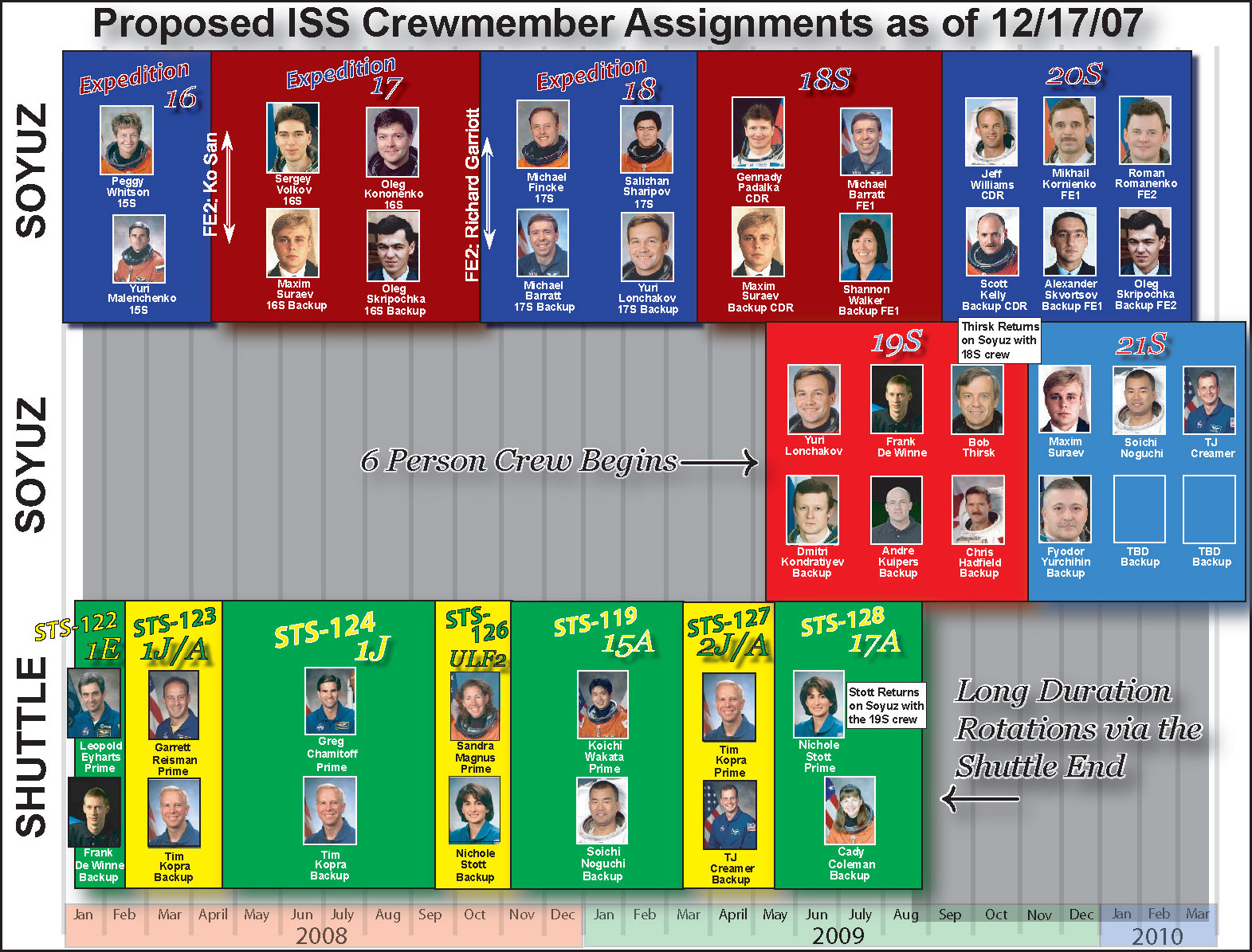
| Expedition | Prime crew | Backup crew |
|---|---|---|
| ISS-17 | Sergei Volkov, Oleg Kononenko | Maksim Sura’ev, Oleg Skripochka |
| ISS-18 | Salizhan Sharipov | Yurii Lonchakov |
| ISS-18S (6-person crew begins) | Gennadii Padalka | Maksim Sura’ev |
| ISS-19S | Yurii Lonchakov | Dimitri Kondrat’ev |
| ISS-20S | Mikhail Kornienko, Roman Romanenko | Aleksandr Skvortsov, Oleg Skripochka |
| ISS-21S | Maksim Sura’ev | Fyodor Yurchikhin |
2008
29/1/2008
“Russia may build new shuttle spacecraft by 2015,” RIA Novosti. Energiya’s spacecraft proposal (it has 6 projects, 2 of which it will submit to the Russian Space Agency in the near future) would likely have a lifting-body design and carry a crew of 6. More via Novosti Kosmonavtiki news №682: Sergei Krikalyov, Energiya’s deputy design project leader, is convinced that several different spacecraft designs will be required to realize Russia’s space projects. “It is not possible to create a ship which would equally be suitable for flights the Moon, Mars, and for the flights to near-Earth orbit. Therefore I do not exclude that not one manned ship will be built, but several,” emphasized the cosmonaut. He said the new ship will be constructed at the new spaceport.
24/2/2008
From Novosti Kosmonavtiki news №687:
In Star City (Звездном городке, Zvezdni Gorodok) an exhibition was opened of the photographic works of airman-cosmonaut, Hero of the Soviet Union and Hero of Russia Sergei Krikalyov with the symbolic name “Paintings of the Creator”. Our planet Earth is presented in an unusual perspective – from space. All photographs were taken from onboard the International Space Station.
4/3/2008
Novosti-Kosmonavtiki photo gallery: «Торжественное собрание в посольстве Чехии по случаю 30-летия первого пилотируемого полёта по программе «Интеркосмос»» (ceremonial meeting at the embassy of the Czech Republic on the occasion of the 30th anniversary of the first manned flight program Intercosmos). Sergei appears in photos: 7, 28, 67, 69.
18/3/2008
Energiya photo-report: “S.P. Korolyov RSC Energiya, Korolyov, Moscow region. The Chief Designers Board meeting At OAO S.P. Korolyov Rocket and Space Corporation Energiya, the Chief Designers Board meeting chaired by V.A. Lopota, the Corporation President, General Designer, took place. Among the issues under review were the following: current state of the International Space Station Russian Segment and going on with its mission Program implementation, progress in prelaunch processing of Soyuz TMA-12 transport manned space vehicle and final works phase, which Expedition 16 crew will perform.” Sergei appears in photo 13.

7/4/2008
Energiya photo-report: “Baikonur launch site, branch office of S.P.Korolyov RSC Energiya A meeting of the State commission was held. Director of Gagarin Cosmonaut Training Center V.V. Tsibliev reported about the crew readiness for the planned spaceflight. RSC Energiya President and General Designer V.A. Lopota reported about readiness of the Soyuz FG/Soyuz TMA-12 rocket-space complex for further prelaunch processing. The State commission approved the prime and backup crews for the Soyuz TMA-12 spacecraft and the ISS-17 and also a decision was adopted to continue preparation of the Soyuz-FG/Soyuz TMA-12 rocket-space complex for fueling and launch at the set time on April 8, 2008, namely at 15 hr. 16 min Moscow time.” Sergei appears in photos 7, 8, 11.


8/4/2008
Novosti-Kosmonavtiki photo gallery: Запуск «Союза ТМА-12» (Launch of Soyuz TMA-12). Sergei appears in photo 66, 69 (top of his head!), 71 (next to cosmonaut Aleksei Leonov).
10/4/2008
«Космонавты могут снимать более качественно, чем спутники – Крикалев», RIA Novosti.
Cosmonauts can photograph better than satellites, says Krikalyov
A skilled cosmonaut onboard the International Space Station can make a photo of the surface of the Earth, of a quality comparable to the pictures received from satellites that cost hundred millions of dollars; besides he, unlike the automatic device, can analyze a situation and make pictures at the appropriate angles, Russian cosmonaut Sergei Krikalyov considers.
Krikalyov, the record-holder for the total duration of flights on the Mir space station and the ISS, presented on Thursday an exhibition of photos from space, as part of the Institute of Space Research (IKI) exhibition “Science on the ISS Russian segment”.
“NASA experts expected that from a camera in a manual mode with a telephoto lens from board the ISS, the pictures would turn out with a resolution worse than 15 meters. However the photos taken through windows have shown, after a careful studying of the ground, that separate pictures are obtained with a resolution of 10 meters, and with using the nadir (a point opposite to zenith) – about 5 meters,” said Krikalyov, answering a question from RIA News.
He explained that automatic satellites cannot replace a person as some Earth sites are often overcast above, and only a person can – having analyzed real-time conditions – take pictures at the correct angle.
“Even NASA experts say that they are reconsidering their attitude to the photos taken in a manual mode by cosmonauts. Earlier they relied only on photos from satellites,” the cosmonaut said. He also said that with the advent of new digital technology on board the ISS may enable things previously inaccessible. “For example, Polar Lights aurora from space appeared recently, and I am confident that no one else has done such imagery,” said the cosmonaut.
Six-flight veteran Krikalyov said that he took both art photography, and images on behalf of the Roscosmos and NASA. He used film at first, then Nikon digital cameras with a 400-millimetre telephoto lens and an extender.
16/4/2008
Sergei was unable to attend the Autographica 11 in England because (according to this forum post) he and Valerii Tokarev were unable to get a Visa granted by the British Government! Don’t know why (one speculation here); possibly something to do with rather strained relations between the Russian and British governments. Stupid politicians (on both sides).
6/7/2008
The biography at Astronaut.ru notes that Sergei is on the future ISS flights list again:
In 2008, Sergei has tentatively been named as part of the backup crew of ISS-21A – he will backup Aleksandr Kaleri. According to these plans, the prime crew will launch on Soyuz TMA-18 in March 2010. This will be the first flight of a new modification of the Soyuz-TMA spaceship (700 – Series 1).
9-10/7/2008
“Living and working on the Space Station”: features a video (157 MB) of a panel involving ISS crew members (including Sergei!) at the symposium “Celebrating Ten Years of the International Space Station” organized by the International Astronautical Federation. (Thanks to Pat for link!)
13/7/2008
Blog entry, in French: “Pendant que le choeur est en vacances” (While the choir is on vacation), by Olga Roudakova. (Thanks to Pat for link!)
Olga Roudakova is accompanied by cosmonaut Sergei Krikalyov, during the international days of Astronautics of Unesco (9 and 10 July 2008). Sergei Krikalyov (or Krikaliov) is the man who had spent many days in space: 809 days spread over six missions. He is also the only person in the world who has ever changed nationality in space. Indeed, he left for an orbital stays with Soviet nationality, and returned with Russian citizenship, as the USSR had disintegrated in flight; his flight to him, Krikalyov …
In the political embarrassment that followed, the decision on his return to Earth was postponed for five months. For the five months of confinement in space (bringing the total duration of its mission to ten consecutive months), Sergei was gratified a premium of 150,000 rubles, or less than 1200 euros.
30/7/2008
Sergei was awarded another medal: Order of the Pride of Russia, ордена «Гордость России». From Novosti Kosmonavtiki news №721:
On June 30, in the GlavUPDK Cultural Center (Культурный Центр ГлавУПДК) in the Moscow District of Russia, there took place the 11th solemn ceremony of the presentation of the highest Russian Federation public reward: the Order “Pride of Russia”. The reward is given for the highest professionalism and dedication, genuine charity and selfless love for the motherland. One of the Order of Knights is the pilot-cosmonaut, Hero of the Soviet Union and the Hero of Russia, Sergei Krikalyov.
27/8/2008
Sergei turns 50 today! С днём рожденья, Сергей! I wonder what he will achieve in his next half-century?
From Novosti Kosmonavtiki news №724:
28/08/2008/00:09 – The President of Russia, D.A. Medvedev, congratulated the pilot-cosmonaut S.K. Krikalyov on his 50th birthday
On 27 August the President of Russia, Dmitrii Medvedev, congratulated pilot-astronaut and deputy chief designer of Rocket and Space Corporation Energiya, Sergei Krikalyov, on his 50th birthday.
“You are deservedly considered one of the record holders among cosmonauts for the total length of time spent in orbit,” Mr. Medvedev said in his telegram. “Your truly heroic biography is an outstanding example of courage, strength of will and firmness of character. Your competence, organisational talents and professional and personal qualities have earned the deserved respect of your colleagues and friends.”
From the Energiya website:
August 28, 2008. S.P.Korolyov RSC Energiya, Korolyov, Moscow region./2008
An S.P. Korolyov RSC Energiya deputy general designer, instructor-cosmonaut-tester, 1st Class, Hero of the Soviet Union and of the Russian Federation, Sergei Konstantinovich Krikalyov turned 50 on August 27, 2008.
The President of the Russian Federation D.A. Medvedev sent him a congratulatory telegram, which, among other things, says: “You are rightfully considered one of the record-breakers among active cosmonauts with regard to the total duration of your orbital missions. Your truly heroic biography became an outstanding example of courage, will-power and fortitude. Your competence, managerial ability, professional and personal qualities earned you a due respect of your colleagues and friends” (news on the web site of the Russian President www.kremlin.ru).
On this significant day, S.K. Krikalyov was congratulated by Governor of St.Petersburg V.I. Matvienko, heads of the Federal Space Agency, management and staff of the S.P. Korolyov Rocket and Space Corporation Energiya, representatives of various companies and organizations in the Russian space industry and Russian Academy of Sciences, including the Gagarin Cosmonaut Training Center, Head of the town of Korolyov A.F. Morozenko, S.P. Korolyov RSC Energiya cosmonaut team, NASA representatives, friends and colleagues.
Dear Sergei Konstantinovich!
The management and staff of the S.P. Korolyov Rocket and Space Corporation Energiya heartily congratulate you on this significant day of your 50th anniversary!
Upon graduating with honors from the Leningrad Mechanical Institute in 1981, you took a job with the world-known Korolyov’s company, where you have been working for more than a quarter of a century now, having risen through the ranks from an engineer to a deputy general designer.
You worked on developing manuals for cosmonauts, proposals on displaying operator’s data on consoles of the Mir space station, updating the on-board documentation of the Salyut-7 space station. You worked at the Mission Control Center during several long-term missions. After communication was lost with Salyut-7 in 1985, you, as a member of a “ground crew,” took part in developing various options for procedures of flying and docking with the uncontrollable space station. Afterwards, this operation was successfully performed for the first time in history! The same year you joined the team of cosmonauts of NPO Energiya. You were training yourself and were taking an active part in training cosmonauts at the Gagarin Cosmonaut Training Center and at Baikonur.
You have accomplished six space missions to the muti-modular space station Mir, the unique creation of the 20th century, and the International Space Station, an ambitious international project of the 21st century, during which hundreds of sessions of scientific and applied research experiments were carried out, providing invaluable results for Russian and world science. And your pictures taken in space are the envy of any professional photographer!
Special milestones in your career are the activities on the International Space Station. Three times you worked onboard the station, and each of these missions was unique in its own way. The first mission was the first manned mission under the International Space Station assembly program, in the course of which US Node 1 module was docked to the Functional Cargo Module Zarya. Together with Space Shuttle Commander R. Cabana, you were the first to open the hatch leading to ISS. The second mission was under the program of the first expedition to ISS (ISS-1). It started the continuous operation of the ISS. You were the first to make habitable the Service Module Zvezda and Functional Cargo Module Zarya, and, later on, the Laboratory Module Destiny, and started scientific research under Russian and US programs. In the third mission you set up the absolute world record for the total space flight endurance of 803 days, which remains unbroken by any other nation in the world!
For the courage and heroism displayed during your missions into space, you were given titles of the Hero of the Soviet Union and the Hero of the Russian Federation, and awarded both Russian and foreign orders and medals. You are an honorary citizen of St. Petersburg. Your energy, commitment and perseverance in achieving your goal, high professionalism and erudition, communication skills and kindness towards people earned you due respect among your Russian colleagues and foreign partners. Everybody also knows about your achievements in sports: you have learned to fly several types of airplanes, including a foreign airplane, and you won prizes several times at the USSR, Europe and world championships.
On this great day, dear Sergei Konstantinovich, please accept our heartfelt wishes of good health, happiness and prosperity to you and your relatives, of new creative successes and luck in the course of flight design tests and operation of the rocket and space hardware for the sake of strengthening the power and prosperity of Russia.
– President, General Designer V.A. Lopota
6/10/2008
Sergei quoted in an Aviation Week article at the 59th International Astronautical Congress:
Space Crew Conflicts Not Expected/2008
– By Frank Morring, Jr./Aerospace Daily & Defense ReportGLASGOW, Scotland – Sergei Krikalev, the Russian cosmonaut who holds the record for time spent in space, says he doesn’t expect crew conflict to be a major problem on long-duration exploration missions, including 30-month trips to Mars and back.
“I think for a mission like a Mars mission, motivation is going to be so high, if you know it’s so important, everything will be done to do your job the best way,” Krikalev told a questioner at the 59th International Astronautical Congress here Oct. 3. He has logged 803 days, nine hours, 39 minutes in space.
“From a psychological point of view, I don’t see a big problem, especially if you are going to have a very extended scientific mission,” he said. “You have plenty of things to do, so it shouldn’t be a problem.”
Asked about disagreements in which one astronaut might consider another’s approach to a problem “stupid,” Krikalev drew applause from the audience when he said “the way we do it in Russian space program, U.S. space program, the European program, we don’t have stupid people in our programs.”
The Russian cosmonaut, now a vice president of RSC Energia, said he was never severely troubled by conflict with a crewmate during two stays on the Mir orbital station – one for 10 months in 1992-93 – and two on the International Space Station.
“Crew selection is going to be important, of course,” he said. “Maybe I was just lucky to fly with good partners. I haven’t felt the urge to go back home sooner because it’s difficult for me to stay with this partner. Maybe I was just lucky, but I think we can learn how to make crew selection for going to Mars.”
Krikalev and other experts in a panel discussion on human space exploration said Mars is probably the outer limit of human exploration with the expectation of a return to Earth. But he predicted there will be “no limits” on humanity’s ability to live off the planet Earth, if they are willing to settle there. Eventually humans will reproduce in space, he suggested in response to a question, although the first off-planet birth is probably in the distant future.
“Birth outside the Earth can happen when we are comfortable there,” Krikalev said. “Still, all these exploration missions are going to something that is dangerous and unknown, so to put someone else there who is not making a decision to be part of this adventure is not feasible right now. As soon as we are going to be comfortable living outside the Earth, then it might happen.”
That moment will come, he said, when humans have spent enough time in space to know how to live there. While robotic spacecraft are valuable in paving the way for human explorers, ultimately “to learn how to live, you have to live there.”
24/10/2008
Energiya photo-report: “MCC-M – S.P. Korolev RSC Energia, Korolev. Soyuz TMA-12 descent vehicle landing At 7:36, Moscow Time, Soyuz TMA-12 descent vehicle returned to Earth. Russian cosmonauts S. Volkov and O. Kononenko have completed their flight under the program of Expedition 17 to the International Space Station (ISS-17), and a spaceflight participant, US citizen R. Garriott has completed his flight under the program of the visiting mission 15.” Sergei appears in photo 2.

2009
Sergei still appears to be working for Energiya in some capacity.
14/1/2009
Energiya photo-report: S.P. Korolyov RSC Energiya, Korolyov, Moscow region. Energiya representatives met with a delegation of the International Astronautical Federation (IAF), led by Executive Director of the Federation, Philippe Willekens. Sergei can be seen in photos 11, 12, 13, 14.


15/1/2009
Energiya photo-report: S.P. Korolyov RSC Energiya, Korolyov, Moscow region. A meeting and interviews between reporters from the Russian Gazette and space officials (including Sergei) to discuss the subject, “Manned Space Flight: What Kind of Reforms Does It Need?”. Sergei can be seen in photos 1, 2.


3/2/2009
Energiya photo-report: TsNII RTC, the city of Saint-Petersburg – S.P. Korolev RSC Energia, the city of Korolev. On February 2, 2009, the State Research Center of Russia known as the Central Research Institute for Robotics and Cybernetics (TSNII RTC), the city of Saint-Petersburg, hosted the International Scientific Technical Seminar devoted to the Space-Purpose Robotic Systems: Experience, Problems, Solutions. Sergei (SC Energia’s Deputy General Designer) appears in photo 2. He also appears in this photo at the TsNII RTC site.


27/3/2009
Sergei left the Cosmonauts’ Group of RSC Energiya.
1/4/2009
A brief note in NK news №773 about Sergei’s latest assignment to the Gagarin Cosmonaut Training Center:
1/4/2009 / 00:05 – Cosmonaut Sergei Krikalev becomes the leader of the civil Astronauts Training Center
The head of the Center of the civilian astronauts will be pilot-cosmonaut Sergei Konstantinovich Krikalyov, who is currently the Deputy General Designer of RSC Energia. All necessary documents were signed this week, said the head of Roscosmos AN Perminov. It was reported by a source in the Russian space industry, says Cyber Security.
Official FKA/Russian Space Agency press release:
By the order of the head of the Russian Space Department, from 27 March 2009, the Hero of the Soviet Union №97, the Hero of Russia (the Gold Star of the Hero №1) Sergei Konstantinovich Krikalyov, is appointed to the post of the chief of the Federal state budgetary establishment, the Yu. A. Gagarin Russian State Scientific-Research and Test Centre of Cosmonaut Training Research (RGNIITsPK) since 30 March of this year.
On 27 March, as communicated by a submitted statement, the 1st class instructor-cosmonaut-verifier of the Open Society RKK Energiya, and the assistant to the Open Society general designer of RKK Energiya, Sergei Konstantinovich Krikalyov, has been released from the position of the 1st class test instructor-cosmonaut, according to the order (№44 dated 27 March 2009) of the head of the Russian Space Agency.
He is the first civil head (Начальник) of the GCTC, which was transferred from the Russian Ministry of Defence to become an agency reporting to Roscosmos (Federal Space Agency). He was released from his duty as Instructor-Test-Cosmonaut 1st Class. He will begin his term in July 2009.
2-3/4/2009
Sergei appears in some pre-launch photos at Baikonur in the NK gallery:
10/4/2009
Sergei Krikalyov attended a meeting at the Kremlin between representatives of the Russian rocket and space industry, and the Russian President. Reports: Roskosmos, Kremlin.ru.
12/4/2009
Roskosmos news: “ISS Crew Receives Congratulations on the Cosmonautics Day from the Earth”. Sergei appears in two of the photos.
Anatoly Perminov, Roscosmos Head, with the Heads of Roscosmos Directorates, Russian cosmonauts, leaders of the space industry, talked today with the ISS-19 crew today from Roscosmos Central Data Station.
Anatoly Perminov congratulated warmly ISS crew commander Hero of Russia Gennady Padalka, flight engineers Michael Barratt and Koichi Wakata, on the Cosmonautics Day.
It is a good tradition to congratulate cosmonauts on-board the station on April 12.
The session was also attended by mass media representatives.
27/4/2009
Roskosmos news: “Anatoly Perminov, Head of the Federal Space Agency, Held a Meeting with GCTC Management”. Sergei appears in two of the photos.
23/6/2009
From NK №790:
23/06/2009/10:09 The transfer of Star City to Roskosmos is complicated by the absence of documents
The transfer of Star City from the Russian Ministry of Defense to civil hands “is compounded by difficulties with the documents,” said the Chief of the Gagarin Cosmonaut Training Center, Sergei Krikalev. Krikalev was appointed in late March and became the first civilian head of Star City.
“The transfer process is difficult, because the difficulties were more than expected,” he said.
In particular, this relates to the lack of necessary official documents for the land occupied by Star City. “It turned out that there were no papers present on this Earth, and lately, it has been found that Stalin had decreed in 1934 that the land be used for a military radio range,” said Krikalev.
According to him, the process of dismantling the old organization is to be completed by the end of June, but the process is difficult because of the restructuring of the Ministry of Defense and the lack of money. Krikalev believes that the difficulties “were accumulated by management over many years”.
25/6/2009
From NK №790. Some of the computer translation I was unclear about:
25/06/2009 / 00:05 – An increase in the size of the ISS crew was planned after all modules were launched
The increase in the ISS crew was originally planned after the expansion of the Russian segment of the Station at the expense of docking with the Station of additional modules; however the quantity of cosmonauts already is now increased to six persons, and start of modules is planned for 2011, the Gagarin Cosmonaut Training Center Chief, cosmonaut Sergey Krikalev, said.
“To tell the truth, I opposed increasing the Station crew while not adding more modules to the Russian segment,” said Krikalev. He added that they initially planned to launch an additional module, and possibly two, and then increase the number of people.
Now the launch dates of the modules has changed; they are scheduled for 2011. “But the increase in the number of crew has not happened.”
Responding to the question on whether or not the Station could cope with twice the crew, the agency interlocutor noted that there was “nothing unusual there”.
“Indeed there has been six people on board, and nine people. Moreover, the Station has increased in size, since four years ago, when I was in orbit, the Shuttle docked, and we had a lot on board. Now there has been added another European and the Japanese module, so there is more space,” said Krikalev.
He expressed regret that the Russian segment had not expanded.
“According to plans, the construction of the Russian segment, the additional module should have been there several years ago … The fact that at the Station, there are now six people – it is not catastrophic, but the fact that the Russian segment has to cope with a greater number of people without increasing space – this presents some difficulty,” noted the cosmonaut.
According to him, it does not affect daily life in close quarters so much, but how the workplace is organized. “If we need our scientists to conduct experiments on this segment, there is not enough space. For daily life it is adequate,” he said.
1/7/2009
Sergei officially takes over the leadership of Star City/TsPK. His photo is now on the GCTC front page.
19/7/2009
“Russia still blue over moon landing,” MSNBC.com. Sergei is quoted on his opinion on Russia not managing to send cosmonauts to the Moon.
“Beginning with the first flight with a primitive capsule, and then getting to the moon, it was a great achievement for humanity,” Russian astronaut Sergei Krikalev said.
“Of course, we would have liked to see the first man on the moon be Soviet, Russian, but that’s life … Our own achievements were very many,” he told Associated Press Television News. […]
Russian space officials meanwhile still seem to be dreaming about winning the next stage of the space race. They keep talking in tantalizing terms about mounting a manned mission to Mars, although they say that would take at least another 20 years to get off the ground.
“I think this is fine. It’s like sports – at one stage one person wins, at another it’s somebody else,” said Krikalev.
11/9/2009
Energiya photo-report: Sergei makes a presentation at a meeting of the Council of Chief Designers. He appears in photo 12.

15/9/2009
Roskosmos news: “‘First Space Clown’ Shows Magic Tricks in Roskosmos”. Sergei appears in photos 1, 2, 4.


13/10/2009
Sergei appears in the NK photo gallery «Послеполётная пресс-конференция членов экипажа МКС-20 в Звёздном городке» for the ISS-20 post-flight press conference: photos 5, 12.
19/10/2009
Sergei appears in the NK photo gallery «Торжественная встреча членов экипажа МКС-20 в Звёздном городке» at the Star City welcome for ISS-20: photos 9, 48, 49, 50, 57, 59, 61, 64, 67, 68, 72, 81, 89, 90, 96
23/10/2009
Interview with Sergei at Roskosmos site, on administrating Star City and transferring it from military from civilian control. No English translation available yet, though.
“Why does the Cosmos attract me?,” Russian Cosmos magazine, November 2009. An interview with NASA Administrator Charles Bolden. He mentions Sergei Krikalyov as they both flew on STS-60 in 1994.
Then he shook hands with chief of training center for cosmonauts Sergei Krikalev. “Sergei! Remember how in the ninety fourth … in orbit ….” “It was a good expedition and no mistake,” Krikalev smiled. […]
Q: Would you be willing to fly into space once again?
A: Yes, I really want to do it. I have flown four times, but it was long ago. I would fly with my friend Sergei Konstantinovich Krikalev.
27/11/2009
From NK №821:
At the new year on the ISS, the cosmonauts will meet without tangerines, but under a fir-tree
For the new year in 2010, the crew aboard the International Space Station (ISS) is traditionally able to greet the number of crossed time zones many times, but without a tangerine and champagne under an artificial Christmas tree, the chief of the Gagarin Cosmonaut Training Center, Sergei Krikalyov, told reporters. “Mandarins aboard the orbiting complex quickly go off, but there is even a Christmas tree at the Station. What is remarkable, it does not matter where it is put - on the floor or ceiling, the little animals and toys do not hang in weightlessness as on Earth, and and stick out and look every which way,” said Krikalev, himself greeting the New Year repeatedly when in orbit.
“Several times I had to celebrate the New Year in orbit. In addition to the obvious differences in context, it is noteworthy that the Space Station for a half hour crosses many time zones, so at the request of the holiday can be encountered many times: on Far East time, and Moscow and American, and Japanese,” the famed astronaut Russia shared his memories.
1/12/2009
Energiya photo-report: Sergei attended the landing of Soyuz TMA-15, watching from TsUP (Moscow Mission Control). He appears in photos 2, 10.


4/12/2009
Energiya photo report: Sergei attended the Council of the Chief Designers. He appears in photos 5, 13.


19/12/2009
Energiya photo report: Sergei attended the State Commission for the launch of Soyuz TMA-17. He appears in photos 1, 6, 8, 9.


21/12/2009
Sergei appears in the NK photo gallery, «Запуск космического корабля «Союз ТМА-17»» (Launch of Soyuz TMA-17); in photo 22.
28/12/2009
Energiya photo report: On the eve of the coming 2010 New Year, Moscow Mission Control Center held the televised communication session with the International Space Station Prime Crew members working in orbit. Sergei appears in photos 2, 4, 5, 6.


2010
14/2/2010
From NK №837. Sergei attended the consecration of a church at Star City. He is atheist according to what I have read, but as Chief of Star City I guess he couldn’t avoid the occasion!
14/02/2010, 00:05 – At Star City this summer the Church of the Transfiguration will be consecrated
In Star City today was held the first day of service at the Church of the Transfiguration. Despite the fact that the church had not yet finished, the service was led by clerics, headed by Father Iovom.
Today, many people including cosmonauts and their families attended the liturgy in the closed “Star City”. In particular, the first service was attended by the Chief of the FGBU NII Yurii Gagarin Cosmonaut Training Center, cosmonaut Sergei Krikalyov, and the head of the closed Star City, cosmonaut Alexander Volkov.
This wooden church, with 13 domes, was built with the participation of the brothers Kuznetsov, all parishioners of ZATO Star City, the brethren of the Trinity-Sergius Monastery.
The consecration is planned this summer for its official opening.
12/3/2010
Energiya photo-report: the General Designers’ Council meeting devoted to the International Space Station (ISS) Russian Segment (RS) was held at OAO S.P. Korolev Rocket-Space Corporation Energiya under the chairmanship of V.A. Lopota, the President, General Designer of the Corporation. Sergei appears in photo 16.

TsPK: In FGBU Research and Testing Cosmonauts Training Center, a two-day comprehensive examination of the ISS-23/24 prime and backup crews training for a long-term expedition to the International Space Station concludes today. Sergei is in photo gctc_01.
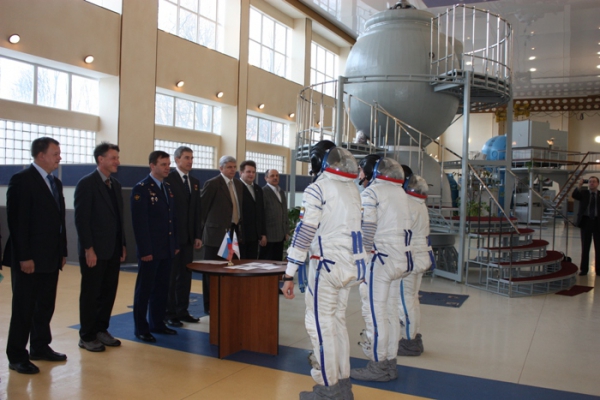
18/3/2010
Energiya photo-report: landing of Soyuz TMA-18. At MCC-M upon the crew evacuation from DM, a press conference for Russian and foreign journalists was held. Heads and representatives of Roscosmos, RSC Energia, foreign space agencies, prime contractors of the Russian rocket-space industry took part in it. Sergei appears in photo 8.

19/3/2010
Roskosmos news: «В Роскосмосе угостили чаем экипаж ТПК «Союз ТМА-18»» (“Roskosmos treated the Soyuz TMA-18 crew to tea”). The traditional meeting between the next crew due to launch and the head of Roskosmos. Sergei appears in photos 4, 6, 7, 8.


22/3/2010
From NK 844:
22/03/2010 – 16:37: TsPK Chief has called upon to create a single state group of Russian cosmonauts
A basic aim of the Cosmonaut Training Center should be to establish a single group of cosmonauts in Russia, said the TsPK Chief, the world record holder for the duration of stay in space, Sergei Krikalyov.
According to the cosmonaut, previously, when part of the squad were military, and the other part were civilians, “the creation of a single unit on the basis of the TsPK was not quite natural.” In July 2009, TsPK was transferred from the Minister of Defence to Roskosmos. Krikalyov said that now, when interdepartmental barriers have been removed, it is wise to create a single unit. The Russian squad currently has about 40 astronauts from TsPK, RSC Energiya and the Institute of Biomedical Problems of the Russian Academy of Sciences.
Krikalyov also stated the need to restore the infrastructure of Star City. “Star City, which we accept now from the Ministry of Defense, requires not only upgrading and modernization, it also requires the restoration of many of its components,” said the Chief of TsPK. He promised in the near future “to compile ideas about the future of TsPK,” and clearly define “what we have, and what is missing.”
1/4/2010
Energiya photo-report: “Baikonur launch site, branch office of S.P. Korolev RSC Energiya. The State Commission held its meeting at Baikonur launch site where the primary and backup crews for Soyuz TMA-18 were approved and the readiness of the space launcher system was confirmed. At the suggestion of the Head of the Gagarin Cosmonaut Training Center S.K. Krikalev, the State Commission approved the proposed composition of the primary and backup crews.” Sergei appears in photos 1, 3, 8, 9, 11, 12.


8/4/2010
NK photo gallery: Sergei had a photo-exhibition displayed in the Kremlin – “Paintings of the Creator”.
TsPK: At the Cosmonaut Training Center, Russian Prime Minister V. Putin held a meeting with the Russian Space Agency and communicated with the cosmonauts. Sergei is in photos p_1, p_2, p_3.
16/4/2010
Roskosmos interview: «Начальник ЦПК Сергей Крикалев: «Реформируя Центр, нам удалось не допустить срыва подготовки космонавтов»» (“Head of TsPK, Sergei Krikalev: ‘we were able to prevent the breakdown of cosmonaut training during reform of the Center’”) on the reform of the Cosmonauts’ Training Center. Not yet translated into English.
19-21/4/2010
Sergei is a guest speaker at the ISS Symposium in Berlin.
6/5/2010
TsPK: Honoring veterans at the Cosmonaut Training Center. Noting the 65th anniversary of Victory over Nazi Germany, our people will bow our heads to express my sincere appreciation and gratitude to all participants of World War II and home front workers. In Star City was held events to commemorate Victory Day. Today in the FGBU conference hall, the solemn celebration of World War II veterans and home front workers, those whose employment was held at the Cosmonaut Training Center. Sergei is in photo Vruchenie.
20/5/2010
Sergei is to have a bust of him made and placed along the Avenue of Heroes in the Moskovskii Victory Park in St. Petersburg. It will be installed on 12 April 2011, Cosmonautics Day. (via NK №856)
25/5/2010
TsPK: The ISS-24/25 prime and backup crews began their preflight exams. Sergei is in photos uilok, pressa.
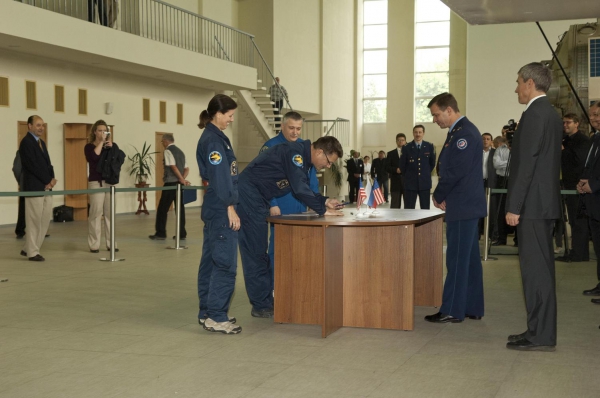
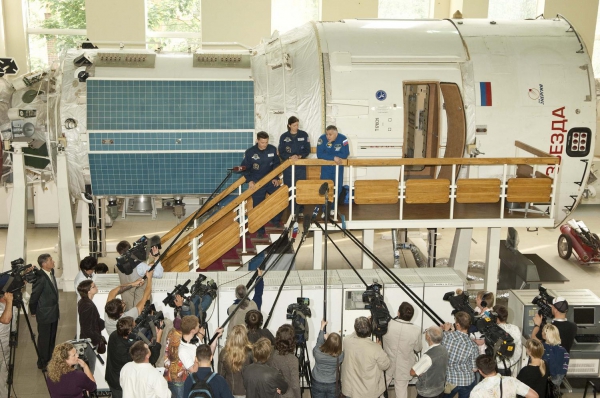
26/5/2010
Energiya photo-report: “The General Designers’ Review Board devoted to the Russian Segment (RS) of the International Space Station (ISS) was held at OAO S.P. Korolev Rocket & Space Corporation Energia under the chairmanship of V.A. Lopota.” Sergei appears in photo 14.

3/6/2010
TsPK: After the traditional breakfast at Star City, the ISS-24/25 prime and backup crews departed for Baikonur Cosmodrome. Sergei is in photo MOR_8881.
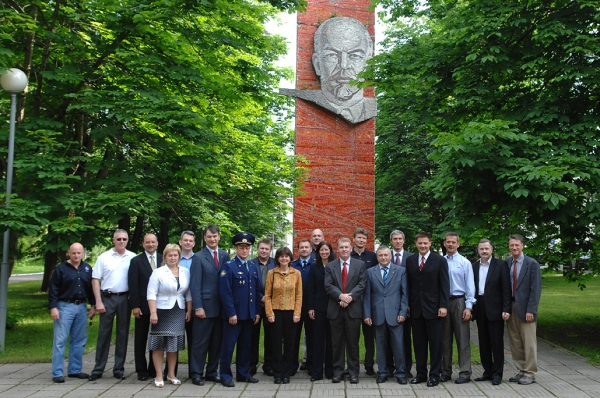
14/6/2010
Energiya photo-report: “Baikonur launch site, branch office of S.P. Korolev RSC Energia. The State Commission held its meeting at Baikonur launch site where the primary and backup crews for Soyuz TMA-19 were approved and the readiness of the space launcher system was confirmed.” Sergei appears in photos 1, 9.


TsPK: A meeting of the State Commission. Sergei is in photo Krik.
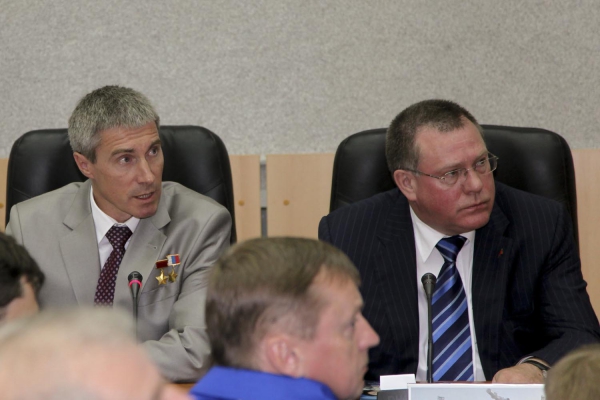
15/6/2010
TsPK: Yesterday, June 14, after a meeting of the State Commission, which were approved by the compositions of the main and backup crews, Head of the Centre of Cosmonaut Training, Sergei Konstantinovich Krikalev, thanked the staff of Internal Affairs of Baikonur for the safety of crew stay during the prelaunch site to the CPC. Sergei is in photos Dog 1, Dog 2.
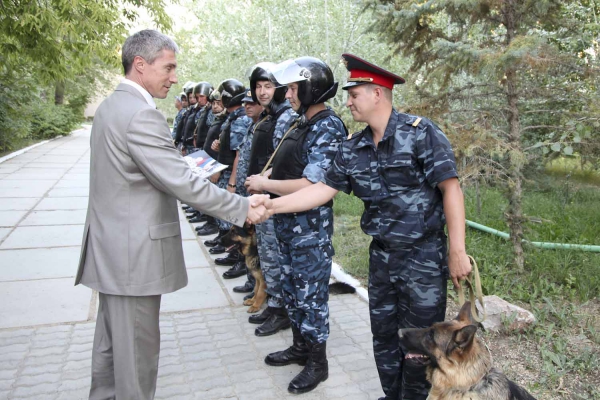
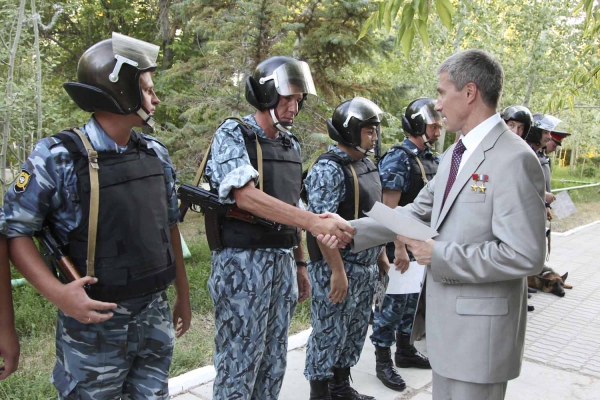
18/6/2010
Via Roskosmos news:
Roscosmos Representatives will Take Part in St. Petersburg International Economic Forum 2010
International Economic Forum 2010 is taking place in St. Petersburg on June 17–19, 2010.
The St. Petersburg International Economic Forum (SPIEF) is a Russia-based non-profit foundation best known for its annual meeting in St. Petersburg, Russia, which brings together top business leaders, international political leaders, selected intellectuals and journalists to discuss the most pressing issues facing the world, including health and the environment.SPIEF is an annual economic summit for Russia and the CIS states. In 2005, some 3 000 people from 64 countries participated in the Forum. Until 2006 the Forum was conducted by the Inter-parliamentary Assembly of CIS Member States and the Federation Council of the Russian Federation. Since then, following a Presidential decree, the Forum has been organized by the Ministry of Economic Development and Trade of the Russian Federation.
The official opening ceremony of the Forum is to take place on June 18. Welcoming Address will come from Elvira Nabiullina, Minister of Economic Development, Russian Federation, Chair of the Forum Organizing Committee.
Russian President Dmitry Medvedev is also expected to make a speech at the Forum on June 18.
The Forum will host session “SPACE TRAVEL – AN EVERYDAY BUSINESS?” to discuss new approaches in public-private partnerships promise to have an even bigger impact on space programmes over the coming decades.
The topics to be raised are:
- What are some of the most important private-sector opportunities in space travel?
- How is extraterrestrial entrepreneurship creating new business opportunities in space?
- Are there prospects for a technological breakthrough that will make space travel easier?
Moderator: James B. Meigs, Editor-in-Chief, Popular Mechanics Magazine
Panelists:
- Anatoly Perminov, Head, Russian Federal Space Agency
- Esther Dyson, Chairman, EDventure Holdings
- Vladimir Gruzdev, Deputy of State Duma of the Federal Assembly of the Russian Federation
- Sergei Krikalev, Russian Cosmonaut
- Jean-Yves Le Gall, Chairman and CEO, Arianespace
- Vitaly Lopota, President-Designer General, RSC “Energia”
- Jan Welter Timkrans, CEO and majority shareholder, MindArk PE AB.
– Roscosmos PAO
Select assertions and opinions:
- One of the key “break-through technologies” yet to be developed is application of power facilities using nuclear fuel. They will increase speed 20-fold. Development of relevant launching infrastructure will be required.
- The government should develop and finance strategic space programs (e.g. flight to Mars program), commercial companies may carry out operating tasks (such as delivery of cargo to the orbit).
- Space is a risky business, but risk is not an obstacle for certain people, therefore there will always be private businesses keen to capitalize on these opportunities.
- The commercial component in space programs is currently prevailing in telecommunication systems, in the systems of earth remote sensing, meteorology systems, while it less significant in the manned missions.
- By 2011, Shuttle will suspend their operations. Therefore RosKosmos has taken the responsibility to deliver astronauts and cargo to the orbit. It is also desired that some other country would have similar systems reserved to perform space-links.
- ISS can operate without investments up to 2020 – and with additional investments, even up to 2028. Within the next ten years it may be handed over to commercial organizations, like Space Adventure, which will perform manned missions to the station.
- We will need 20-30 years before people start living in Mars or somewhere else on a permanent basis – creating a second living environment would be established other than the Earth.
- Space tourism segment has good chances to become sufficiently notable.
Selected quotes:
“We have learned to live in space, we have learned to work in space. So far it is more an environment for professionals, but non-professionals gradually start to use it too.”
– Sergei Krikalev
“Privatization may be implemented in space, the same way it happened in the Internet.”
– Esther Dyson
“ At present we are at the edge of the next quality step from our original habitat, reaching further into space.”
– Sergei Krikalev
“Commercial area in development of manned missions is interesting for RosKosmos, and we support it.”
– Anatoly Perminov
24/6/2010
TsPK: Traditional honoring of the returned ISS-22/23 Expedition crew at Star City. They laid flowers at Yurii Gagarin’s monument. Sergei is in photos otkrytie, podarki.

30/6/2010
TsPK: Interview at Metro (in Russian): «Сергей Крикалев: Бизнес летит в космос» (“Business flies into space”).
1/7/2010
TsPK: Anatoly Perminov, Head of the Federal Space Agency, visited the Gagarin Cosmonaut Training Center. The purpose of the visit: acquaintance with the prospect of the CPC-to-date requirements of the project plan for the modernization of the simulator base, technical facilities and information society of the Institution. Sergei is in photo Perminov.

16/7/2010
Officers assigned to the Cosmonaut Training Center upgrade their military ranks
From 1 July 2009, troop unit 26266 (Russian State Scientific-Research and Test Cosmonaut Training Center Yuri Gagarin) has been eliminated, and the CPC has acquired the status of a civil institution (FGBU Research Institute CPC Gagarin) administered by Roskosmos. Nevertheless, about two hundred officers continue military service in the Centre.
Yesterday, 15 July, 17 soldiers, from lieutenant to lieutenant colonel, received military ranks. The order of attribution of an officer’s rank was read by chief of personnel management Martseniuk IE, epaulettes were presented by Chief of Cosmonaut Training Centre Sergei Konstantinovich Krikalev. The officers were congratulated by the CPC leadership and co-workers, who wished their comrades to reach new heights in the military service and receive regular stars on the epaulets!
Sergei is in photo MOR_1160.
17/9/2010
TsPK: After the meeting of the Interdepartmental Commission of the Cosmonauts Training Center, a press conference was held by the ISS-25/26 main and backup crews. Sergei is in photo krikalev.
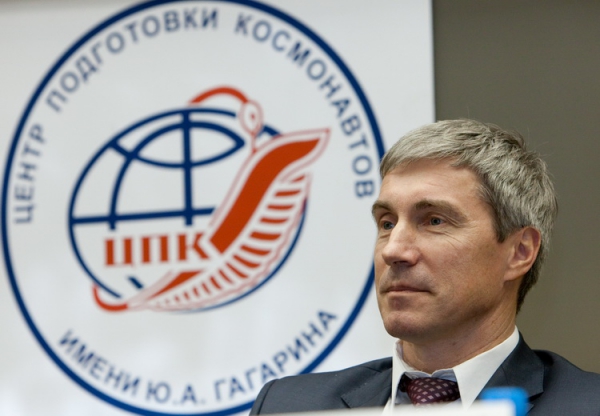
6/10/2010
TsPK: Meeting of State Commission with ISS-25/26 crew at Baikonur. Sergei is in photos book, te.
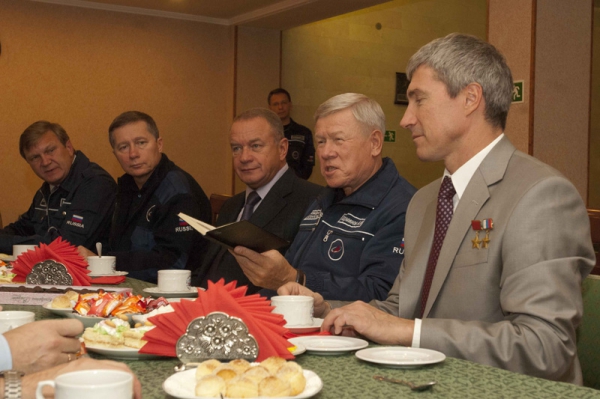
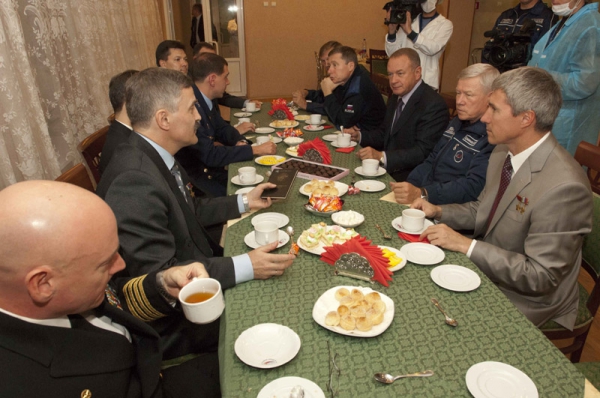
8/10/2010
TsPK: Pre-launch preparations for ISS-25/26 at Baikonur. Sergei is in photo doklad.
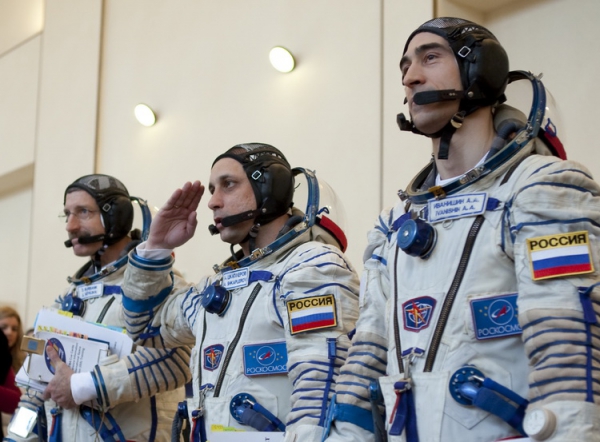
22/10/2010
TsPK: Ceremonial meeting of ISS-23/24 crew in Star City after a successful flight. Sergei is in photos rukovodstvo, krikalevjpg.
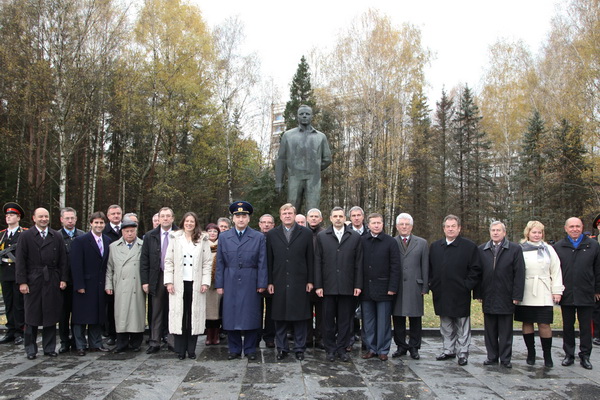
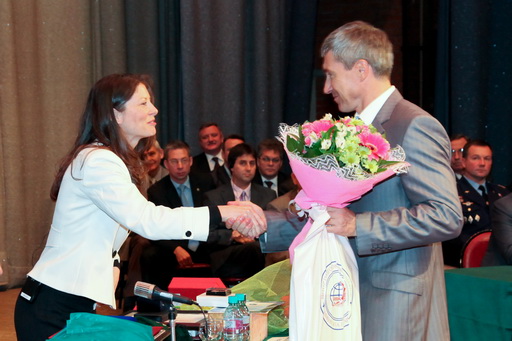
27/10/2010
NASA interview with Sergei, 10 years after Expedition 1.
TsPK: The ISS has broken Mir’s record of continuous crew occupancy. Sergei in photo ekipazh.

31/10/2010
TsPK: 10 years since the launch of Expedition 1 to the ISS on Soyuz TM-31. Sergei is in photos: vodolazy, krik, koster, nevesomost, more, v soyuze, mks, skafandry, ekzamen soyuz, pered soyuzom, bilety na mks, ekzamenmks, baik, primerka, podhod, doklad, vo.
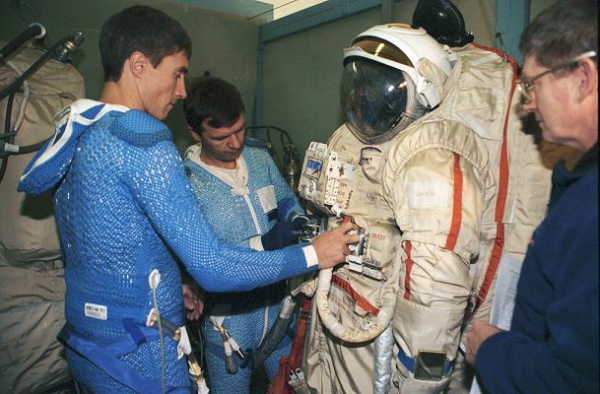

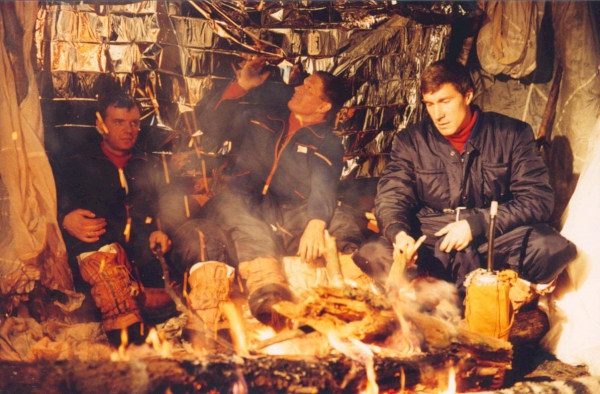
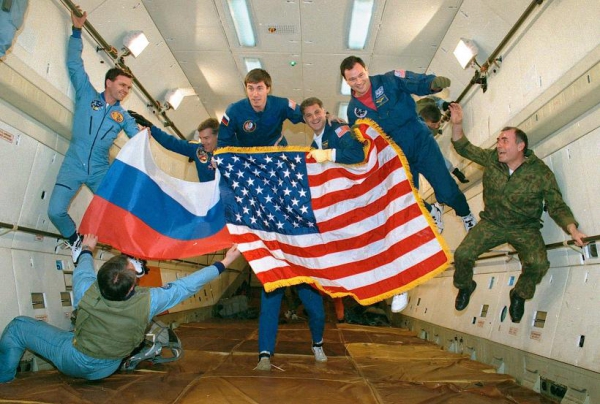
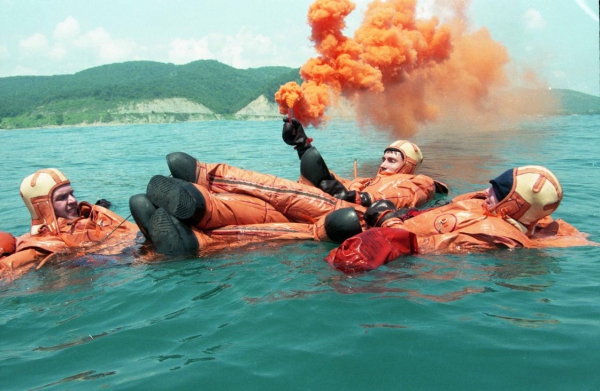
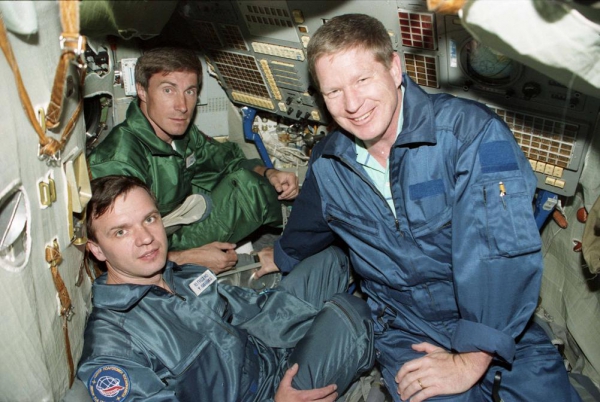
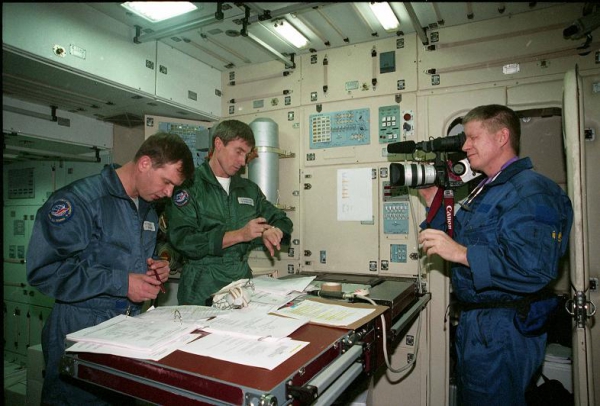
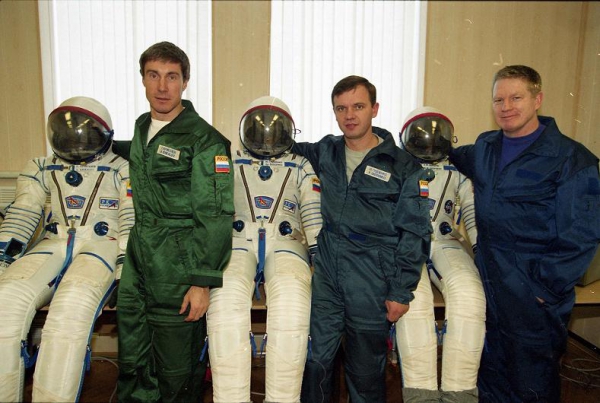
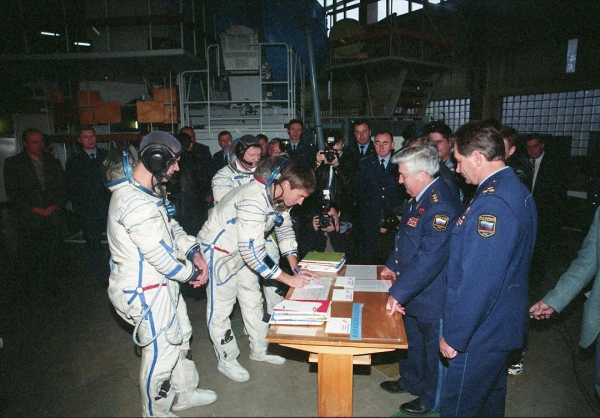
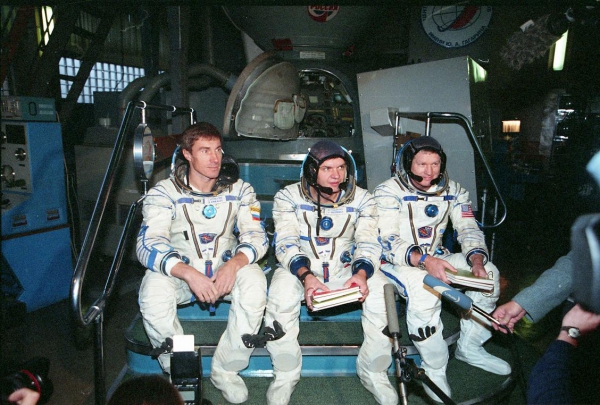
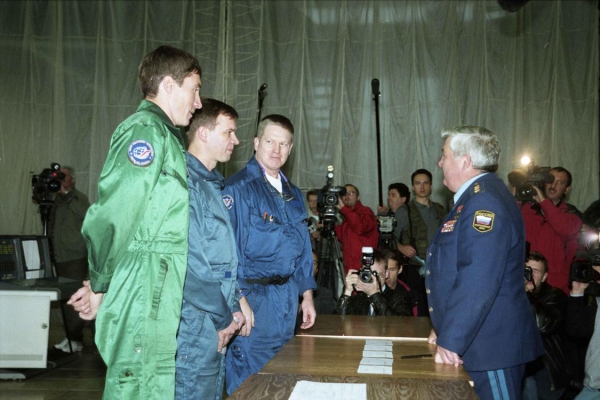
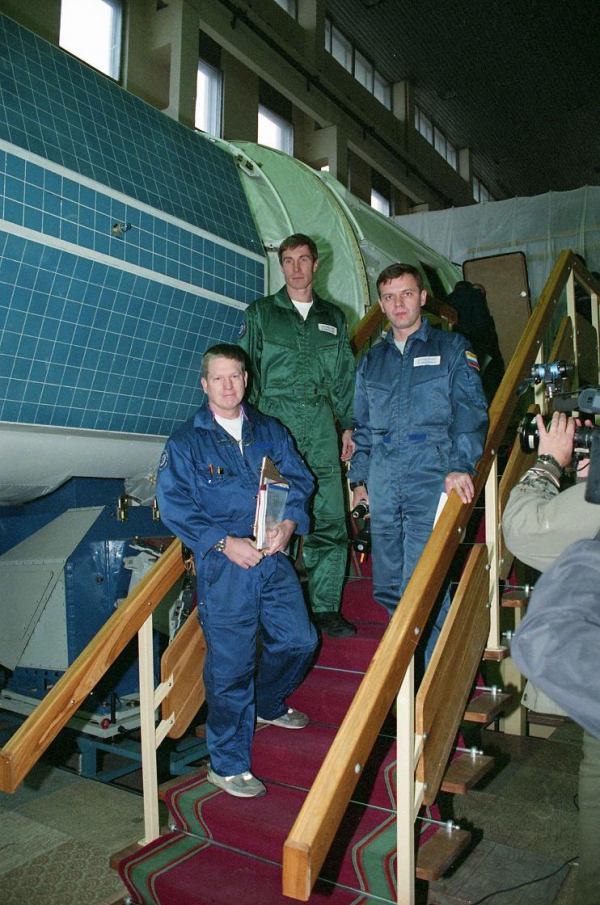
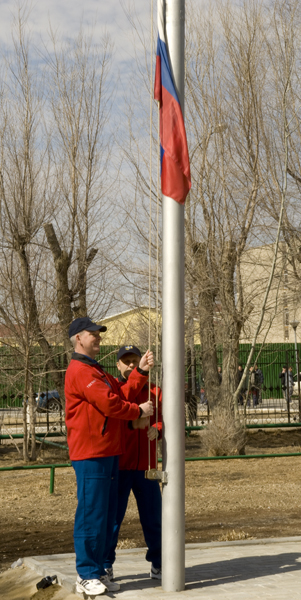
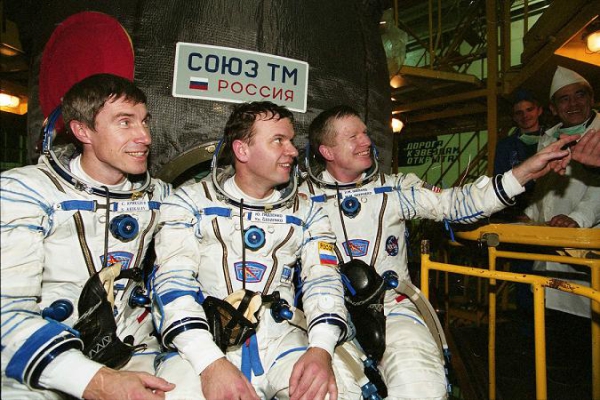
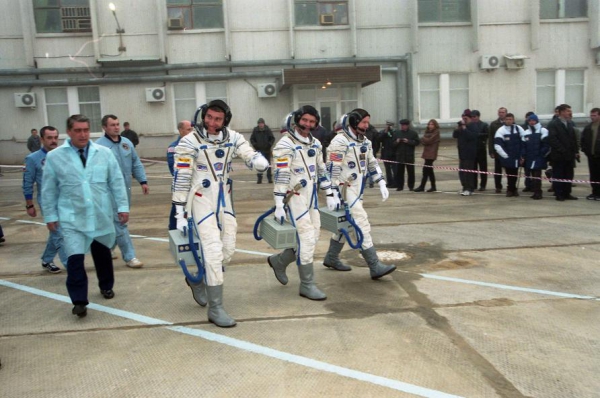

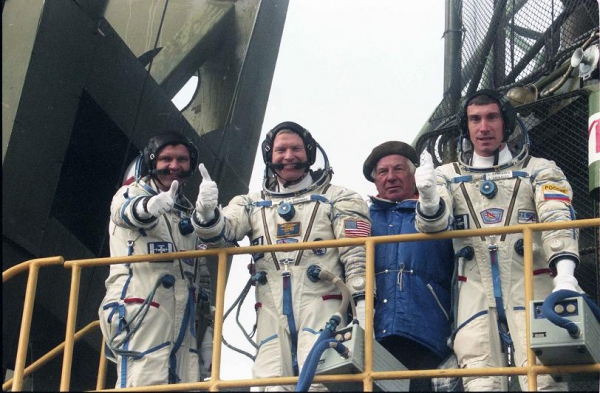
1/11/2010
TsPK: Press conference at the Bauman Moscow State Technical University on the 10th anniversary of the ISS. Sergei said the first Expediton was essentially experimental, and there were a lot of technical issues to cope with. Sergei is in photos: krikalev, ekran.

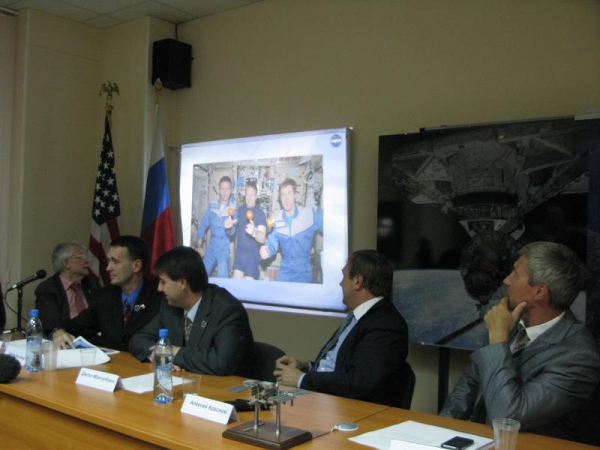
12/11/2010
TsPK: Uglegorsk round table: “East Baikonur (Восточный, Vostochniyi) – a new development stage of Russian spaceflight.” Sergei said there was a need to create training facilities for cosmonauts, and infrastructure is also needed for the final prelaunch period. (In Russian: «Нужен целый комплекс, который позволит космонавтам проходить учения на тех аппаратах, которые будут использоваться здесь. Также нужна инфраструктура для заключительного предстартового периода. Вот над этим предстоит работать детально.»)
13/11/2010
TsPK: Marking 10 years of the ISS. Sergei said: “In the future not only space factories will be built, but berths to construct ships in orbit, so they will no longer have to be launched from Earth.” (In Russian: В будущем возможно строительство в космосе не только космических заводов, но и сооружение неких стапелей, на которых будут создаваться космические корабли. В том, чтобы такие корабли стартовали с Земли, нет никакого смысла. Скорее всего, их сборка будет вестись в космосе.)
23/11/2010
TsPK: Sergei was a guest at the “Ocean Planet” film festival in Moscow.
25/11/2010
Energiya photo-report: Sergei attended the General Designers’ Review Board devoted to the Russian Segment (RS) of the International Space Station. He appears in photos 3, 17.


28/11/2010
Star City Patriarch of Moscow and All Russia, Kirill, performed the rite of the great consecration of the Church of the Transfiguration of Our Lord in Star City. Sergei also gave him a tour. Photos at Voices from Russia blog, and at TsPK: 1, 2, 3, 4, 5, 6.


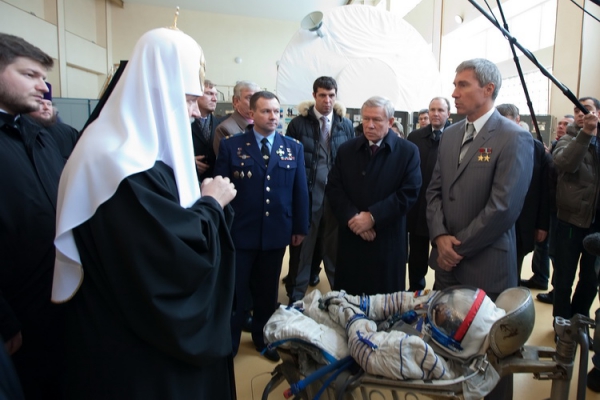
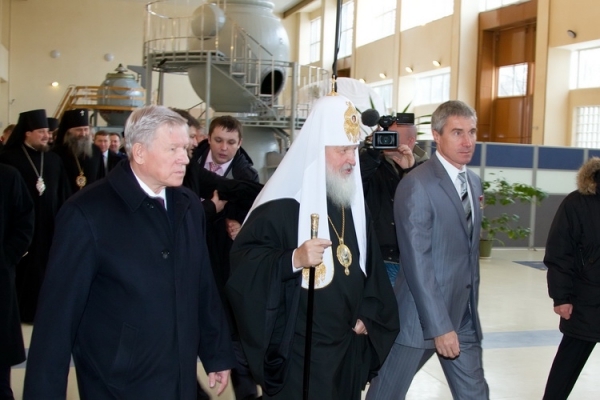
TsPK: Church of the Transfiguration consecration. More photos of Sergei giving Patriarch Kirill a tour: pokaz skaf, soyuz, v zale mks, na stantcii.
10/12/2010
TsPK: Press day with access to the ISS-26/27 crew preparing for flight at Baikonur. Sergei appears in photos cveti, vmeste.
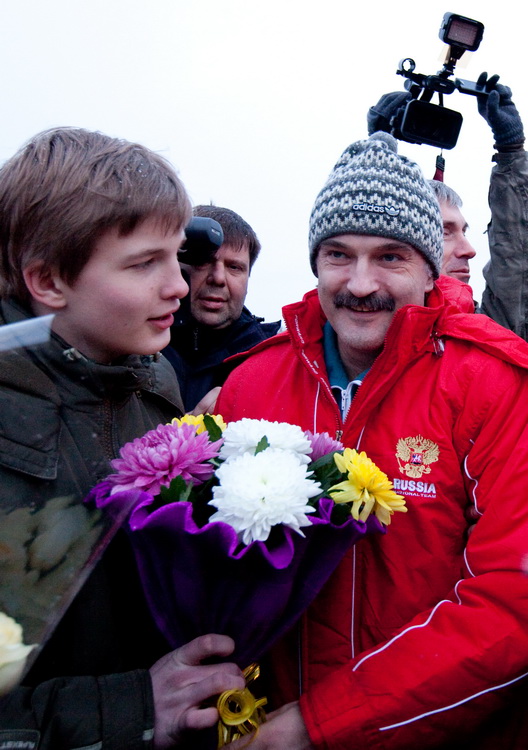
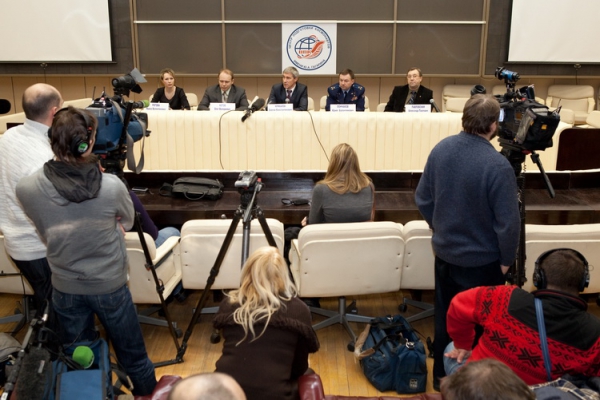
14/12/2010
TsPK: A meeting of the State Commission approved the crews for ISS-26/27 at Baikonur. Sergei appears in photo gk1.
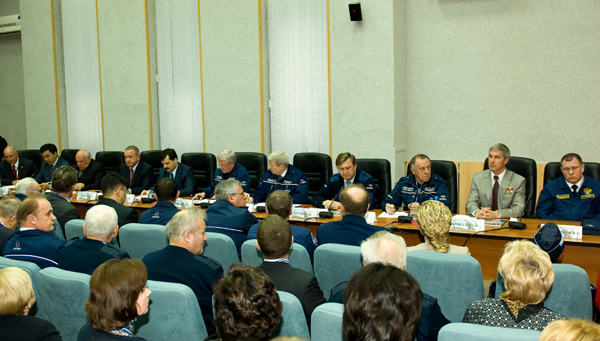
TsPK: Traditional pre-flight press conference for ISS-26/27. Sergei appears in photo pk4.
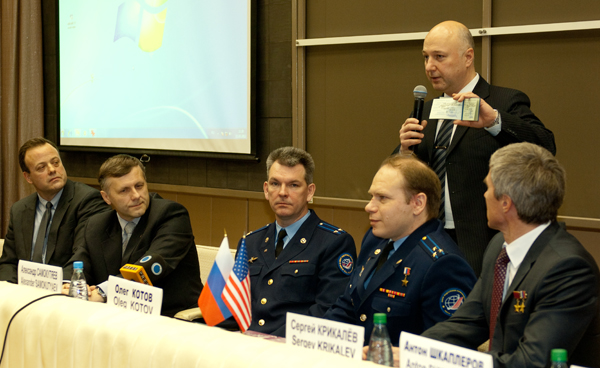
TsPK: NASA astronaut Catherine Coleman, part of ISS-26/27, is congratulated on her birthday at Baikonur. Sergei appears in photo pozdr1.
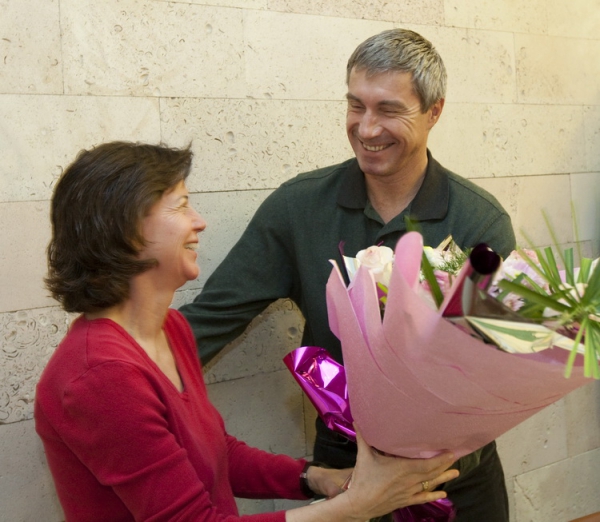
16/12/2010
TsPK: Launch of Soyuz TMA-20 with ISS-26/27 crew from Baikonur. Sergei appears in photos start12, start14.
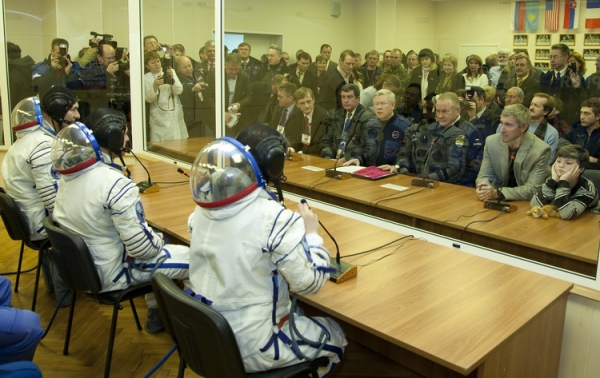
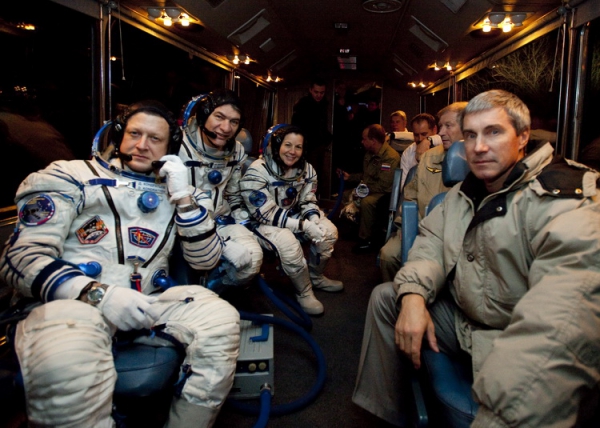
28/12/2010
TsPK: At the ceremonial meeting devoted to the end of 2010, Sergei summed up the year as “difficult, but interesting,” and plans for the future. Sergei is in photos: doklad, doklad1, doklad2.
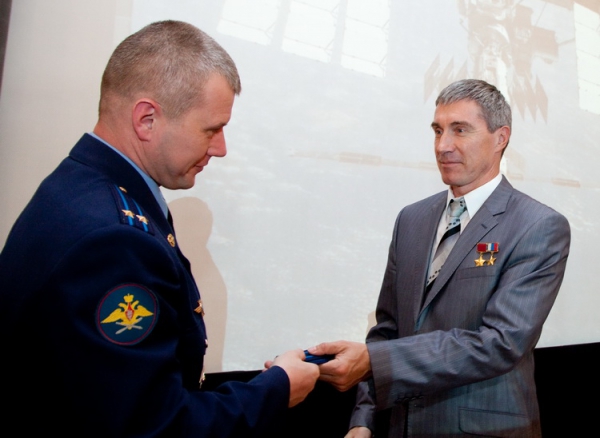
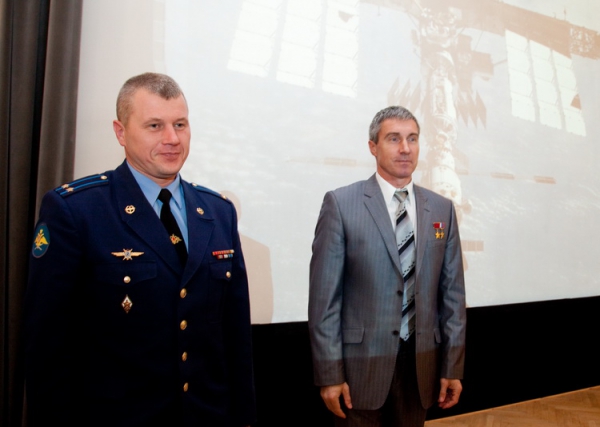
2011
14/1/2011
TsPK: Today in Star City took place a formal post-flight meeting of the ISS-24/25 crew, consisting of Fyodor Yurchikhin (Russia), Shannon Walker (USA) and Douglas Wheelock (USA). At exactly 12:00 the cosmonauts, the leadership of TsPK, and representatives of the Federal Space Agency and related organizations laid flowers at the monument to the first cosmonaut of the Earth, Yuri Gagarin. Sergei congratulated the crew on a successful mission and safe landing. Sergei is in photos: vctre4a, y gagarina, vctypitelnay re4, cnjva, krikalev, vry4enie krikalev.
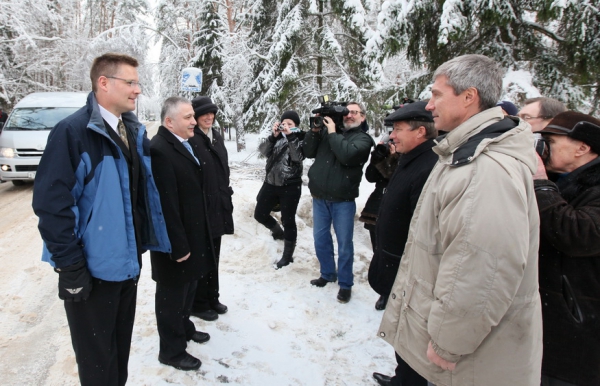
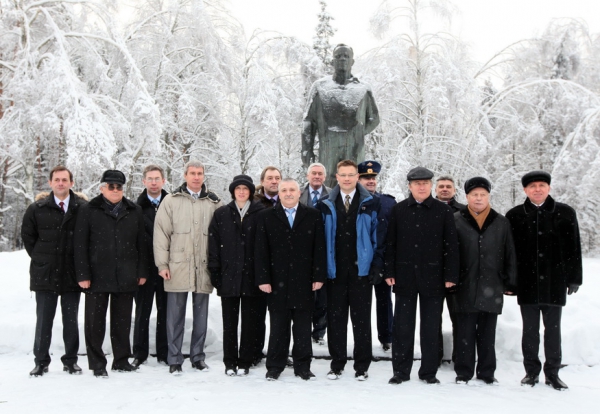
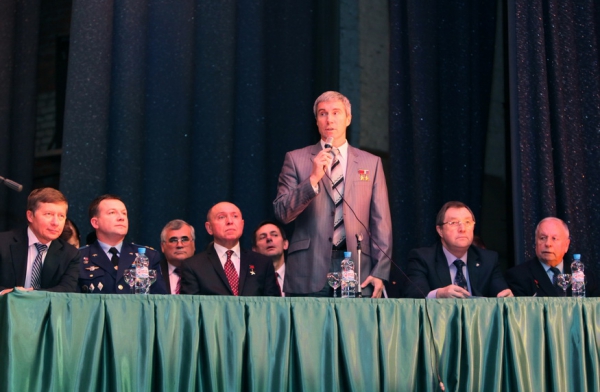
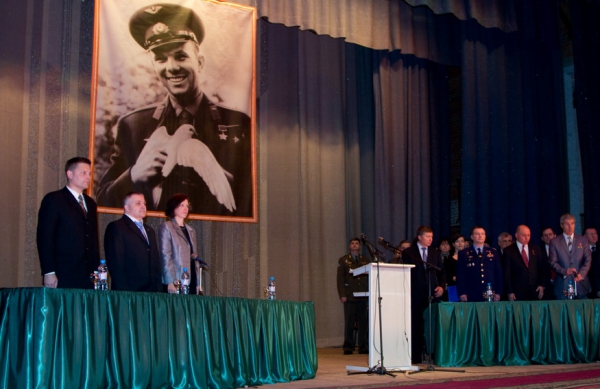
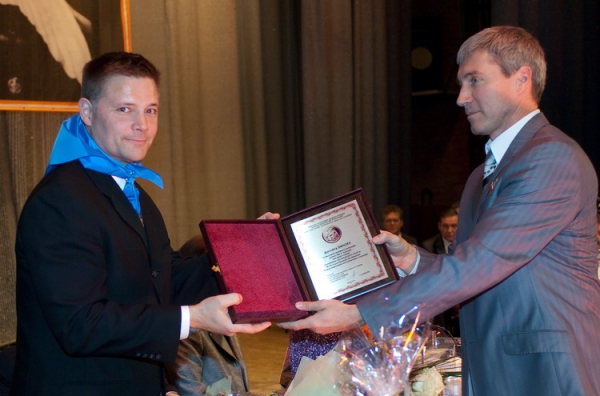
25/1/2011
TsPK: Today the Bauman Moscow State Technical University opened 35 Academic Readings on space dedicated to the memory of Academician SP Korolev and other prominent local scientists, pioneers of space exploration. Sergei took part in the Readings. He reported on the formation and development of the national system of selection and training of cosmonauts from Yuri Gagarin to the present day. His report gave an estimate of the current state of Russia's system of selecting and training cosmonauts (SOPK/СОПК), its problems and ways to solve them. “Creating a national system of selection and training of cosmonauts is inextricably linked with the landmark flight of Yuri Gagarin made the beginning of the era of manned spaceflight. General Designer SP KorolevIn played a big role in the formation of SOPK; he was the initiator of the Cosmonaut Training Center and outlined the main features of the image created by SOPK.”
28/1/2011
TsPK: Sergei attended a meeting of the Editorial Board marking the 5-year anniversary of the publication of the magazine Russian Space.
31/1/2011
TsPK: The 25th Academic Readings on space took place over 25-27 January 2011 at the Bauman Moscow State Technical University. On January 27 there was a round table on “Youth and the aerospace industry: problems and prospects” with Sergei as one of the lead presenters. He is in photo kryglii stol.
1/2/2011
TsPK: Cosmonaut Training Center wishes Happy Birthday to the First Deputy General Designer of RSC Energia, Nikolai Ivanovich Zelenschikov. Sergei is in photos: pozdravlenie, jubilei.

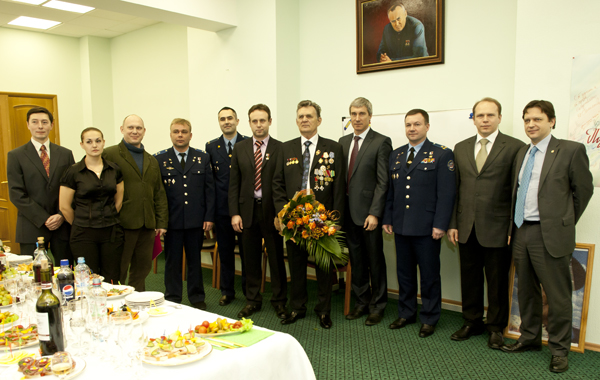
TsPK: Sergei Krikalyov and former cosmonaut Sergei Zalyotin met with the students’ military-patriotic squad named after St George. The meeting took place in a warm and friendly atmosphere. The children took great interest in the conversation with the cosmonauts, asking about how to become an cosmonaut, and what obstacles must be overcome on the way to space. Sergei Konstantinovich gladly answered all the questions, saying that to become an astronaut is not easy, but possible, and one needs to have excellent health and a good education. Sergey said that the most important aspect is the ability to learn and develop themselves. The cosmonauts spoke about the stages of preparation for a space mission and their work in space. After the meeting, the children received commemorative calendars autographed by the cosmonauts. Photos: rasskaz o kosmose, vruchenie podarkov, avtography, Malenkiy gost, sovmestnoe foto.
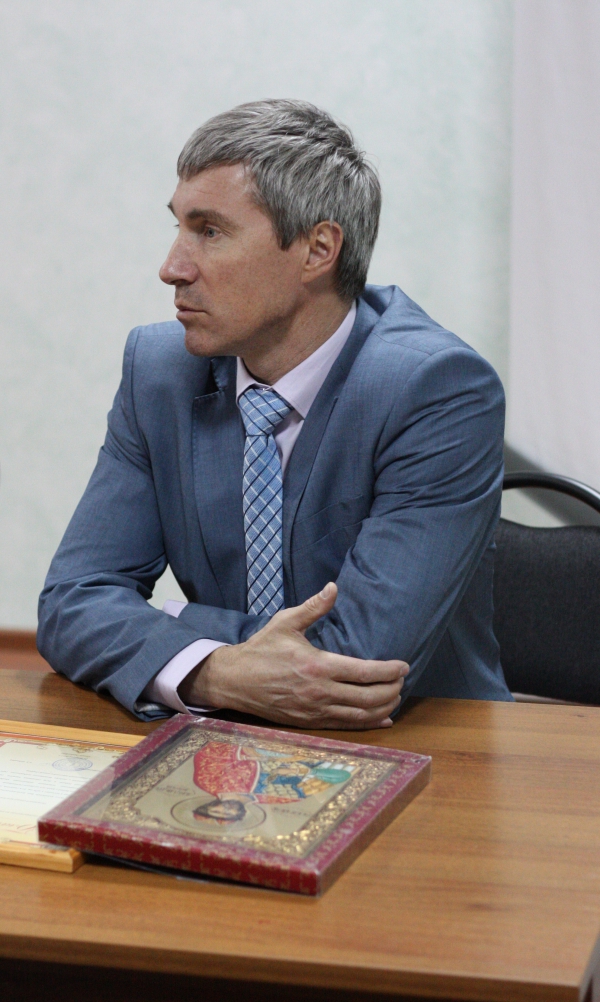
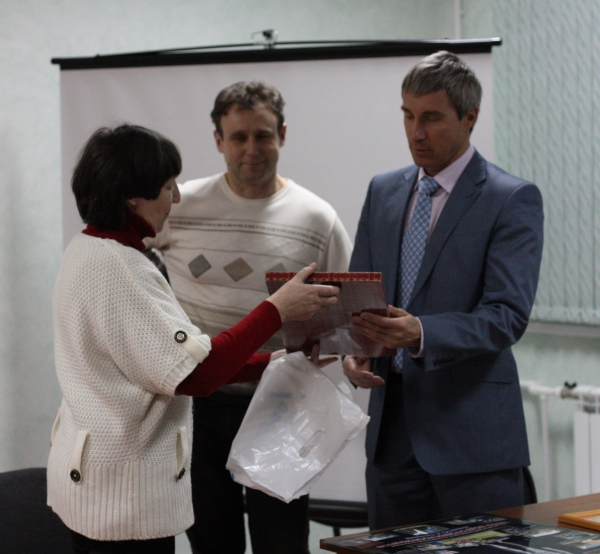
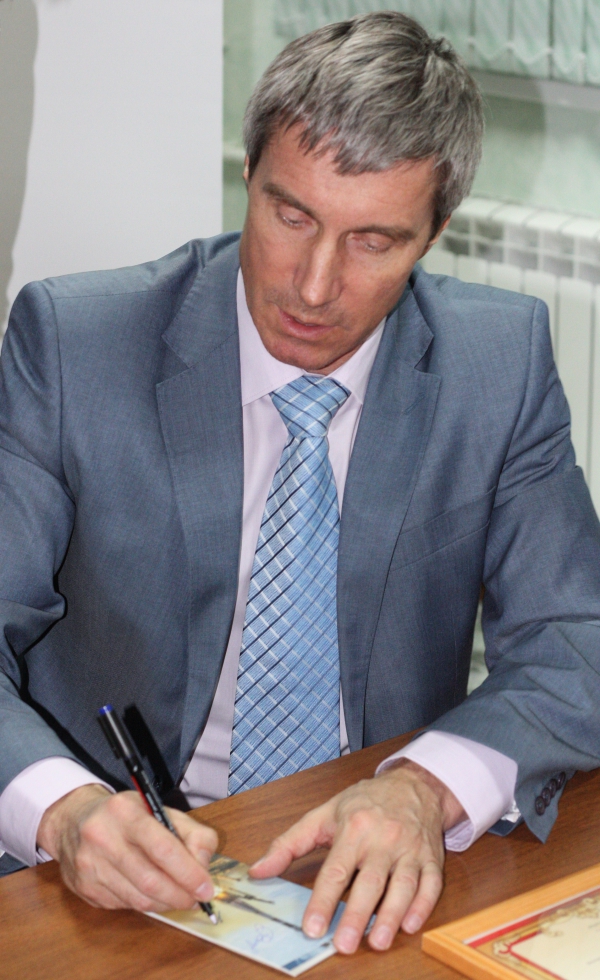
8/2/2011
TsPK: Last week ended with a two-day seminar on “Peter in Cosmos,” which took place under the “Weekend in the Cosmos”. Cosmonaut Training Center students visited the military-patriotic club St. George of St. Petersburg. They toured the Star City simulators, met TsPK personnel and visited the Chkalovskii airfield. Sergei is in photo kollektivnoe foto.
10/2/2011
TsPK: Cosmonaut Sergei Ryzhikov and TsPK professionals visited a rally for the preinduction and recruitment of young people in Kirzhach, at the FGUP/ФГУП flight test facility. The holding of such gatherings that involve students in the educational district schools, military and patriotic associations, Vladimir and Yaroslavl region, has become a tradition in Kirzhach. Sergei Krikalyov appears in photo vmeste.
16/2/2011
TsPK: Today, 16 February, at the Cosmonaut Training Center was held the Cathedral Youth II Meeting of the World Russian People’s Council, dedicated to the 50th anniversary of the first manned space flight. The meeting was organized by the Patriarch of Moscow and All Russia, head of the World Russian People’s Council (WRPC) Kirill, the Cosmonaut Training Center and the Moscow State Technical University, Bauman. Sergei is in photo vistyplenie Krikaleva.
18/2/2011
TsPK: The second annual Media Day – a day in the life of the Cosmonaut Training Center through the eyes of the press. The journalists had the opportunity to see training in neutral buoyancy, see the Soyuz trainers and the Russian segment of ISS, and to attend the simulation training in a centrifuge. They were also able to interview cosmonauts, trainers, experts and crews. Sergei is in photos: krikalev, vmeste.
22/2/2011
TsPK: 23 February is Fatherland Defender’s Day. Since 1993, the Russian Armed Forces have undergone significant qualitative changes in their development and structure, and adopted a new look. They form the basis of national defense and are designed to provide armed protection of the integrity and sovereignty of our state. On 22 February, in connection with the Day of Defender of the Fatherland, the Cosmonaut Training Center held a solemn meeting, at which leaders congratulated servicemen, civilian personnel and cosmonauts on the upcoming holiday. For many years these people have made a significant contribution to science and supported the credibility of Russia as a great space power. In accordance with the order of the TsPK Chief, SK Krikalev, cosmonauts Oleg Novitskii, Aleksander Misurkin, Alex Ovchinin, Eugene Tarelkin, Konstantin Valkov, Dmitri Kondratiev and other staff of the Centre were awarded marks, certificates and diplomas for high performance in professional activities, approximate labor discipline and conscientious performance of official duties.
4/3/2011
TsPK: At 8:20 a.m. the ISS-27/28 backup crew reported to the State Commission – the Chairman of the Commission Chief of Cosmonaut Training Center, SK Krikalev, his deputy for the training of cosmonauts OV Kotov, cosmonaut commander V. Lonchakov, a representative of RSC “Energia” EN Zhuka and M. Foale, NASA representative, on the readiness of the crew to train. Then the crew pulled out an envelope with a list of contingencies that they would be presented with during their training. Sergei in photos: Osn, Voprosy pressy.
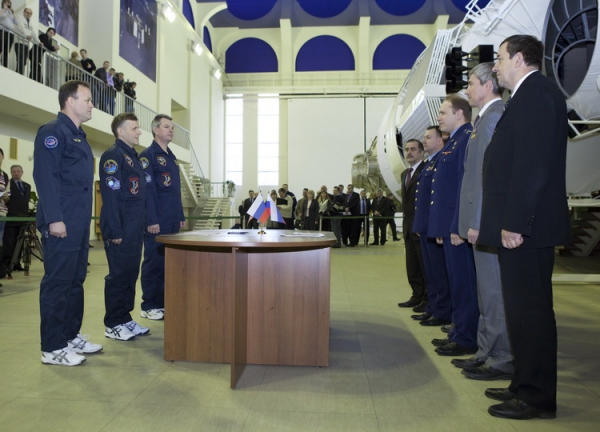
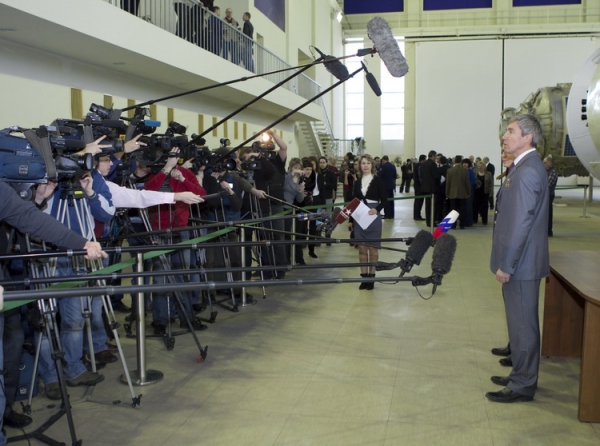
5/3/2011
TsPK: Training exams for the ISS-27/28 prime and backup crews on the Soyuz TMA simulator. Sergei is in photo Vosem dvadtsat.
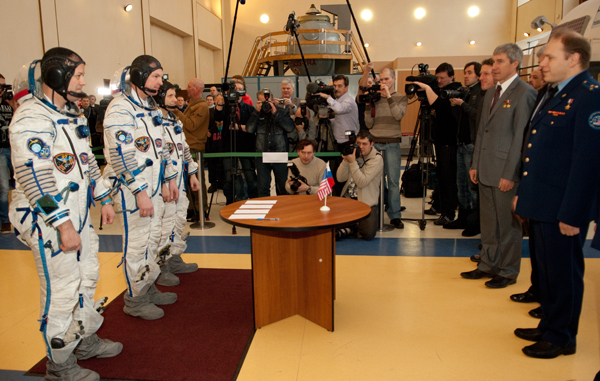
TsPK: SK Krikalev on behalf of all men sincerely congratulated the women in the Centre for International Women’s Day on 8/3. The TsPK Chief Head sent female employees a letter of appreciation and awards for outstanding performance in professional activities, hard work and conscientious performance of official duties in the preparation of domestic and foreign cosmonauts. Photos: Krikalev, press.


9/3/2011
TsPK: Yuri Gagarin’s birthday. International social science readings have been held in his home village of Glushino since 1974. Among the honored guests of the 38th Gagarin Lectures were legendary cosmonauts from the first group – AA Leonov, Volynov, Gorbatko – the Head of Cosmonaut Training Center, SK Krikalev, the cosmonaut commander V. Lonchakov, recently returned from a flight and the ISS-27/28 prime and backup crews preparing for flight. By long tradition, guests from Star City went to the cemetery to honor the parents of Yuri and put flowers on their graves. Sergei is in photos: Na kladbishche, Meeting.
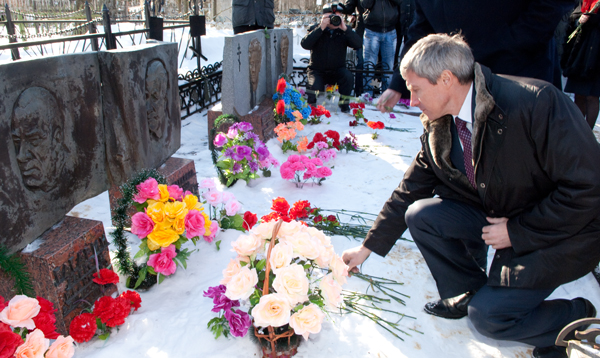
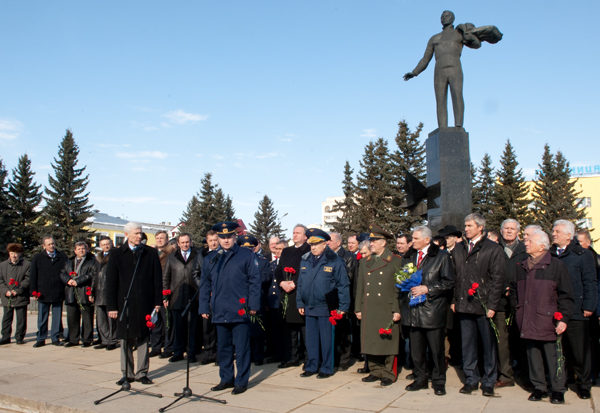
10/3/2011
Energiya photo-report: “The General Designers’ Review Board devoted to the Russian Segment (RS) of the International Space Station (ISS) was held at OAO S.P. Korolev Rocket & Space Corporation Energia under the chairmanship of V.A. Lopota, the Corporation President and General Designer.” Sergei appears in photos 3, 14, 20.


11/3/2011
TsPK: ISS-27/28 press conference. Sergei is in photo pk4.
TsPK: Ceremonies commemorating Yuri Gagarin in Smolensk Oblast, in the village where he was born, Glushino. Every year veteran cosmonauts, TsPK personnel and community leaders come to honor the memory of the first cosmonaut. Sergei appears in photo Krikalev govorit.
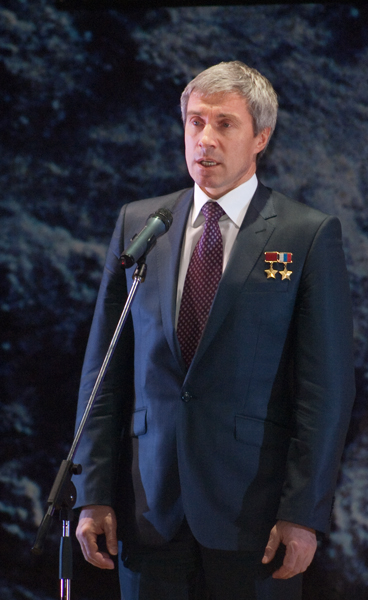
12/3/2011
TsPK: Traditional visit to Red Square by the ISS-27/28 prime and backup crews, followed by a tea party with the Federal Space Agency Head Anatolii Perminov Nikolaevich. Sergei is in photo chayepitiye.
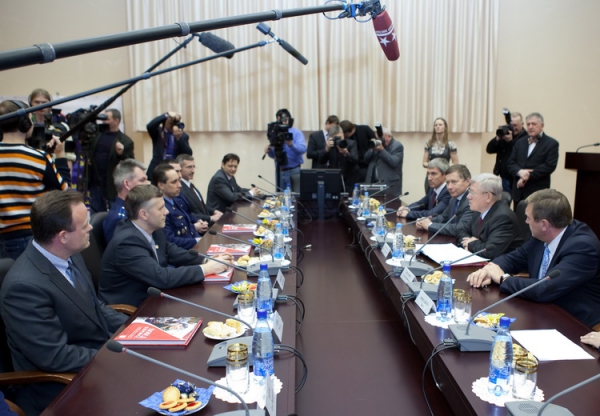
17/3/2011
TsPK: The Vladimir branch of the Russian Academy of National Economy and the Public Service under the President opened an exhibition space of the Museum on the 50th anniversary of the first manned space flight. Sergei is in photos: gosti vistavki vo vladimire.
18/3/2011
TsPK: Press conference at Star City for the soon-to-depart ISS-25/26 crew. Sergei is in photo ekipazh i rykovodstvo CPK.

21/3/2011
TsPK: After the traditional breakfast and farewell, the ISS-25/26 crew departed from Chkalovskii Airfield near Star City for Baikonur Cosmodrome. Sergei is in photo ekipazg kosmonavti rykovodstvo.

22/3/2011
TsPK: Sergei represented TsPK in Paris, along with deputy TsPK Head cosmonaut Oleg Kotov, for the celebrations dedicated to the 60th anniversary of the International Astronautical Federation (IAF) and the 50th anniversary of Yuri Gagarin’s flight.
1/4/2011
Financial Times: “USSR and Russia: Sergei Krikalev”. Interview with Sergei.
3/4/2011
TsPK: Traditional meeting of the State Commission at Baikonur Cosmodrome, who approve the launching of the main and backup crews. Sergei presented a report on the composition of the main and backup crews. Sergei is in photos: gk1, 22.
5/4/2011
TsPK: Soyuz TMA-21 launches from Baikonur Cosmodrome. Sergei is in photo st9.
8/4/2011
TsPK: The Cosmonaut Training Center notes the international day of human space flight for 12/4. Cosmonaut veterans, Roskosmos and space industry representatives, the administration of the Moscow region, management and staff of the Centre laid flowers at the monument to Y. Gagarin in anticipation of the day. Sergei is in photos: krikalev, Shatalov.

9/4/2011
TsPK: “I am assured, more interested persons will become cosmonauts” – an interview with TsPK chief Sergei Krikalyov. (Also at 63.ru.)
12/4/2011
TsPK: On 9 and 10 April in Kaluga, the international conference “The Man – Earth – Space,” dedicated to the 50th anniversary of the space flight of Yuri Gagarin, took place. Sergei is in photos i ewee, konferenvua, priem,
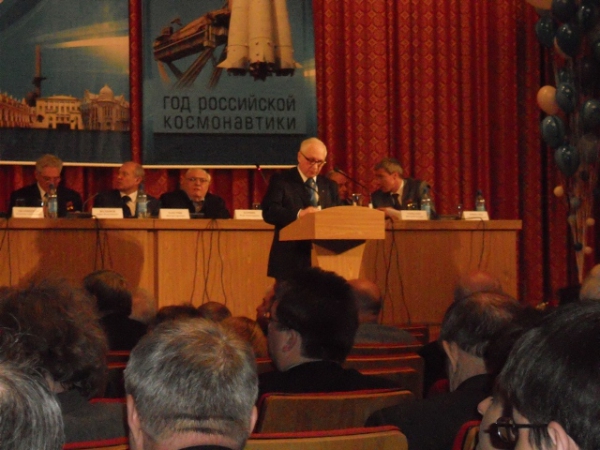
13/4/2011
TsPK: 50th anniversary celebrations at Star City of Yurii Gagarin’s spaceflight. Sergei is in photo prazdnik3.
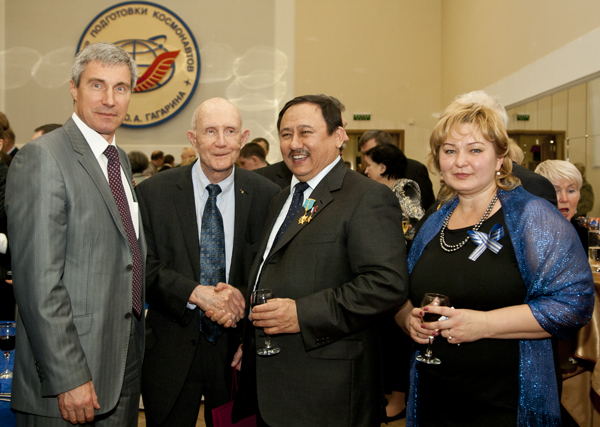
Random photo of Sergei swimming from another article for that day on cosmonaut fitness training.
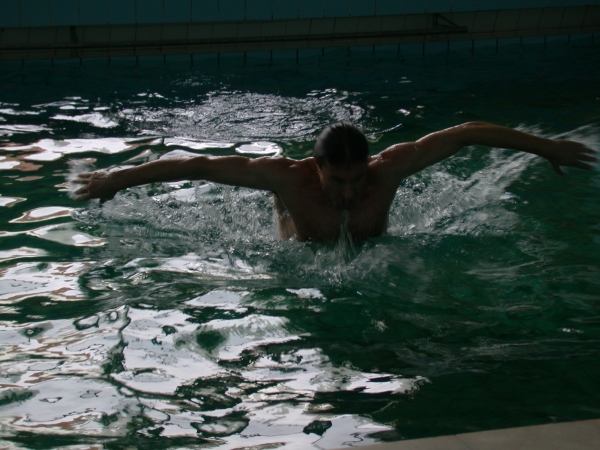
14/4/2011
TsPK: A traditional post-flight celebration of the ISS-25/26 crew at Star City. Sergei is in photos mnogo, re4, krik.


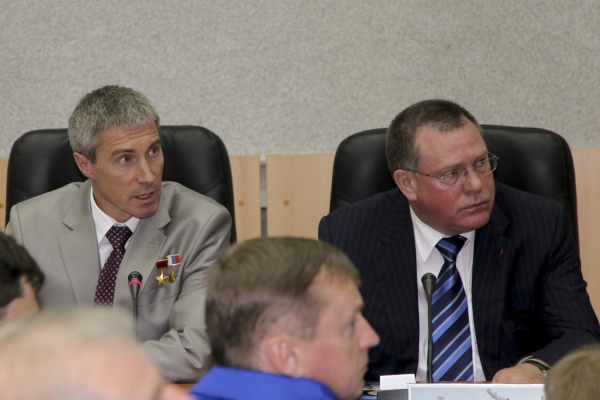
21/4/2011
TsPK: Sergei attended the opening of an exhibition on the history of Soviet-Russian space flight in Budapest on 19/4. Sergei in photos: rc_budapest_20.04.11, rc_budapest_20.04.11_2.
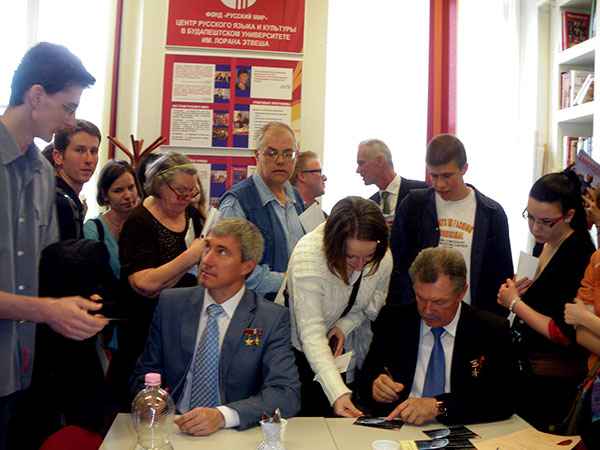
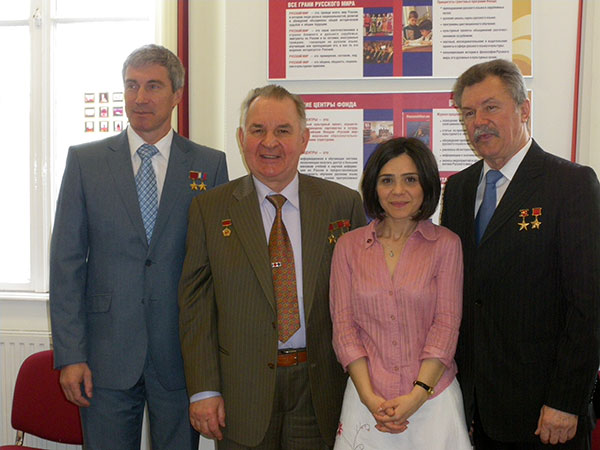
23/4/2011
TsPK: Sergei presented awards to the winners of the competition “The Unknown Gagarin”. The competition was organized by the Ministry of Defense, the Department of Education, Moscow Region, TsPK, and the Russian Space Forces. It was attended by students of military schools, Suvorov military schools and Defense Ministry boarding pupils. The works by boys and girls study the unknown biography pages of the first cosmonaut of the planet Earth. One of the nominations of the contest included the construction of current technical models. The ceremony was held in the hall where the simulator of the Mir space station resides. The hall was restored for International Space Day, and now there is mounted a photo exhibition which was opened in the Federation Council on April 5. Sergei Konstantinovich so enthusiastically talked about the spacecraft, flying about, the work on space stations, the guys were ready to listen to it for hours. Sergei in photos: zal11, zal2, zal7.
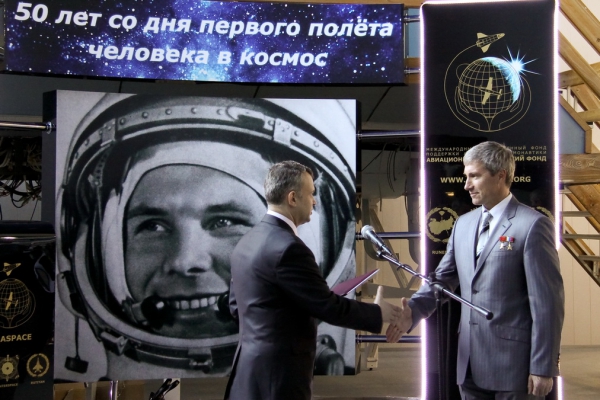
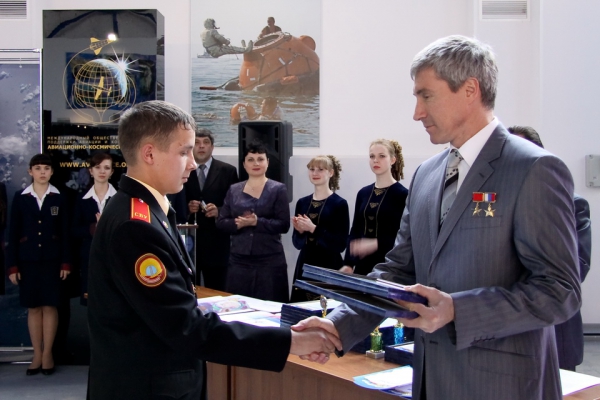
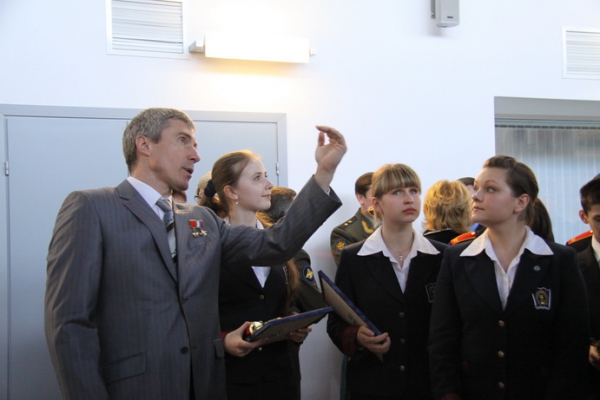
27/4/2011
TsPK: The Council of Federation Committee on Defence and Security held an expanded meeting on the topic: “The development of space industry in the national security of the Russian Federation” at Star City. SK Krikalev presented his report in which he touched on several important issues related to the activities of the CPC. He said that in the first place, it is the social security for employees of the organization. “The manned space program – is, first of all, people who work here. If we do not seriously raise the salary to employees of the Centre, there is a real risk of loss of skills.” He proposed to consider additional medical insurance. “For the civilian specialists who conduct training, testing works harmful to health, there is no mechanism for compensation.”
Sergei Konstantinovich raised the question of granting an official status certificate (diploma), which is issued to the cosmonauts after the passage of general space training. Krikalev gave special attention to the issue of funding the Center for future development which has been allocated 300 million rubles. These funds was only enough to “fill in old holes.” During his speech, Sergei Konstantinovich noted a contradiction in Federal Law 94, Part 2, Article 55. For example: “In the case of an emergency landing by cosmonauts due to an off-nominal situation (fire, depressurization), the CTC will announce a contest in order to evacuate cosmonauts. These competitions take several weeks.” Sergei in photos: sovet federacii1, sovet federacii2, sovet federacii4, sovet federacii10, sovet federacii11, sovet federacii12.


5/5/2011
TsPK: The Ambassador of the Republic of Kazakhstan in Russia, Zautbek Turisbekov (Заутбек Турисбеков), visited the Cosmonaut Training Centre. During the meeting with the head of the Center, Sergei Krikalev, and the first woman-cosmonaut Valentina Tereshkova, was discussed topical issues of bilateral cooperation and interaction in the space industry.
6/5/2011
TsPK: On the eve of the Victory, veterans of the Great Patriotic War were officially congratulated in the Cosmonaut Training Center, having contributed to the work of cosmonaut preparation. In his congratulatory speech to the veterans Sergei Konstantinovich Krikalev spoke. “Dear veterans! Your deeds are beyond time. They were and are a model for living and future generations. Without you there would be this great holiday, Victory Day, as well as of this year’s 50th anniversary since the first human space flight. You have made an invaluable contribution to the space industry and the training of cosmonauts.” Sergei in photo VVOV1.
12/5/2011
TsPK: The ISS-28/29 crews began exams on the Soyuz TMA-M simulator. Sergei in photos: komekztr282921, komekztr282925.
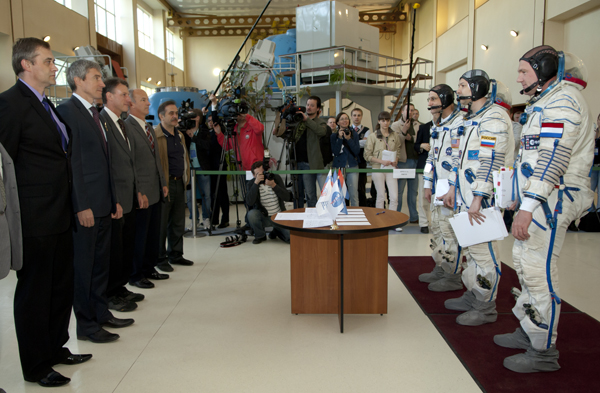
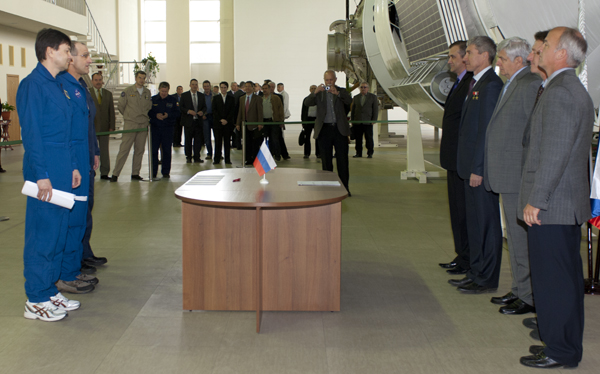
14/5/2011
TsPK: A festive evening devoted to the 50th anniversary of Yuri Gagarin’s flight was held at the cultural center of the MFA (МИД) of Russia. The invited guests were able to see photographs by Sergei Krikalev. The exposition is called “Art of the Creator” and is a series of photographs taken during space flights. “We should remember and be proud of the achievements of local engineers and scientists, cosmonauts – all those who contributed to the development of world spaceflight,” Sergei said. Photos: mid7, mid8.
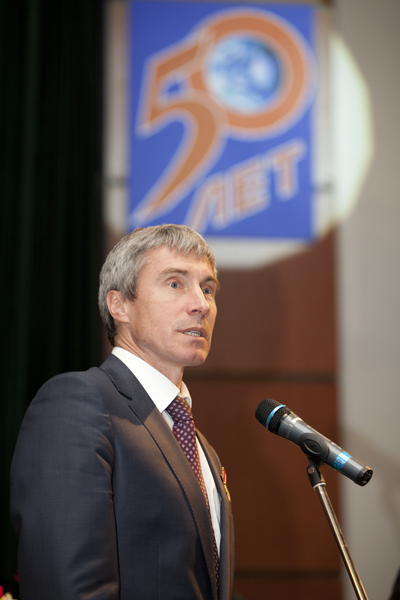
17/5/2011
TsPK: ISS-28/29 complete their flight training and the usual press conference was held at Star City. Sergei appears in photos: zavdenpod28291, zavdenpod28292.
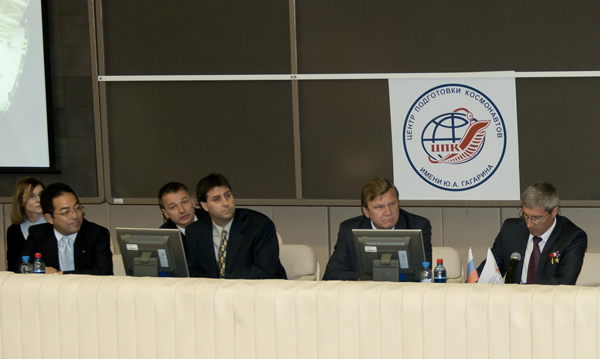
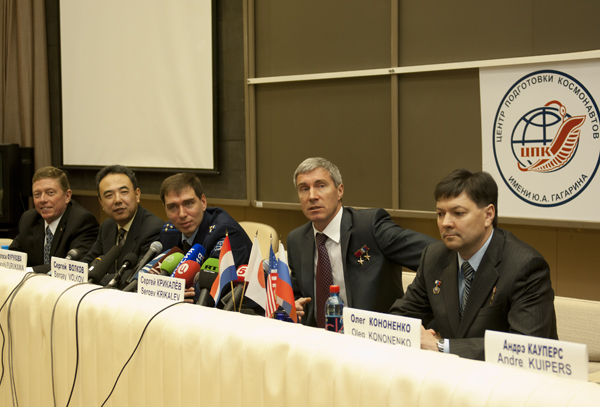
18/5/2011
TsPK: Today marks the 20th anniversary of the launch of Soyuz TM-12 with the Expedition 9 crew to the station Mir. The crew were Commander Anatoly Pavlovich Artsebarskii, flight engineer Sergei Krikalev and British female astronaut Helen Sharman. Helen Sharman attended the anniversary at TsPK in this photo with Sergei.
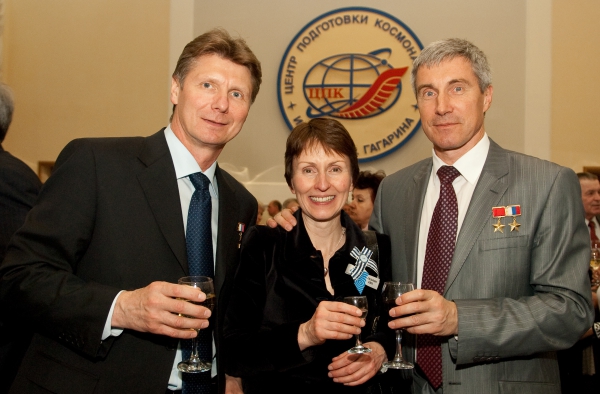
25/5/2011
TsPK: The Federation Council inaugurated the photoexposition “Art of the Creator” by Hero of the Soviet Union, Hero of Russia, cosmonaut, an honorary member of the Royal Photographic Society of Great Britain, winner of National Award in Photography “Golden Eye of Russia” – Sergei Krikalev. The opening was attended by members of the Federation Council, cosmonauts Vladimir Dzhanibekov, Boris Volynov, Yuri Baturin, representatives of the Office of the President of the Russian Federation and prominent cultural figures. Viktor Ozerov, chairman of the Federation Council Committee on Defense and Security, greeted the audience. He said: “If a person is talented, he is talented in everything. It is necessary that many people see this work – it is the key to the future of the domestic space, it is an impulse to awakening the interest of young people and children to the cosmos. Sergei Krikalev could not just take pictures of Earth from orbit and put the soul, to show the unique, wonderful moments and landscapes. To all of us with you to understand how beautiful, how unique our planet.”
Pilot-Cosmonaut Vladimir Dzhanibekov noted his colleague’s remarkable ability to catch the right angle to make the perfect shot. “More than one thousand five hundred people in the world have visited the Space Station. They also took photos, but Sergei Krikalev took them in a manner that was second to none. It is labor and the artist’s talent,” said Vladimir. The cosmonaut’s camera captures the erupting volcano and sandstorms, forming hurricanes and typhoons, and even local man-made disasters. Sergei Konstantinovich himself, speaking at the opening ceremony, said about the uniqueness of the Earth, which he observed, “We look at the stars from Earth, into space. And once there, we have as much interest in looking at the Earth. We see the most unique images that can only be observed from orbit, and wish that all people could see it.” Photos: 11584, v2.
26/5/2011
TsPK: Sergei took part in the World Russian People’s Council. Sergei Krikalev, speaking at a meeting of the Council, noted that the cosmonaut training center is already working with the World Russian People’s Council. “This year in February on the basis of our Youth Center held a meeting of the Cathedral. We have assembled the best students of science and technology universities, the future designers, engineers, inventors. Now you can hold meetings and discussions between people of the humanitarian, scientific and technical knowledge, whose purpose is to search for answers to global issues facing Russia and the world.” He added that, unfortunately, many of the values have now become blurred and it jeopardizes the ability to save our priorities, achieved in previous years. “The loss of values is most dangerous to young people. In order to be able to acquaint the younger generation with the achievements of space science, to teach them to create new technologies, in the Cosmonaut Training Center created the Youth Space Centre. We realize that the education of morality should be as important a challenge as the transfer of knowledge. Our challenge is to educate not only knows the working person, but a complete person, living consciously, soulfully, benefiting not only themselves but also their neighbors and Fatherland.” Photo: sobor260511.
TsPK: Cosmonaut Dmitrii Kondrat’ev held a press conference at the Cosmonaut Training Center. Sergei added: “We watched the landing, the calculation accuracy was good. The capsule went down and stood upright on its tracks, and had not the slightest ‘drift’.” Photo: S_Krikalyov.
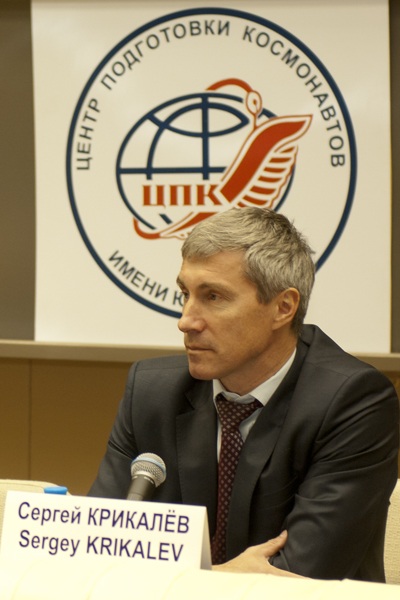
8/6/2011
TsPK: Departure of Soyuz TMA-02M crew from Baikonur. Sergei appears in photo st15.
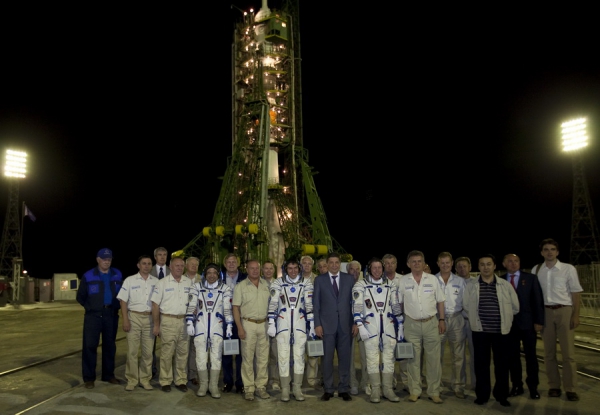
29/6/2011
TsPK: Post-flight press conference and traditional welcome meal for the ISS-26/27 crew at the Cosmonaut Training Center. Sergei appears in photos: IMG_9603, IMG_9595, IMG_9550, vstrecha3, vstrecha6, vstrecha7, vstrecha11.


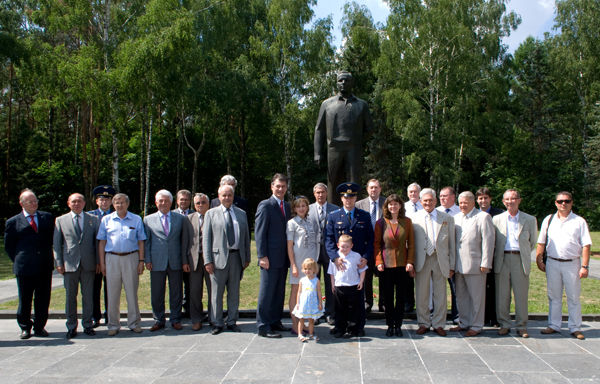
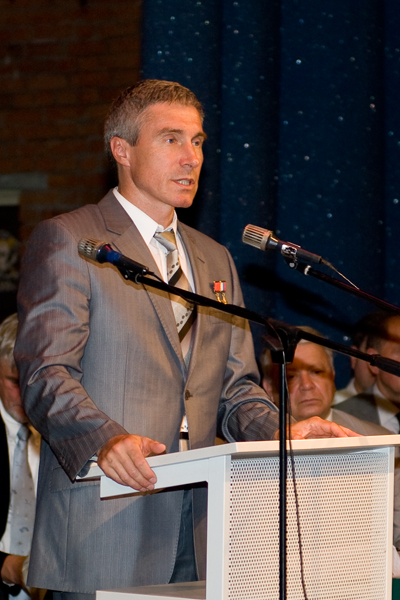
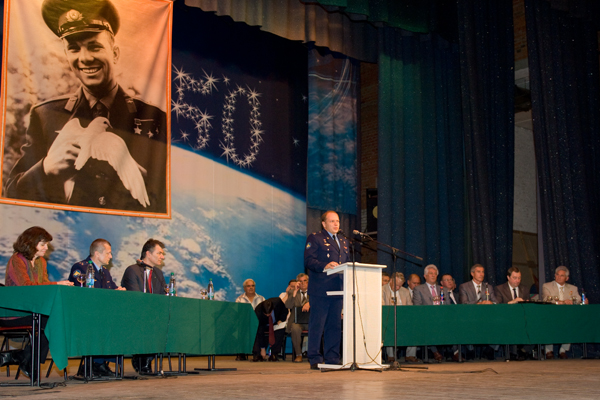
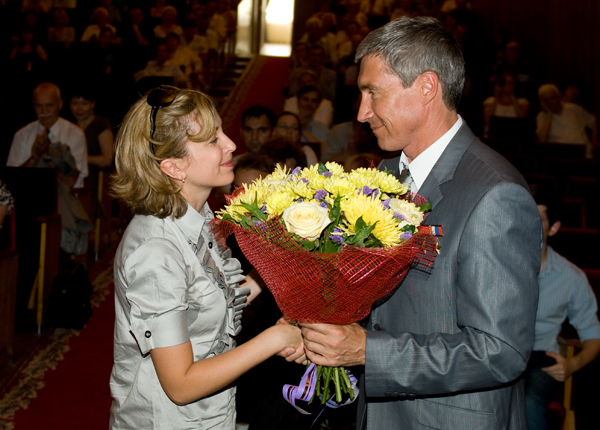
14/7/2011
BBC News: “On the shoulders of space giants”.
15/7/2011
Independent: “Sergei Krikalev believes in a starry future”.
25/7/2011
TsPK: Sergei visited the Drakino airfield for the 20th anniversary championship of Russian aircraft sports. He spoke to those present at the Championship and the Serpukhov District Head, Alexander Shestunom. They discussed the further development of sport flying in the area and prospects for Russian and international competitions. Photo: shestun_krikalev_p.
26/7/2011
TsPK: Sergei headed a seminar for young professionals – “Cosmonaut Training Center. Yesterday. Today. tomorrow.” Professionals who work at CTC no more than six months, had an opportunity to learn in detail about the specifics of the agency where they work, and to see the base, which is the basis of preparation of domestic and foreign cosmonauts. Sergei appears in photos: Beginning, Pavlovskij i Krikalev.
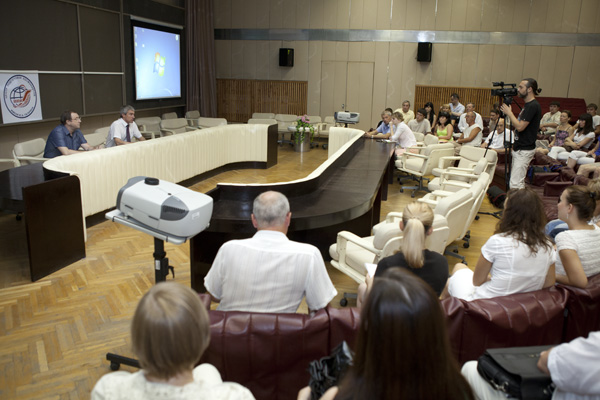
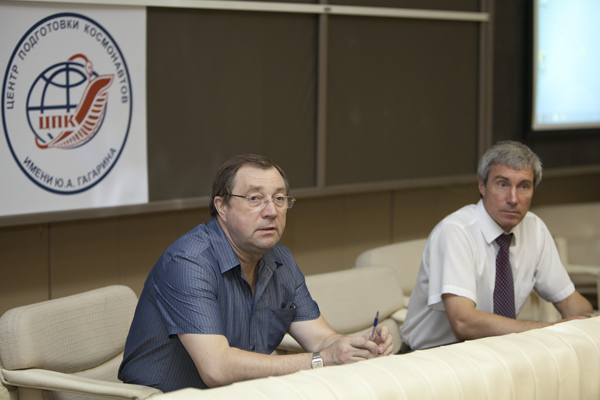
An exhibition, “Earth through the porthole,” based on some of Sergei’s space photos, is held at the Engineering building fortress in St. Petersburg. A trivia note is that Sergei is a honorary fellow of the Royal Photographic Society of Great Britain.
1/9/2011
TsPK: The ISS-29/30 crew begin their comprehensive exam training. Sergei appears in photos 31R_9689, 31R_9727, 31R_9804.
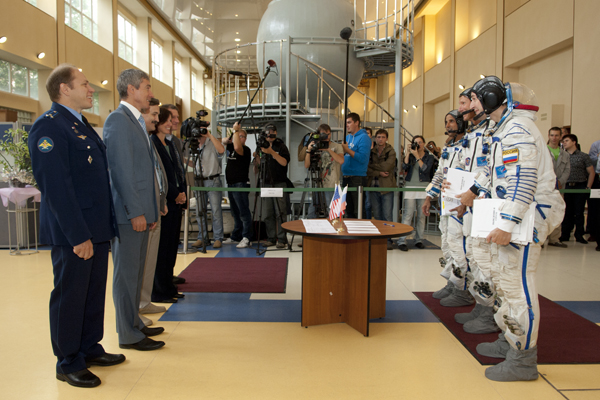
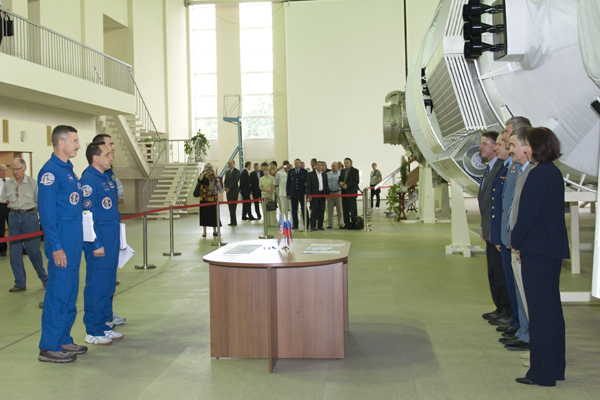
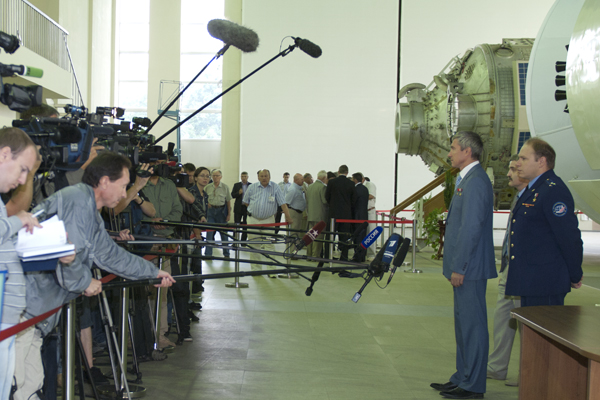
5/9/2011
TsPK: Sergei attended the 24th Congress of the Association of Planetary Space Flight Participants in the Cosmos Hotel, Moscow. He appears in photos kongress_24_6, kongress_24_7.


9/9/2011
TsPK: A tour of the Cosmonaut Traning Center for representatives of the British media. Sergei appears in photo: britan-cmi_5.
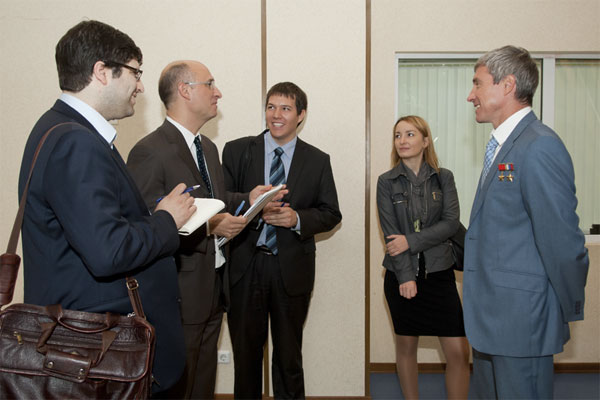
13/9/2011
Sergei was in Kaluga, participating in memorial services and readings at the Kaluga Administration Region’s Town Hall for Konstantin Tsiolkovsky (whose birthday is 17 September). Sergei presented a report, “50 years of manned space flight: analysis and perspectives” («50 лет пилотируемых полетов в космос: анализ и перспективы развития»). (Source: NK)
16/9/2011
Energiya photo-report: “At 07:59:39 AM, Moscow Time, Soyuz TMA-21 descent vehicle made a soft landing in the designated landing area to the South-East of Dzhezkazgan in Kazakhstan.” Sergei was watching from TsUP (Mission Control Center) in Moscow, and appears in photos 7 and 9.


TsPK: Sergei appears in photo tarhan_3 at TsUP, and greeting the crew at Star City in photo zv-gorodok_4.


19/9/2011
TsPK: Soyuz TMA-21/ISS-27/28 crew press conference at Star City. Sergei appears in photos: press_1, press_4, press_6, press_7, press_8.

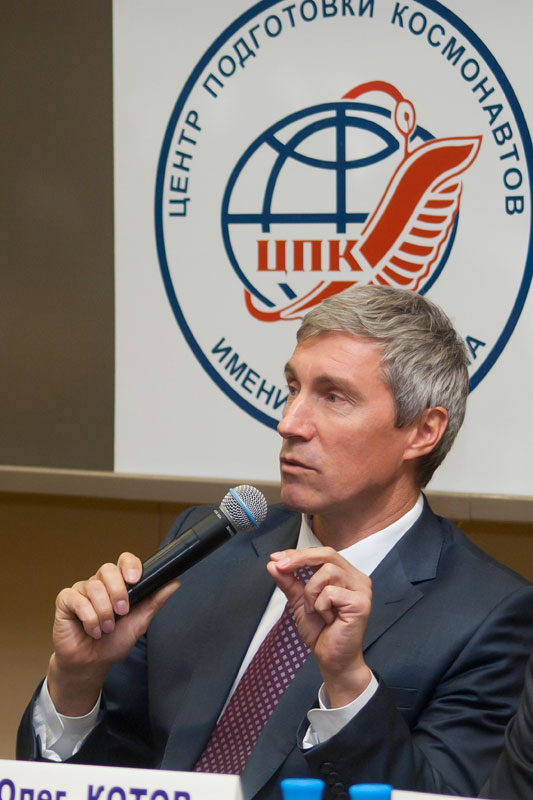
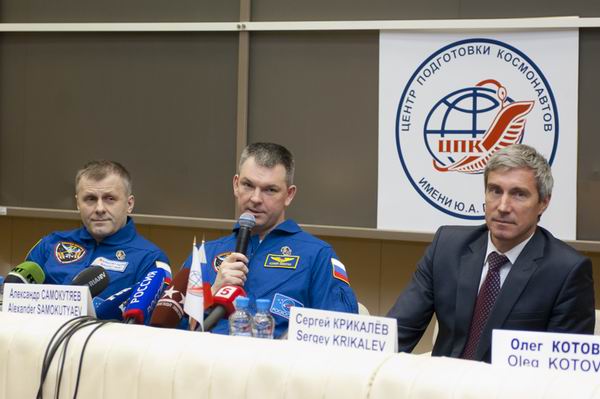
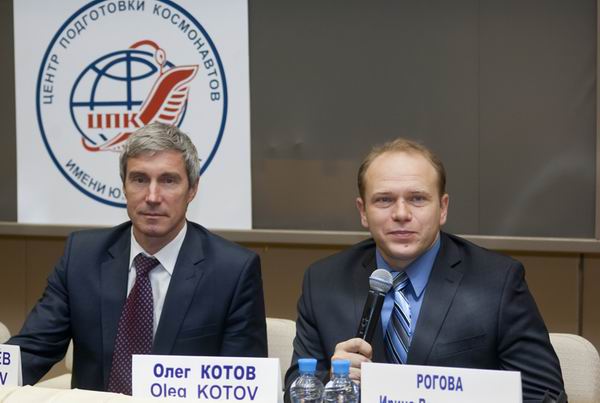
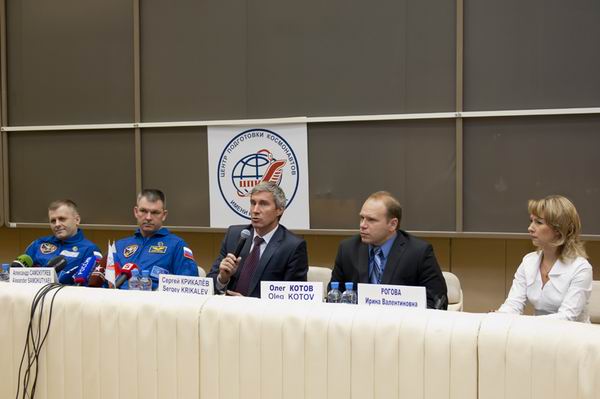
3/10/2011
TsPK: On 2/10 the traditional open tournament in rhythmic gymnastics, “Rainbow Autumn,” was held at the GCTC Sports Complex. The tournament was attended by teams from different cities of Russia: Samara, Akhtubinsk, Syktyvkar, Sosnovy Bor, Dzerzhinsk, Moscow and Moscow region. Sergei Konstantinovich congratulated participants of the competition and wished them luck. He noted the skill and the excellent preparation of the speakers, expressed appreciation to the coaches and congratulated them on their coming professional holiday – Day of the teacher. “Coaches, like teachers, are making an invaluable contribution to the children’s future.” Sergei appears in photos gimnast_2, gimnast_3, gimnast_4.
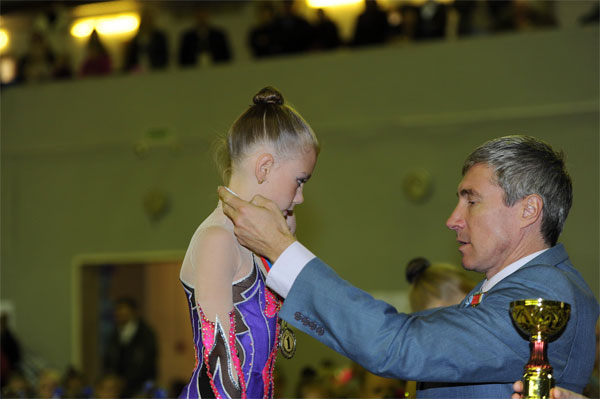
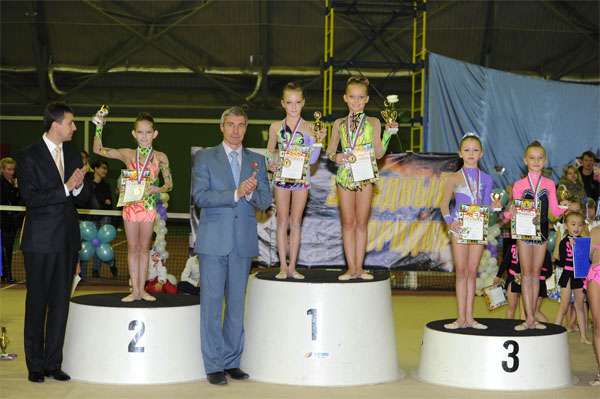
7/10/2011
TsPK: A traditional meeting and celebration of the recently-returned ISS-27/28 crew at Star City. Sergei is in photo polet-off_2

TsPK: The crew also laid flowers at the monument to Yurii Gagarin. Sergei is in photo geroi_1.
18/10/2011
TsPK: The International Space Forum was held in the Cosmonaut Training Center, the first time it took place there. Sergei welcomed the guests and wished them successful and fruitful work. “It is hoped that the forum will share their ideas and expectations in terms of near-earth space and provide long-term projects for the implementation of interplanetary missions.” During the period of the forum to hold two scientific conferences will be held: “Manned space flight” (FGBU “Research Cosmonaut Yuri Gagarin,” ФГБУ «НИИ ЦПК имени Ю.А. Гагарина») and “Actual problems of space biology and medicine” with the satellite symposium “Life-support systems for manned space flight” (RAN, РАН). Sergei is in photos forum_1, forum_2.


TsPK: The organizers and special guests of Space Forum 2011 answered questions from journalists.
“With the development of civilization, from the first manned mission to space science took a big step forward, which resulted in prolonged space flights on the constantly manned International Space Station. In connection with this complicated problem facing astronauts are increased demands on their health. Conquerors of Space, you must have a very extensive knowledge in various fields. If from the beginning of preparation before the first manned space flight took place only a year, it is now preparing itself for a space flight lasts 1.5 to 2 years,” said SK Krikalev. […]
The final question of the journalists had been addressed to SK Krikalev. He was asked to comment on the possibility of development of the Moon, near-Moon space, a lunar manned lunar bases and facilities (this topic was raised in the report of the Cosmonaut Training Center, “Human missions from Yuri Gagarin to the ISS and to fly in deep space”.)
“Given the current level of science and technology in the future the Moon can become a platform for testing Mars exploration technologies, and perform other manned missions in the solar system. The main requirement for manned missions to the Moon or Mars is to ensure safety of the crew, which must take into account a number of features. For example, for the Moon are: lack of an atmosphere, high radiation, temperature drop; for Mars: a significant distance from the Earth, the need for a powerful power plants, possibly radiation and bacteriological danger.
“Interesting data were obtained from the Japanese satellite ‘Kaguya’, who discovered the hole on the lunar surface diameter of 65 m and a depth of 100 m. If once volcanic processes occured on the Moon was, these holes can be input into the lava tunnels. If in such a tunnel to place living and working compartments, it can be reliably protected from exposure to radiation and to decide, therefore, one of the most important problems of life on the Moon. The temperature inside the tunnel at a thickness of 1-2 m set can be stable at −30 to −40°C. It is also important for life support.
“There are several possible ways to build a lunar base in a lava tunnel. In our opinion, the most effective and safest would be to use inflatable structures for the formation of the main residential and business sections of the lunar base. Optimum could be considered a development of such tunnels, and boost placement of modules could be performed by robots with minimal involvement of astronauts or no. The share of astronauts could be assigned functions such as their re-entry, assembly, bringing into operation the service, scientific, and household equipment.”
Sergei is in photos cosm_forum_1; cosm_forum_2, cosm_forum_8.


21/10/2011
Energiya photo-report: A session of the Council of Chief Designers for the Russian Segment of the International Space Station. Sergei appears in photos photo_10-21-03, photo_10-21-10, photo_10-21-24.


Sergei was apparently not too impressed by the soon to be completed Mars-500 experiment, as quoted in the Wired.com article “Guys in a Capsule”:
In Russia, I encountered deeper skepticism among cosmonauts, who tend to live just outside Moscow in an elegant, tree-lined enclave known as Star City. When I ventured there one day, I spoke to Sergei Krikalev, who has spent 803 days in outer space – more than any other human being – and he scoffed at Mars500. “If you spend 500 days sitting in a chair,” he asked, “does that make you a race car driver?”
24/10/2011
TsPK: Press conference with the ISS-29/30 crew. Sergei is in photos pressa_1, pressa_4, pressa_7.


26/10/2011
TsPK: In the Cosmonaut Training Center a meeting of young diplomats from the Russian Foreign Ministry and the international diplomatic community took place, dedicated to the 50th anniversary of the flight of Yuri Gagarin into space. Sergei appears in photo 1026_diplomat_7.

3/11/2011
TsPK: On the eve of the All-Russian Festival “Unity Day” in the large conference hall of the Presidential Administration VI was held the “Russian of the year” ceremony for the National Prize of public recognition of the achievements of citizens of the Russian Federation. For outstanding contribution to the development of Russian spaceflight, the prize “Russian of the Year” was awarded to Sergei K. Krikalev.
7/11/2011
TsPK: Kazakhstan Prime Minister K.K. Masimov visited several enterprises and organizations of missile and space industry including the Cosmonaut Training Center. He was given a tour by Sergei.
12/11/2011
TsPK: After the state commission approved the composition of the ISS-29/30 primary and backup crews, cosmonauts talked over a cup of tea with the leaders of the Russian Space Agency. Sergei appears in photo chaepitie1.

13/11/2011
Energiya photo-report: The State Commission held its meeting at Baikonur launch site where the primary and backup crews for Soyuz TMA-22 were approved and the readiness of the space launcher system was confirmed. Sergei appears in photos 1, 12.


14/11/2011
TsPK: Soyuz TMA-22 is launched on a snowy morning at Baikonur. Sergei appears in photos start14,start15.


22/11/2011
TsPK: The ISS-28/29/Soyuz TMA-22 crew are welcomed back to Star City. Sergei appears in photos IMG_0363, IMG_0381.
24/11/2011
TsPK: Sergei gives champion boxer Kostya Tszyu (who resides in Australia) a tour of the GCTC. Sergei appears in photos kosta1, kosta2, kosta3.
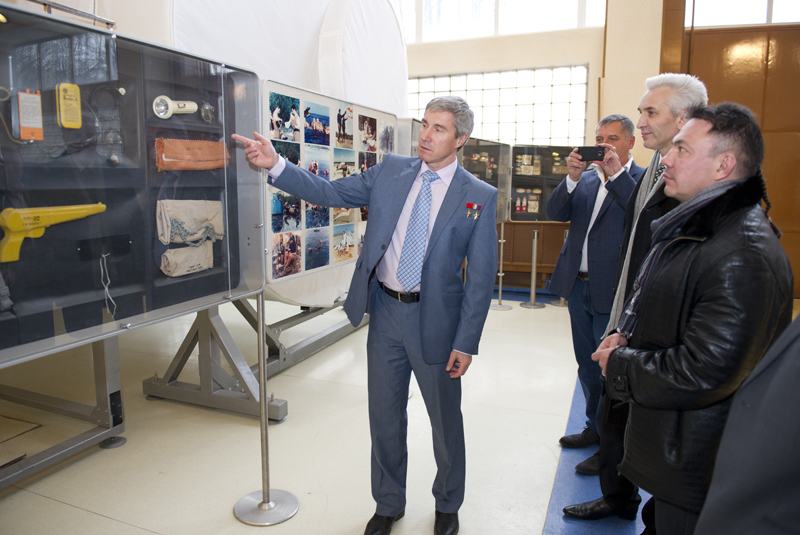
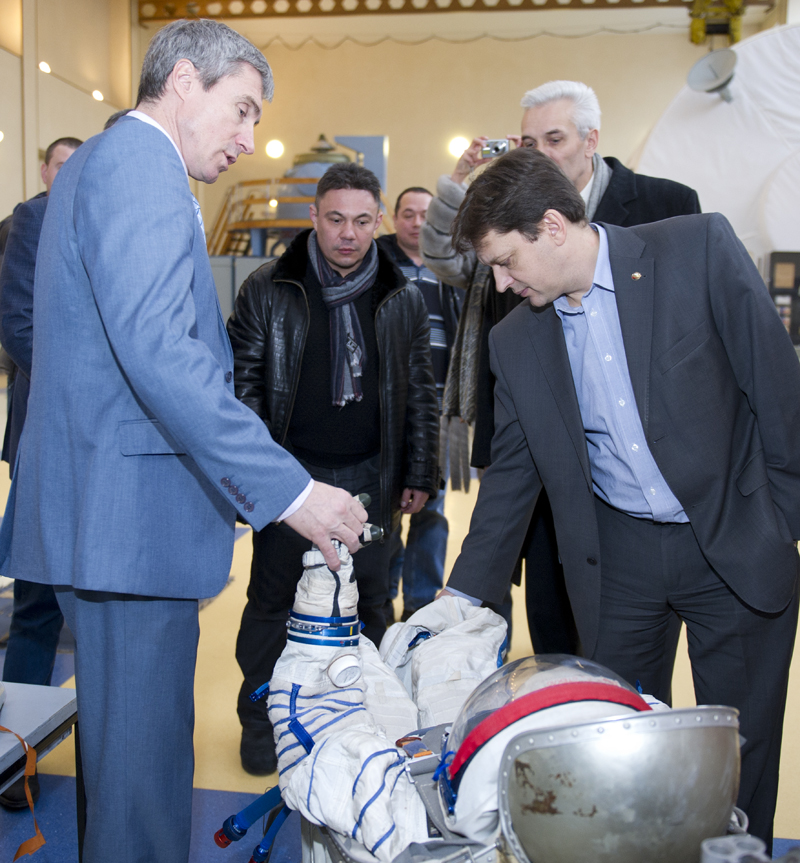
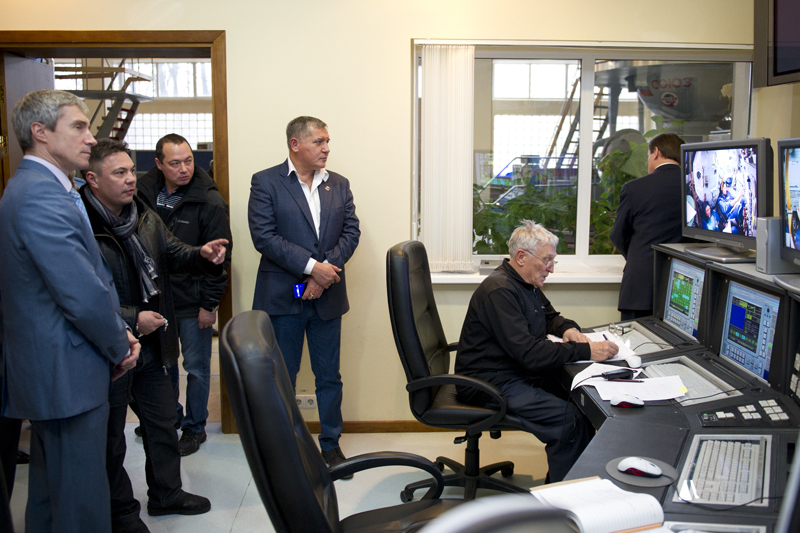
25/11/2011
TsPK: Press conference with Soyuz TMA-22 commander Sergei Volkov. Their thoughts on the Progress M-12M/44 accident and Mars-500 experiment (slightly corrected Google translation):
Members of the media: What were your feelings when the accident occurred with the Progress? Maybe if it was leaving the Station in an emergency ?
Sergei Volkov: Very sorry to lose the ship. Not because there lay the goods, parcels – all in the end. It's a pity that the accident occurred and the cause was not immediately clear. It's great that we managed to understand and successfully launch the following Progress, albeit with some delay. For the fact that the crew successfully launched and flew, honor and praise to the large number of employees the space industry. Thank you very much! When we learned that the ship did not come, we immediately understood that there would be some changes in the program. There was a lot of questions about how, in what part we will fly, will folks still be with us for six weeks. Our part of the crew, because at that moment was still far from the landing, knew that in any case, we fly up to November. We are with Michael and Satoshi knew how much we are told, so we are going to fly. Our Soyuz could fly until mid-January. So at the moment, if we were told that we would fly up to January, we would fly up to January, and it was taken for granted. As I said before, we did not want to leave the Station unmanned. For the guys who were going to Earth, it was two-fold situation. On the one hand, the well still fly if given the chance, but on the other hand, the home you want. But they are easy enough to react to all this and were also more willing to stay until mid-October. Then, when it was decided that they come down in time, we are with Michael and Satoshi only three remained close the program and do the three of us that have been done six of them. We have tried to do everything.
Sergei Krikalev: A lot of work was done to be sure the next launch vehicle would be possible. A huge amount of groundwork was audited. Complete missiles, ready for takeoff from the airport, Kourou, was returned for tests to be sure that some obstacles to accomplish the mission there. The successful launch of the spaceship was a condition for the start of the next crew, it also became the reason that the landing of the crew of Sergei was delayed for a week. There was much work. The possibility of immediate escape from the Station, which the Americans say, means the normal elaboration of emergency situations. This opportunity we mean always, and when we trained with Sergei. 2003 S. Volkov and Krikalev C. together in preparing the crew of shuttle STS-114; because of a change of mission their flight did not take place. – Ed. For the crews, who are preparing now, the opportunity for emergency egress from the Station is always provided to avoid some trouble after leaving the Station in a standalone mode. Of course, there is much preparatory work that needs to be done with us and the Americans. Another thing is that we may be sooner realized that everything is going well, and stopped the works, but the Americans just before the last days before the arrival of the crew from the Earth provide for emergency Station egress. Despite the fact that the ship was physically able to fly even a little longer, the search terms in the time of landing were such that the transfer to a later start time was not possible. Guys were flying so much more, as far as possible without risk and excesses.
Korolev TV: There is a proposal to use the ISS to continue the experiment, the Mars-500. Do you think that might make useful astronauts for this experiment?
Sergei Volkov: If we look at the history of the problem, our cosmonaut Valery Polyakov spent 438 days. He flew with my father and completed his flight with Sergei Konstantinovich Krikalev. An example of a long stay in space is already there. If we are talking about resource use ISS in preparation for flight to Mars, it seems to me that you can use professional cosmonauts much more seriously, despite the fact that we do not fly 500 and not 400 days. Now the average flight duration is about 160 days. The crew – this is in any case, a closed group, which lives in the real atmosphere, a long flight. Send a special crew to the ISS, which will be there 500 days in isolation – I honestly have no idea how to do it. To isolate them, you need a separate module that will allow all to live in it. So, this is another service module, even the segment in which the crew must be provided livelihoods. If we are talking about 500 days of isolation, even if we take only the food, the crew will fly, while between the containers, and then they these containers would be “eat away” and fill out their garbage. We still have to open the hatch, and then the purity of the experiment will be broken.
Sergei Krikalev: You have to understand how to do this experiment and why. If you raise the question whether a person just to spend a long time in space, the flight of Polyakov, which lasted one year and two months, has already said everything. In total, several people have already exceeded two years in orbit. The same 500 days already exceeded many in total. At the moment there is no more materiel that is ready to fly to Mars, and say how much the flight will last – 500 days, 600 or 300 – still very early. I was present at the output of the crew of the Mars-500 experiment. Indeed, it is very interesting, gives additional knowledge on the behavior and interaction of people in a confined space, the effectiveness of their work, although some of the techniques and equipment for a flight to Mars, of course, there is not perfected. Was worked out a change of activity, something like a long mission, and it will not necessarily be to Mars. There are different options, for example, it may be to one of the asteroids. Regarding the use of the Station for the purpose of long distant expeditions, it is possible, and we are talking about this for a long time. “Let's just put him at the Station people, so they sat there” – this is the most unproductive part in preparing for the Mars mission. Much more interesting is the development of techniques for autonomous flight, when decisions are taken on board, not when every step of the flight following “Earth” and the crew asks questions about every single nut, and if we turn off communication for a week and work autonomously. These programs have been trained for more in the 80s, when the Station flew without a continuous connection, and discussed whether the flight of the shuttle Buran was to be autonomous. Accordingly, the training of the crew must be different. And the people, and equipment must be prepared to work independently. There are many tasks that need work. If we talk about the real preparation for the long flight, then I think there is much that needs to be done, what methods and techniques to create and improve. As to whether people stay long there, no doubt. After a short expedition by Igor Volk to the Station “Salyut,” it was found that the pilot can, how to change his professional and other characteristics after space flight. It all worked out in preparation for a flight by Buran. This is comparable to the way people from the flight will operate on the surface of Mars or other objects. Maybe there will be a flight to an asteroid. With such hard work we have encountered in flight with Alexander Volkov. I was out after six months in orbit, and we have worked even though Sasha was a failure in the suit. We had a lot of work. Such development will allow new information and improve the technique and methodology for future long-duration missions.
1/12/2011
TsPK: Press conference for ISS-30/31 prime and backup crews. Sergei is in photos Press-konferencia.7, Press-konferencia.8.
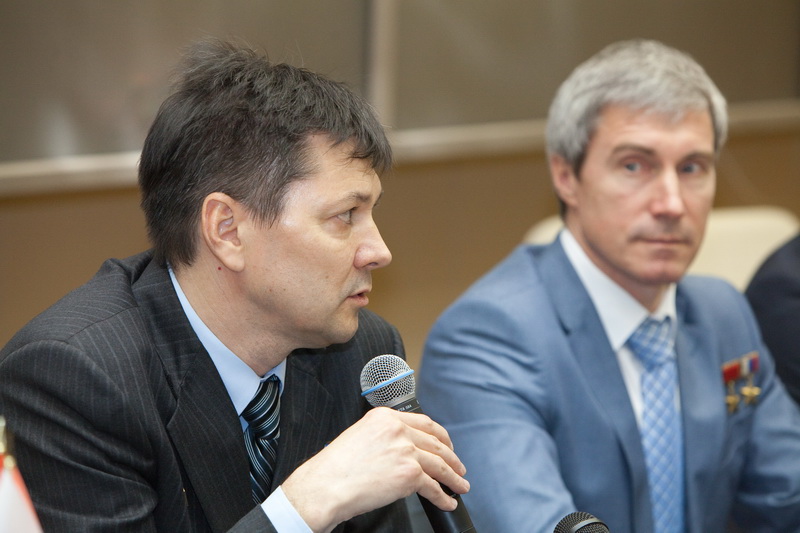
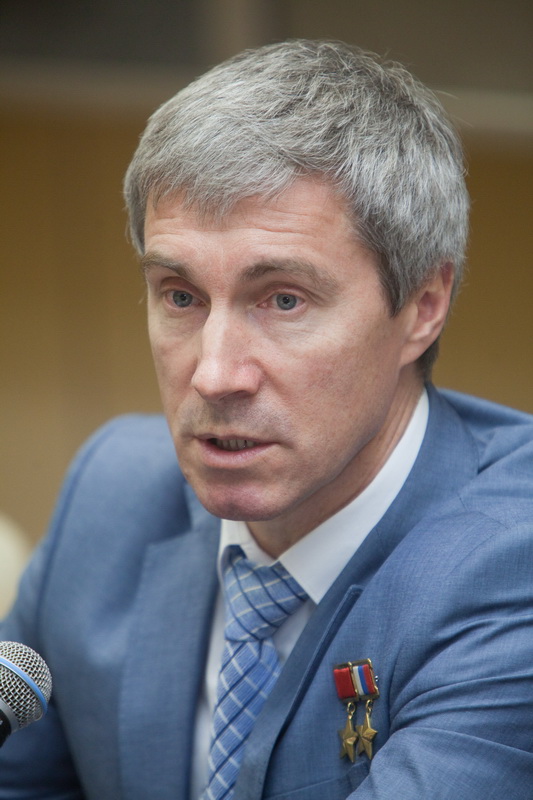
15/12/2011
TsPK: Expedition 28/29 are honored at the Cosmonaut Training Center. Sergei appears in photos vstrecha.28-29.2, vstrecha.5, vctrecha.28-29.7.
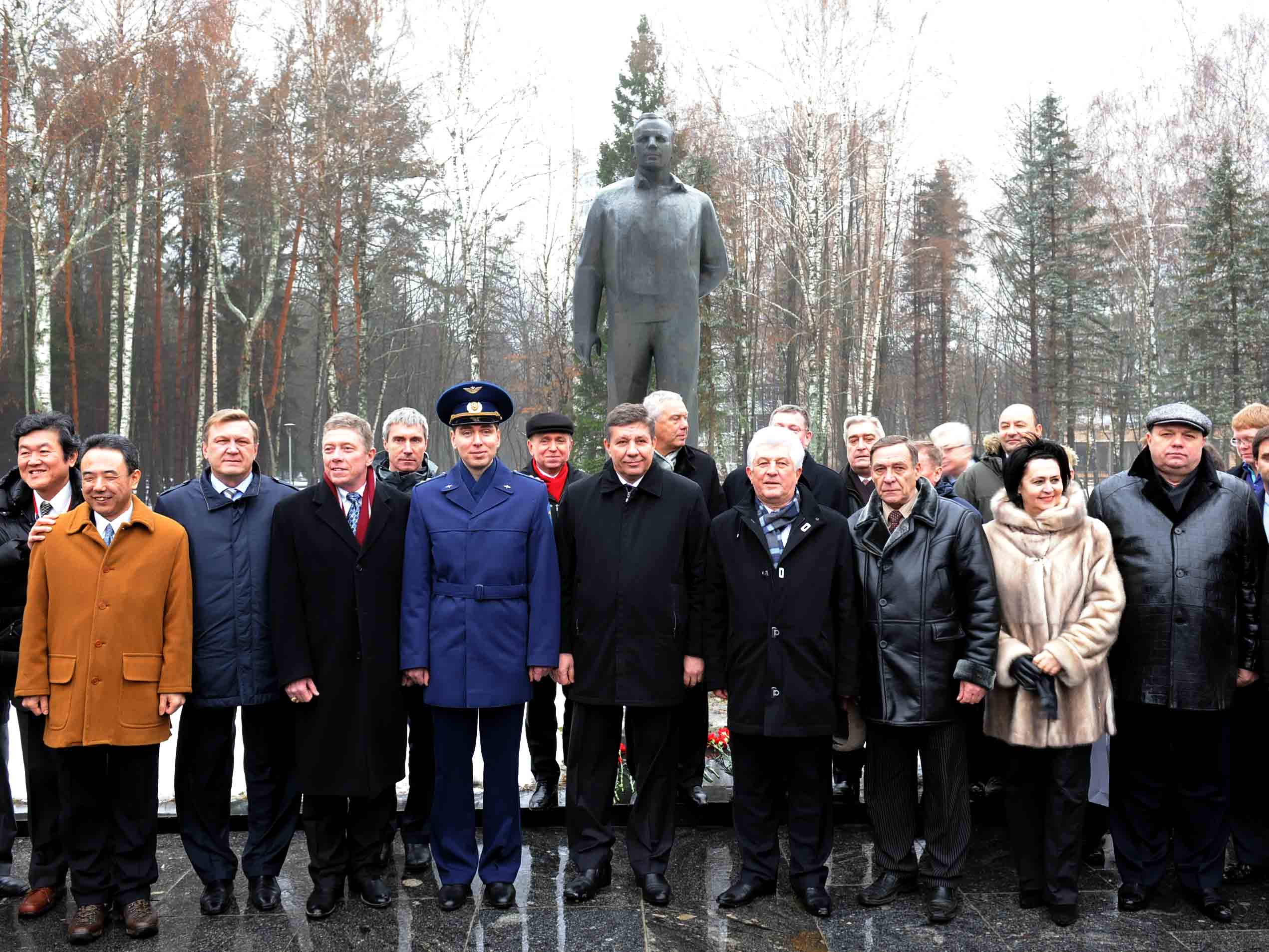
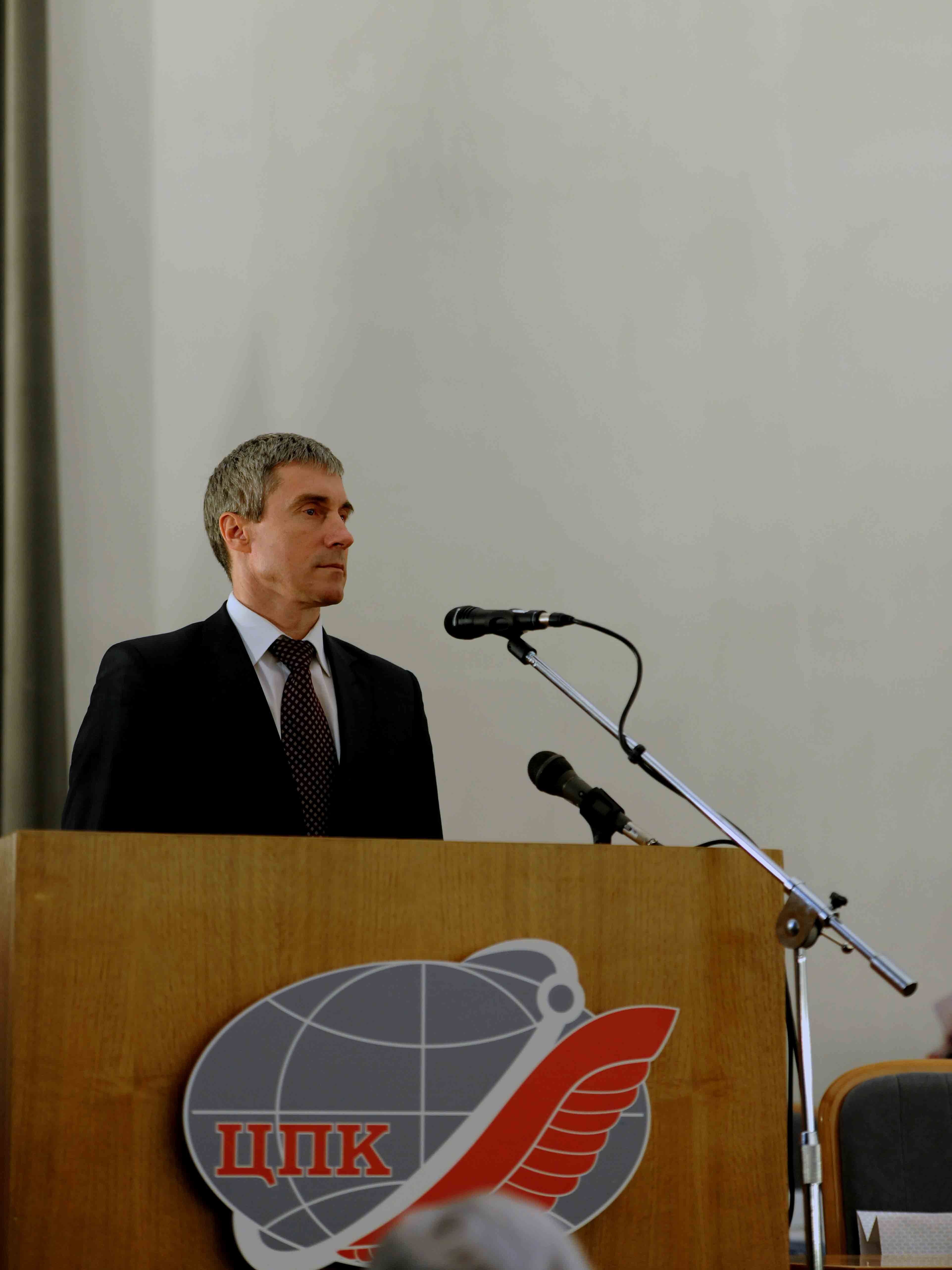
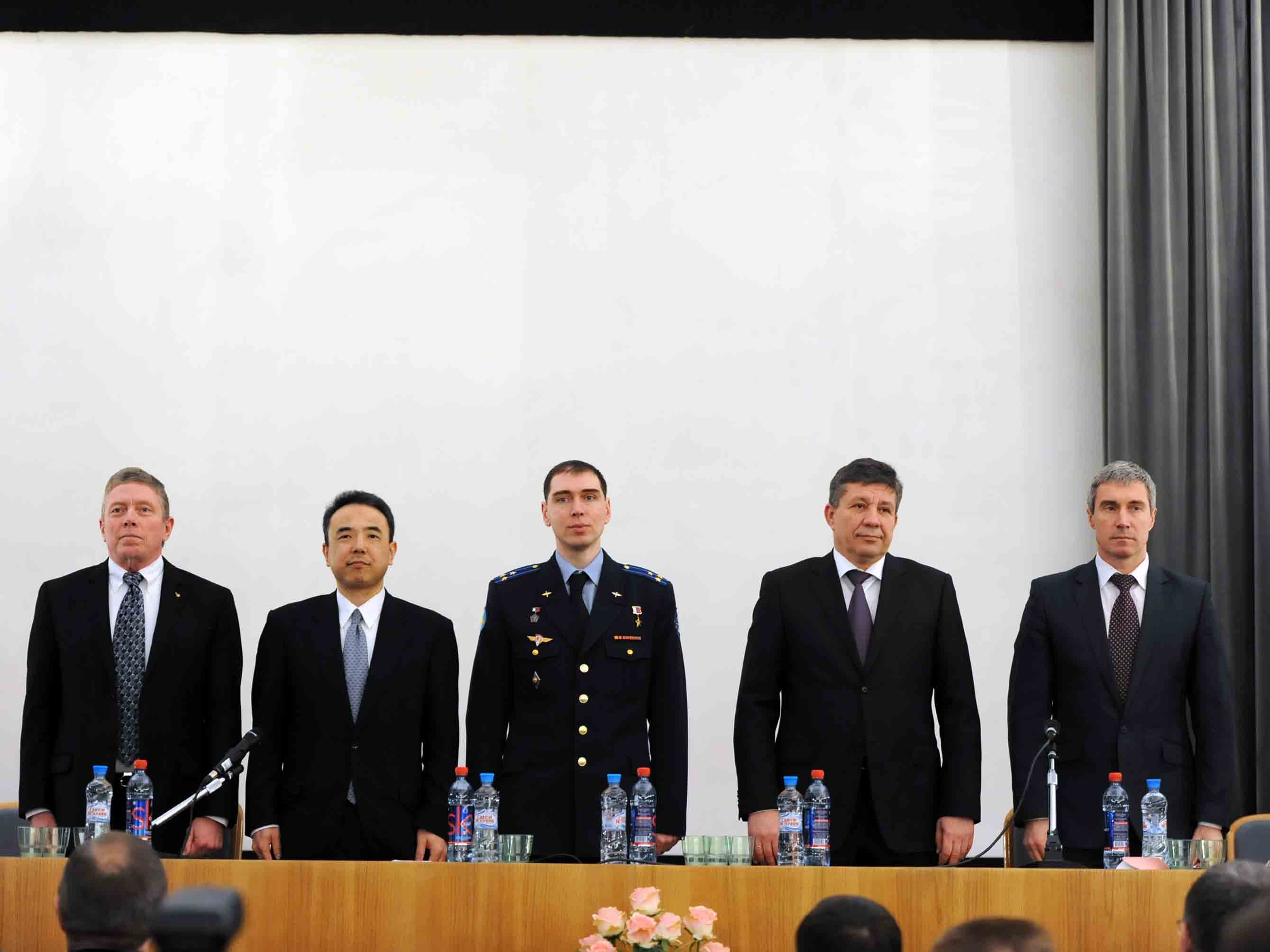
21/12/2011
Energiya, TsPK: Meeting of the State Commission to approve the primary and backup crews for Soyuz TMA-03M and confirm the readiness of the space launcher system. Sergei is in photos: start1, 12-20-07.


22/12/2011
TsPK: Launch of Soyuz TMA-03M at Baikonur. Sergei is in photos start30315, start30317.


26/12/2011
TsPK: Sergei attended the awards for the finalists of the “Youth Space Vision” art competition, held at the GCTC. Sergei appears in photo DSC_32561.

TsPK: A charity tournament in rhythmic gymnastics was held at the GCTC sports complex. Sergei Krikalev, Russian cosmonaut Maksim Suraev and test cosmonaut Maksim Ponomarev were the guests of honor, and presented awards to the winners. Sergei appears in photos nagradi_343, nagradi_334, nagradi_340, nagradi_354.2.
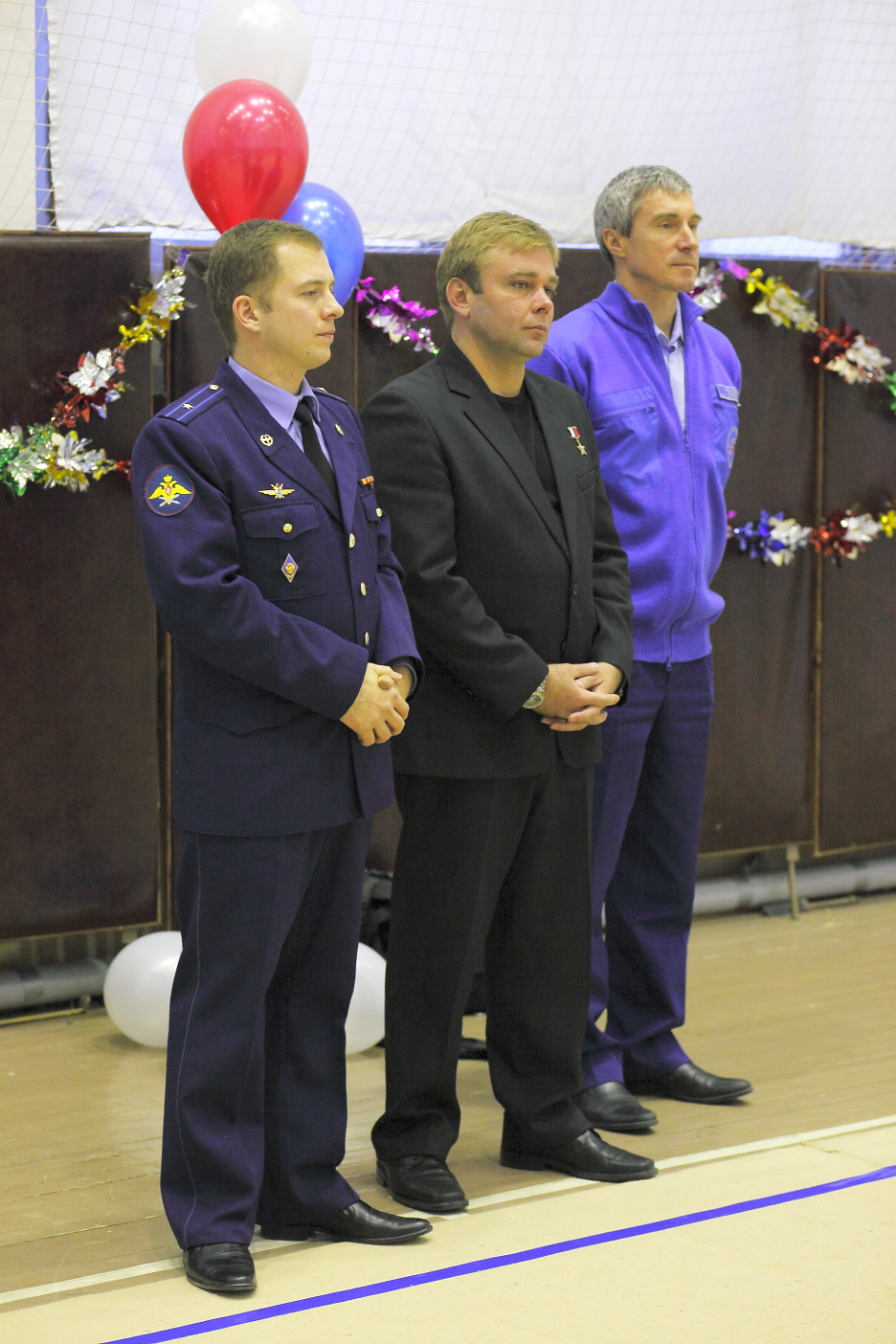
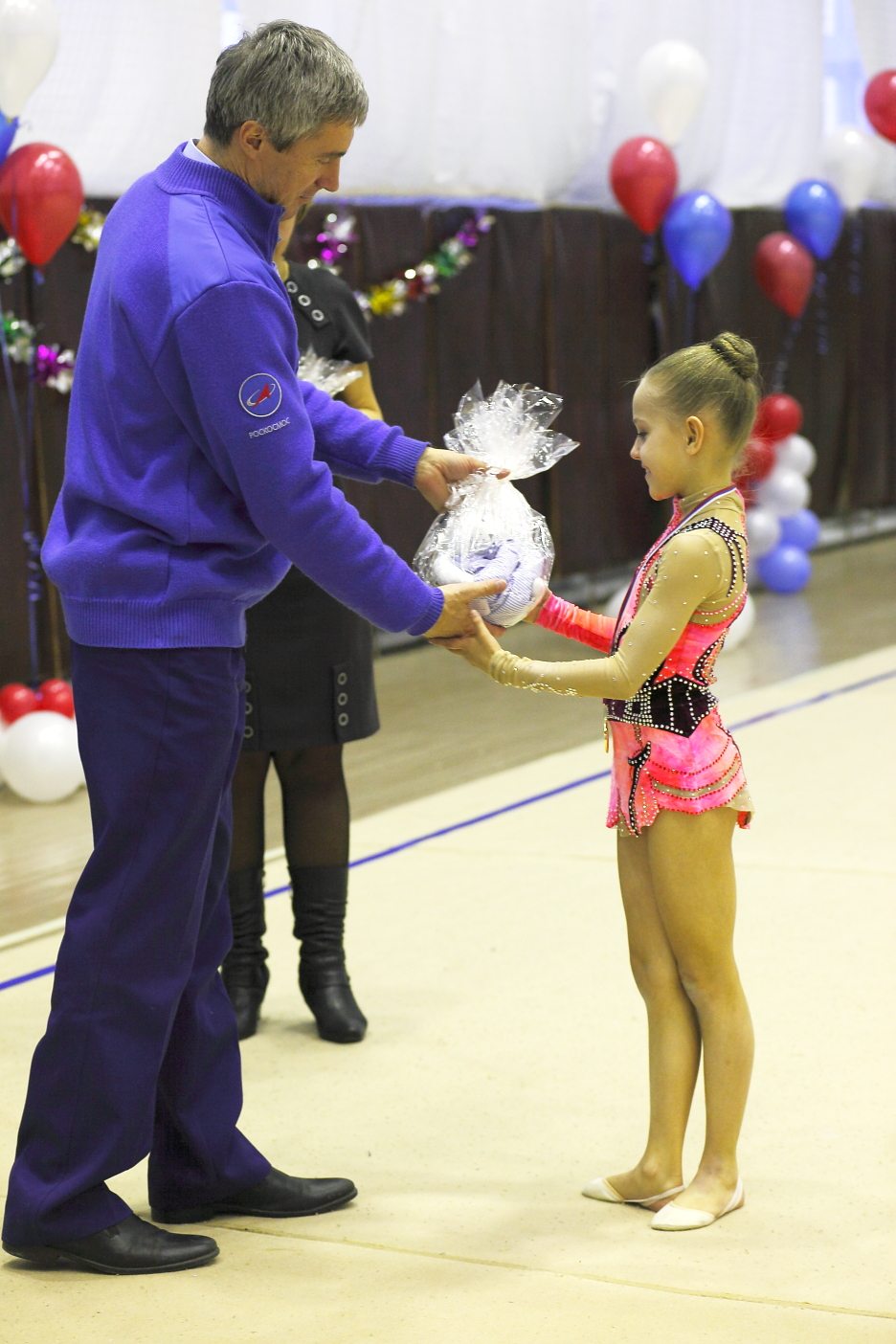
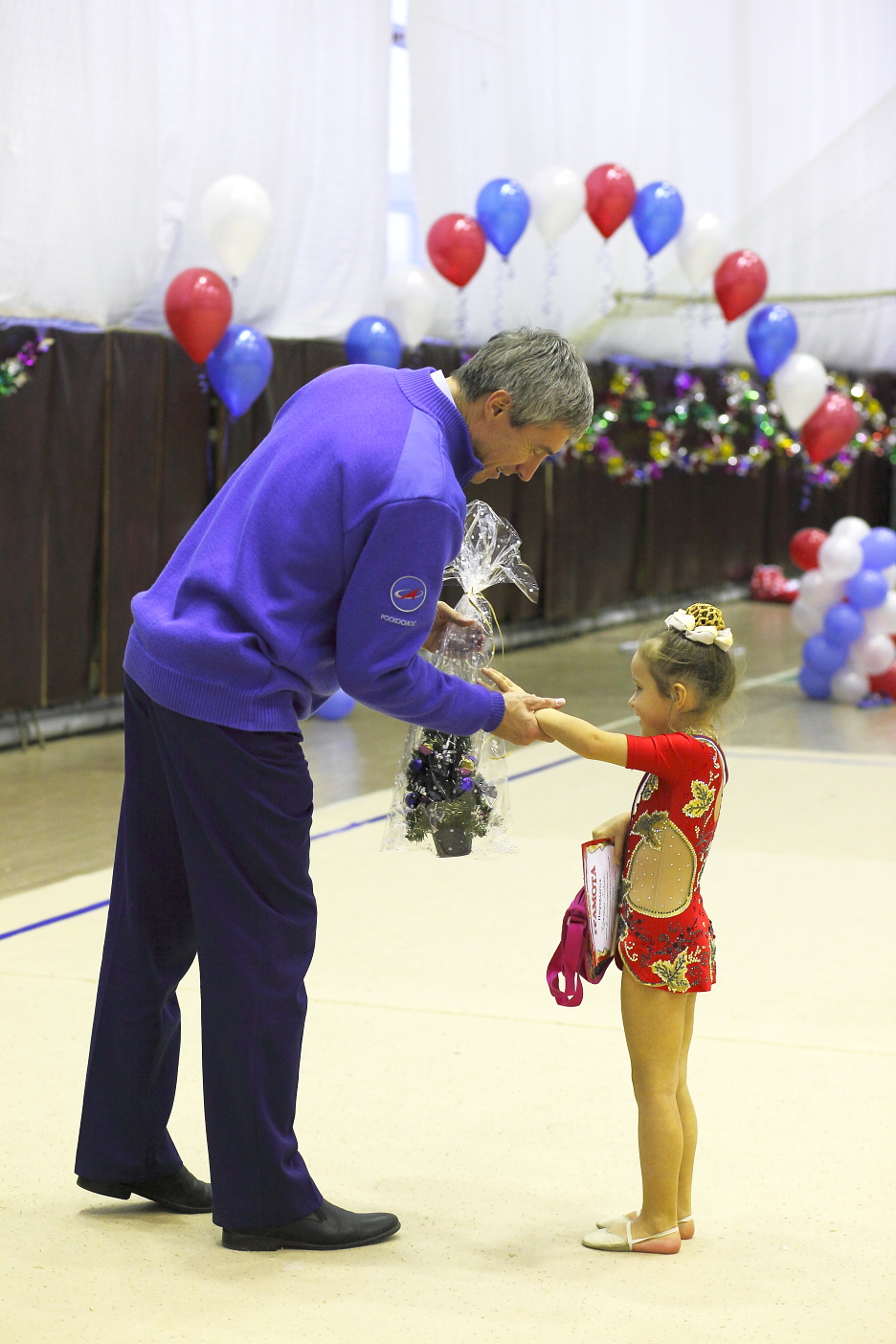

27/12/2011
TsPK: 70th birthday of cosmonaut training instructor Igor Ivanovich Sukhorukov. Sergei appears in photo syxorykov3.
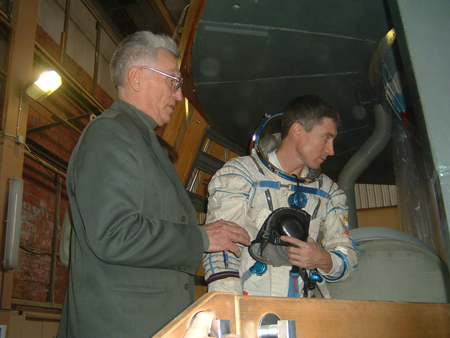
28/12/2011
TsPK: End-of-year breakup at the GCTC. Sergei appears in photos 1, 3, 5.
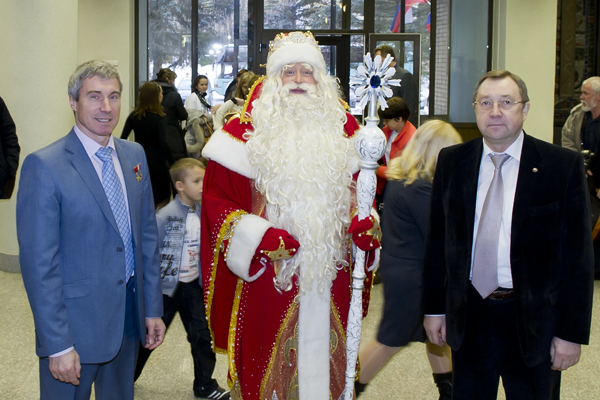
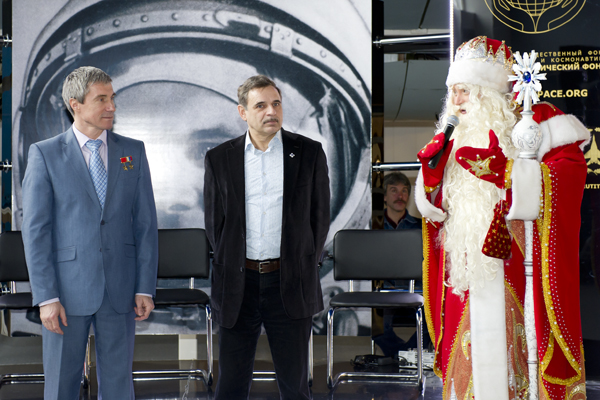
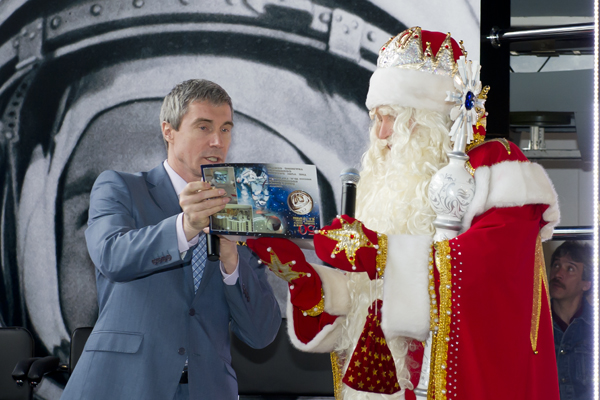
Head of CPC Sergei K. Krikalev said the most significant events in the organization in 2011 to the year. For the Cosmonaut Training Center, he was difficult, rewarding and rich with bright events.
Sergei Konstantinovich noted the challenges that faced the CPC workers in the past year on the training of Russian and foreign cosmonauts and astronauts, research and testing, development and improvement of Yuri Gagarin Cosmonauts’ Training Center database, the plan of events dedicated to the fiftieth anniversary of space flight, the first cosmonaut of the Earth Y.A. Gagarin. Summing up this year, Sergei said that basically all set for the organization goals were achieved.
In conclusion, the ceremonial event, Sergei K. thanked all the staff of the Center for a good job, congratulated the New Year and wished them good health, happiness and success in work and family well-being!
2012
21/2/2012
TsPK: Today at the Cosmonaut Training Center was held a “press day” devoted to the competitive selection process in the Russian Federal Space Agency cosmonaut. Journalists were given an opportunity to obtain information about the first-ever open competitive selection process. First, the media talked to the leadership of the Center: GCTC chief Sergei Krikalev and his deputy for the preparation of cosmonauts Oleg Kotov.
7/3/2012
TsPK: Sergei congratulated the female employees at the GCTC for International Women’s Day, 8 March. Especially distinguished GCTC specialists were awarded the “Cosmonaut Valentina Tereshkova” Jubilee Medal.
20/3/2012
TsPK: “Yeltsin twice failed to give me the star of the Hero” – Interview with Sergei on the 20th anniversary of the introduction of the title “Hero of Russia”; he was the first recipient. President Yeltsin neglected to make an appearance on both occasions.
11/4/2012
TsPK: Celebrations at the GCTC for the anniversary of Yurii Gagarin’s 1st flight on 12 April 1961.
17/4/2012
TsPK: “Art of the Creator,” an exhibition of Sergei’s spaceflight photos, is being displayed in St Petersburg until 22/4.
23/4/2012
TsPK: The ISS-30/31 crew began the final stage of their mission training.
24/4/2012
TsPK: April 19 and 20 at the Baikonur Cosmodrome was the first in the history of the “intergalactic” tennis tournament “Bat Baikonur,” dedicated to the Cosmonautics Day holiday and 20 April launch of the Progress space cargo ship. The event was organized by the Cosmonaut Training Center and Cosmonaut Yuri Gagarin tennis club, together with the Institute of CIS countries, with the support of the Federal Space Agency, the administration of Baikonur, the Ministry of Transport of the Russian Federation, Moscow regional center and Rostekhnologii (Russian Technologies State Corporation). Sergei appears in photo DSC_75981.
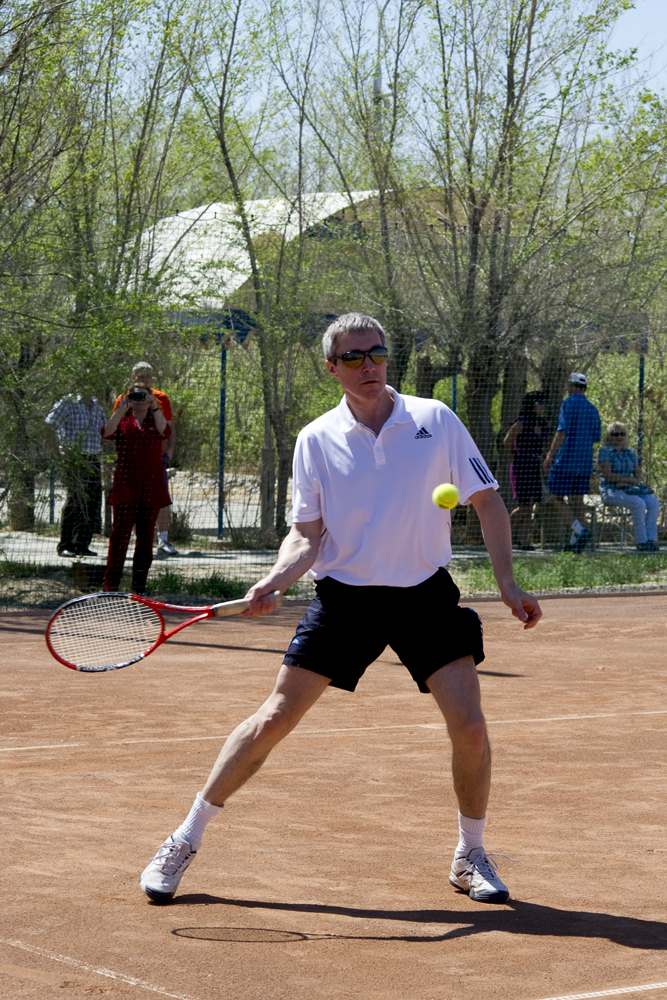
TsPK: The CTC hosted the final of the annual “Star Race” competition of scientific and technological and artistic projects on space, which this year celebrates its 10th anniversary. Sergei warmly congratulated the participants and said, “that are gathered here today bold and curious, determined and intelligent guys, who will present their projects on the theme of space.”
TsPK: Final training session for the ISS-30/31 crew.
28/4/2012
TsPK: The landed Soyuz TMA-22 crew returned to Star City, with Sergei there to greet them.
14/5/2012
TsPK: Preflight press conference for the ISS-30/31 (TMA-04M) crew at Baikonur. Sergei appears in photos: 4154033046, 6272090092, 2437050631.


25/5/2012
TsPK: The ISS-29/30 crew (who flew on Soyuz TMA-22) were honored at the Gagarin Training Center after their flight as is the tradition. Sergei congratulated the crew on the successful completion of the flight.
29/5/2012
TsPK: The Cosmonaut Training Center opened its doors to children with disabilities.
22/6/2012
TsPK: Today the main ISS-32/33 crew began their exams in the Soyuz TMA-M simulator. Management and employees of the Cosmonaut Training Center, including Sergei, representatives of the media, fellow astronauts wished the crew good luck.
27/8/2012
TsPK: Birthday wishes for Sergei (54).
2014
6/8/2014/2012
Roskosmos news: Appointments at the State TsNIIMash (ФГУП ЦНИИмаш) – former cosmonaut Sergei K. Krikalev started to work in the post of Deputy General Director of FSUE TsNIIMash – the main Roscosmos scientific organization. In this role, he will develop plans for manned missions in the framework of development of deep space.
2015
19/1/2015
“World renowned Cosmonaut Sergei Krikalev Joins Skoltech as Professor of the Practice,” Skoltech.ru. “The renowned cosmonaut and rocket scientist Sergei Krikalev was appointed Professor of Practice at the Skoltech Space Center on January 19, 2015.”
17/9/2015
“I was a Russian cosmonaut in space as the Soviet Union collapsed – your questions answered,” Guardian.com Q&A session.
19/12/2015
Sergei was apparently to appear on NTV, a Russian talk show, with cosmonauts Svetlana Savitskaya and Vitaly Tokarev, but walked out when it became apparent they were to engage in anti-scientific discussion about the pros and cons of vaccinations (source). I put rough Google translations of the relevant articles here.
2016
15/3/2016
Skoltech: “Space experience at first hand.”
6/4/2016
RBTH: “Roscosmos set to build lunar base by 2035.”
22/4/2016
SpaceDaily.com: “US-Russia Space Projects Set Example of Good Cooperation.”
24/5/2016
SpaceDaily.com: “International Space Cooperation Strongest in Times of Political Crises.”
20/9/2016
NASA: jsc2016e183855 – “At the Russian Mission Control Center in Korolev, Russia, NASA Administrator Charles Bolden (left) and cosmonaut Sergei Krikalev, now a manager in the Russian Federal Space Agency (Roscosmos), pose for pictures Nov. 20 following the docking of the Soyuz MS-03 spacecraft to the International Space Station.”
28/9/2016
Spaceflight Now: “Russian space station crews to be smaller next year.” Sergei quoted here when speaking with reporters at the International Astronautical Congress in Guadalajara, Mexico.
12/12/2016
Discover magazine article: “The Last Soviet Citizen.”
2017
5/3/2017
Sergei was elected president of the Federation of Aircraft Sports of Russia.
2018
17/10/2018
TsPK: Press conference with the participation of the executive director of Roskosmos Sergey Konstantinovich Krikalev and pilot-cosmonaut of the Russian Federation Alexei Nikolaevich Ovchinin. Here they were answering questions at a press conference following the aborted launch of Soyuz MS-10.
2019
As of this year, he is Executive Director of Manned Space Programs at Roskosmos.
11/4/2019
RIAN: Сергей Крикалев: ОАЭ планируют купить космический корабль Союз / Sergey Krikalev: UAE plan to buy the Soyuz spacecraft (in Russian).
27/8/2019
61st birthday wishes for Sergei from Roskosmos and TsPK.
Today is celebrating his birthday, the Executive Director of Roscosmos State Corporation for manned space programs, Hero of the Russian Federation, Hero of the Soviet Union, pilot-cosmonaut Sergei Krikalev. He is 61 years old.
The legendary astronaut, now leading the direction of the Russian manned astronautics, among friends and numerous colleagues0150 astronauts and astronauts – has earned a reputation as a highly professional, multifaceted and purposeful person, without a remainder devoted to his work. During his career as an astronaut, he made six space flights with a total duration of 803 days 9 hours 42 minutes, eight spacewalks, has more than 40 hours of extra-ship activity.
Personal and professional qualities, combined with exemplary hard work, allowed Sergey Konstantinovich to succeed not only in the space program, to which he devoted his whole life, but also in other areas of activity. He is a master of sports of international class in aerobatics and at the same time is the author of a series of photographs taken from the ISS, which have gained worldwide popularity.
The management and employees of Roscosmos State Corporation are proud that Sergei Krikalev continues his activities today for the benefit of the Russian manned space program, and join the many congratulations on his birthday with wishes for health, good spirits and new professional success!
2020
23/1/2020
Meeting with the Roscosmos cosmonauts
The Director General of Roscosmos State Corporation Dmitry Rogozin met with members of the cosmonaut corps on January 23, 2020. The meeting was attended by both experienced cosmonauts of Roscosmos and representatives of the 2018 recruitment .
During the event, the leaders responsible for the main areas of activity of the State Corporation presented the development prospects of Roscosmos. The reports touched upon the plans of the industry for the coming years, primarily related to manned space exploration. Details were considered of the details of the new manned transport system (PTK NP Orel), as well as the new launch vehicles and their configurations used.
In addition, the leadership announced the main stages of the construction of launch complexes for the Angara launch vehicle family and superheavy class, as well as plans for the construction of related facilities.
– Roscosmos
30/5/2020
Video message from Sergey Krikalev, Managing Space Program Executive Director, on the occasion of the successful launch of the Falcon 9 launch vehicle with the Crew Dragon manned spacecraft and its crew.
16/9/2020
Roskosmos interview: Sergey Krikalev: “It would be interesting to work at the Station”
Questions of Roskosmos to the Hero of the Soviet Union, Hero of Russia, cosmonaut, Executive Director manned space programs of the State Corporation Roscosmos Sergei Krikalev about transactions with the module Nauka (“Science”) in orbit, opening opportunities for the Russian segment of the International Space Station, the future fate of the Station and the likelihood of another space flight.
– Sergey Konstantinovich, tell us how the docking of the Nauka module with the ISS will take place?
– The joining will take place as follows. Immediately after the launch of Nauka, the cosmonauts will leave the ISS into open space and disconnect all connections between the Zvezda service module and the Pirs small module, which will be undocked and carried away by the cargo vehicle. This is a routine operation, which was envisaged, but was not implemented earlier just because it was not necessary.
As a result, the nadir node Zvezda will be released for receiving Nauka. The docking itself will take place in an automatic mode under the control of specialists from the ground and the crew.
– Does the presence of the Naukamodule give any independence from the American segment?
– Any expansion of the Station’s capabilities increases the potential of each segment - no matter whether it is Russian or American. All modules are integrated into a single complex – ISS. And we are all the same tied together on computer networks, on the motion control system. In addition, part of the orientation of the entire ISS is performed by American gyroscopes, and these gyroscopes are “unloaded” by our engines. The orbit of the entire Station is being corrected by our spacecraft. Thus, all segments remain strongly interconnected, but with the advent of Nauka the possibilities will increase.
– What will the Naukamodule add in terms of the convenience and work of astronauts?
– The module will give an increase in volume for the life and work of astronauts in orbit. There will be a cabin for the third crew member of the Russian segment. The possibilities for conducting experiments will expand.
– How will the scientific potential of the Russian segment change?
– The MLM Nauka has modern, more advanced and more compact control system modules, which gave additional cubic meters of volume both for research and for storage of goods. Of course, the number of workplaces will increase: there will be more than 40 – inside and on the outer surface of the module. The number of units of new scientific equipment will increase. The possibilities of dumping information from this scientific equipment to the Earth will increase. A multi-zone furnace will be installed inside the module, which will allow for materials science work – many new experiments will be added. Thus, the potential for scientific research will increase significantly.
In addition, with the addition of Nauka, we will have not only new volumes, but also some additional energy. With the arrival of the next NEM module, there will be even more of it.
– Will we have a crew of three Russian cosmonauts with the arrival of the module?
– In accordance with the agreements, when the Station is completed and US spaceships will be able to regularly deliver crews to the Station, the Americans will have the right to keep four people on the ISS, and we will have three. We had a reduced crew for some time due to the lack of the required number of jobs at the Station. But everything will change when Naukacomes. We will need additional hands to integrate the module into the structure of the Station: to link information systems, energy, life support systems, to do all the work centrally and synchronously. This requires quite a lot of labor, so there will be several space walks.
– Now there is an agreement on the operation of the ISS until 2024. What next? What are the prospects?
– Initially, it was discussed that the Station would exist for 15 years. In 2015, this period ended. But, firstly, the Station was a little late with the deployment. Secondly, it became clear that such a unique scientific laboratory has much greater potential than was initially assumed. Therefore, it was jointly decided that it will remain in orbit until 2020.Late completion of the work was postponed until 2024, and now the question of another extension of the service life is discussed – until 2028 or even until 2030.
What role the State represented by NASA will play in the operation of the Station, and what role private companies will play, remains to be determined. It is not yet clear how the international partnership will work. After all, all mutual obligations are concluded between State agencies – NASA and Roscosmos, NASA and ESA. And if the Station is transferred entirely to commercial structures, then this will raise a number of questions. I believe that the truth, as usual, lies somewhere in between. And even if some part of the Station is transferred for commercial use, the State will still remain the main customer.
As an example, you can see how work is organized to create a transport system in the United States. Now many are enthusiastic about the fact that manned spacecraft are being developed by private companies. It’s true, but they do it at public expense. After all, the customer of the seats on the Crew Dragon ship is the State represented by NASA. When everything is organized, the current routine can be outsourced to private hands.
– In what case can a decision be made to separate the Russian segment from the American segment?
– Such a question may arise if, for some reason, a decision is made to terminate the operation of the Station, and we will have modules, the continuation of which will be expedient. Here one must understand that astronauts at the Station work in extreme conditions. We lay in all the risks, we take into account that there may be force majeure situations: for example, a collision with a meteorite, some serious accident at the Station. In this case, the entire program of work will be revised.
We had a similar situation at the Mir complex after the Spektr module was depressurized. We lost it for intended use, but the main part of the Station, and these are five modules, functioned successfully. Therefore, if the ISS is completed, I do not rule out that some modules will remain in orbit.
– Can the modules of the Russian segment be used autonomously?
– Yes, probably they can, but the connection of other modules with certain functionality will still be required. Everything will depend on specific conditions. Now it is becoming clear: having invested so much work in the creation of the Russian segment of the ISS, having gained experience in operating this Station, it is not advisable to simply take and stop work, to put it mildly. Therefore, my personal opinion: in the next 10 years, the ISS will continue to exist in one form or another.
– Are there any plans to train astronauts from among scientists to work at the Station?
– All cosmonauts during general space training and training in the group receive additional knowledge, undergo minimal scientific training. When the crew is already preparing for a specific flight program, the cosmonauts receive specialized knowledge on the experiments that they plan to carry out in space. Therefore, the cosmonauts have a scientific base.
For example, when Yuri Gidzenko and I flew to the ISS on the first expedition, we had the Plasma Crystal experiment. We then quite deeply “dug” the scientific component and brought into its technology our knowledge of reliability, redundancy, various types of emergency situations. And the experiment turned out to be very successful.
When the idea of training highly specialized scientists emerged in the late 1960s, it relied on forecasts of a significant increase in the crew. But so far our crew is quite small, and the forecast for the development of astronautics is at odds with the real facts. Therefore, narrow specialization is not very advisable. Perhaps, with an increase in cargo traffic and Station volume, an increase in the number of crew, professional scientists will be more in demand.
– You were the first 22 years ago to open the hatch to the still uninhabited Station, you worked on the first long-term expedition. What if you were offered to fly now and assess the state of the ISS, what would you say?
– I would agree, because as a professional astronaut, it is incredibly interesting for me to see how the Station has evolved. After all, I took part in the first assembly flight, when the first two modules docked. I was on the first long-term expedition, then on the 11th, when the Station increased its capabilities. Now it is really more than then, and in the near future it will increase even more as modules of the Russian segment are added. It would be very interesting to work at the Station in such a configuration and with new capabilities.
– Do you exclude the possibility of another flight to the ISS?
– I hope we’ll see. To be honest, the deployment of the Station is going slower than planned, and when I switched to administrative work, I reserved the opportunity to return and make an additional experimental flight. Let’s wait and see, everything will depend on the dynamics of the Station’s development and the movement of the program forward.
Updated 1:39 PM Monday, 21 September 2020
Photo gallery
Miscellaneous photos of Sergei that don’t fit on other pages. Contributions would be welcomed!
Video stills
Some image stills of Sergei in his earlier life from one of the Expedition 1 videos (ex1crewprofile) in NASA’s Gallery. These are low-quality images, but the best I could do! Bill Shepherd put some photos of his earlier life in the Expedition 1 photo gallery, but his Russian crewmates didn’t. :-(


Official portraits
Listed in order of date.
- Energiya portrait taken before his first flight, circa 1988 (33 KB)
- Energiya portrait, 2000 (36 KB)
- TASS photo, 2000 (26 KB)
- Alternative Energiya portrait – Sergei smiling!! (From Wil) (103 KB)
- Energiya portrait of Sergei as Vice-President of Manned Flights, February 2007 (appearing on the May-June 2007 news page in relation to news of his promotion) (57 KB)
- Roskosmos portrait as Executive Director of Manned Space Programs in 2019. (203 KB)


Links to NASA portraits:
- S93-40675: Portrait taken on 6 August 1993 for his STS-60 mission
- JSC2005-E-04452: ISS-11 informal portrait, 3 February 2005
- JSC2005-E-13488: ISS-11 Sokol spacesuit portrait, March 2005
Miscellaneous
Energiya
Some of Sergei’s personal family photos can be accessed from his Expedition 1 biography at the Energiya site.
Le forum de la conquête spatiale
Painting of Sergei on the cover of Science & Vie, April 1992; he is holding a symbolic hammer & sickle in a rather menacing fashion! (237 KB, via forum post)

DVIDS
Search results for all Sergei photos (word search for “krikalev”).
Nissaville
Sergei at a Dacha Party on 13 September 2001 (?) to farewell Bob Cabana, the Director of Human Spaceflight in Russia, who was returning to Houston. (Found at the now-defunct Nissaville.com website; archived at Archive.org.)

Spaceonline.com
Photos by Claudio Arotti:
Updated 10/4/2019
Profile
A few personal details about Sergei, as found on the Internet. (Any more information would be appreciated!)
Personal data
Sergei Konstantinovich Krikalyov, Сергей Константинович Крикалёв, was born on 27 August 1958 in what was then the city of Leningrad, USSR (renamed St. Petersburg on 6 September 1991). His father is Konstantin Sergeevich Krikalyov, Константин Сергеевич Крикалёв, who was born in 1932. Konstantin was an engineer at the Baltic Plant in St. Petersburg; he is now a pensioner. His mother is Nadezhda Ivanova Krikalyova (nee Prokof’eva), Надежда Иванова Крикалёва (Прокофьева), born in 1931. She was principal of Secondary School №10 in Leningrad; and is also now a pensioner. She survived the Siege of Leningrad during World War 2. Both his parents still live in St. Petersburg.
As far as I know, Sergei has no siblings.
Physical description
Sergei has blue-grey eyes and short brown hair (which began to turn grey in the early 2000s). He stands 183 cm (6 feet) tall and weighs approximately 69 kg (152 pounds). He is of slim build and very fit.
Hobbies and interests
Sergei enjoys aerobatic flying (he flew for the Russian and Soviet national aerobatic flying teams), swimming, scuba diving, Alpine (downhill) skiing, tennis, windsurfing and amateur radio operations (X75M1K; space call sign is U5MIR).
Education

In 1975 Sergei graduated from the 77th secondary school of Leningrad city, and obtained a speciality of chemist-analyst/laboratory assistant. In September 1975 he began studies at the Leningrad Mechanical Institute (Voenmekh – now St. Petersburg Technical University). From November 1997 through May 1980 he also worked as a laboratory assistant and senior laboratory assistant in the Institute.
In 1981 he graduated from the Leningrad Mechanical Institute. He was in the machine-building department specializing in Flight Vehicle Design and Manufacturing; he received an honors diploma in Mechanical Engineering. From May to August of that year he worked as an aircraft technician on operation and repair of aircraft and engines in the Leningrad urban aero club DOSAAF (All-Union Voluntary Society for Assistance to the Army, Air Force and Navy – Dobrovolnoye Obshchestvo Sodeistviya Armii, Aviatsii i Flotu, ДОСАФФ, Добровольное Общество Содействия Армии, Авиации и Флоту).
His subsequent career is summarized on the Career page.
Titles
Sergei’s job title/description was Flight Engineer, Test-Cosmonaut, S. P. Korolyov Rocket & Space Corporation Energiya, Russia. His cosmonaut number is 67; international number is 212.
Outside of being a cosmonaut, Sergei was for a time also Senior Vice-President at Energiya. He was assigned Vice-President of Manned Flights on 5 February 2007.
From 27 March 2009 to 2014 he was appointed the first civil head (Начальник) of the Gagarin Cosmonaut Training Center.
In 2019 he was the Executive Director of Manned Space Programs at Roskosmos.
Family

In 1991 Sergei married Elena Yuri’evna Terekhina, Елена Юрьевна Терехина, who was born in 1956. He had met her in 1980 when they both worked at NPO Energiya as engineers. She was in the Moscow Control Center (TsUP, ЦУП). Her parents, Faina and Yurii, reside in Samara, Russia.
Their daughter, Ol’ga Sergeevna Krikalyova, Ольга Сергеевна Крикалёва, was born on 20 February 1990. Elena left her job to care for her daughter.
Sergei and his family reside in Moscow, in a 3-storey apartment. (Cosmonauts used to have to live in Star City, Звёздний Городок, for security reasons during the Soviet era, but can live anywhere that is convenient, now.)
Some of Sergei’s personal family photos can be accessed from his Expedition 1 biography at the Energiya site.
Miscellaneous
- His favorite foods include ice-cream and jam.
- Sergei has an asteroid named after him! 7469 Krikalev (1990 VU14)
Updated 10/4/2019
Sports

As well as his spaceflight achievements, Sergei Krikalyov has also won lots of awards in sports.
He is a first-grade swimmer; candidate for all-around combined tournament Master of Sport at Leningrad Championship in 1979.
From 1977 he took up aerobatic flying. During 1980-1981 he was a member of the aerobatic flying Leningrad Team.
In 1981 he was awarded the title of the USSR Master of Sports on aerobatic flying. He flew the aircraft Yak-18A, Yak-50, Yak-52, Yak-55, Yak-55M, Su-26, Su-29 (under space training program relative to L-39, MiG-21, MiG-25, Tu-134).
From 1983 he continued aerobatic flying at the Central Aeroclub after V. P. Chkalov in Moscow.
In 1982 he took part in the USS Championship on behalf of the Central Aeroclub team.
In 1983 he was recognized as an aerobatic flying Overall Champion of Moscow. In the Spartakiade finals of the USSR Nations and the USSR Championship, he represented the RS FSR team, where he won the third place in the team records and the 8th place as a personal record.
In October 1982 he became a candidate for the aerobatic flying USSR Team.
In 1985 he took part in the aerobatic Socialist Countries Championship as a member of the USSR 2nd team.
In 1986 he won the USSR Championship in the team records (the 2nd team of Russia).
In 1995 he became a member of the Russian combined team on sailplane aerobatic flying. He also participated in the World Championship (Silver Prize winner in aerobatic flying exercises). This was at the 6th World Glider Aerobatic Championships, held in Fayence, France. Sergei was ranked 57th in the Individual Results, with 7776.4190 points. He flew a Swift, registration RA-0121.
In 1996 he was awarded the title International Class Master of Sports. He also won the European Championship in the team records (champion by aerobatic flying exercises – a new program).
In 1997 he won the World Championship and the 1st Aerobatic Flying Games in the team records. He is a silver prize winner in a personal record.
In the 2003 World Glider Advanced European Aerobatic Championships, Sergei was ranked 50th in the Individual Results, with overall points of 10 206.563 (59.17%).
Aircraft flown
He has flown in the aircraft Yak-18A, Yak-52, Yak-5, Yak-55M, Su-26, Su-29, L-39.
He performed familiarization flights with instructor in the MIG-21, MIG-25 and TU-134.
He was granted a second pilot license to fly the T-38 Talon aircraft (USA) and has logged more than 140 hours in this aircraft. (The T-38 is a jet trainer aircraft flown by NASA pilot-astronauts.)
– Source: Energiya biography
Spaceflights overview
A summary of Sergei’s spaceflights and spacewalks (VKDs). Times are UTC/GMT.
Spaceflights
| Expedition | Launch spacecraft | Date & time | Landing spacecraft | Date & time | Flight duration |
|---|---|---|---|---|---|
| EO-4 (Mir, «Мир») | Soyuz TM-7 (Callsign: Донбасс-2, Donbass-2 – the “2” indicates he was in the second Soyuz seat to the left of the commander/pilot) | 26 Nov 1988 at 15:49:34 | Soyuz TM-7 | 27 Apr 1989 02:57:58 | 151d 11h 08m 24s |
| EO-9/10 (Mir, «Мир») | Soyuz TM-12 (Callsign: Озон-2, Ozon-2 [Ozone]) | 18 May 1991 at 12:50:28 | Soyuz TM-13 | 25 Mar 1992 at 08:51:22 | 311d 20h 00m 54s |
| STS-60 | Discovery | 3 Feb 1994 at 12:10:00 | STS-60 | 11 Apr 1994 at 19:20:13 | 8d 07h 10m 13s |
| STS-88 | Endeavour | 4 Dec 1998 at 08:35:34 | STS-88 | 16 Dec 1998 at 03:54:21 | 11d 19h 18m 47s |
| Expedition 1 (ISS, МКС) | Soyuz TM-31 (Callsign: Уран-2, Uran-2 [Uranus]) | 31 Oct 2000 at 07:52:47 | STS-102 | 21 Mar 2001 at 07:33:06 | 140d 23h 40m 19s |
| Expedition 11 (ISS, МКС) | Soyuz TMA-6 (Callsign: Базальт, Bazal’t [Basalt]) | 15 Apr 2005 at 00:46:25 | Soyuz TMA-6 | 11 Oct 2005 at 01:09 | 179d 23m |
| Total accumulated spaceflight time: 803d 9h 37m | |||||
Notes
After completing Expedition 1, Sergei’s total accumulated time in orbit was 624 days, 9 hours, 16 minutes over 5 flights. Only 3 other cosmonauts had more time than Sergei then:
- Avdeev, Sergei Vasil’evich: 747 d, 14h, 22m over 3 flights. Just over 2 years!
- Polyakov, Valerii Vladimirovich: 678d, 16h, 32m over 2 flights.
- Solov’ev, Anatolii Yakovlevich: 651d, 0h, 10m over 5 missions.
According to the NY Times article, “A Trip Forward in Time. Your Travel Agent: Einstein,” on the “Twin Paradox” physics law where time will slow for someone travelling at a fast speed:
The record holder for this type of travel, he said, is the Russian astronaut Sergei Krikalev, who came back from 748 days orbiting in the Mir space station a full one-fiftieth of a second younger than he would have if he had stayed on the ground.
So the more he orbits the Earth, the slower he will age!
Spacewalks
Внекорабельной деятельности
| Date | Beginning time | Duration | Crew | Spacesuit type | Tasks |
|---|---|---|---|---|---|
| EO-9, ЭО-9 | |||||
| 24 Jun 1991 | 21:11 | 04:58 |
|
Orlan-DMA | Replaced Kurs docking system antenna |
| 28 Jun 1991 | 19:02 | 03:24 |
|
Orlan-DMA | Attached TREK cosmic ray collector to exterior of Mir |
| 15 Jul 1991 | 11:45 | 05:56 |
|
Orlan-DMA | Began Sofora girder construction. Sofora mounting platform installed |
| 19 Jul 1991 | 11:10 | 05:28 |
|
Orlan-DMA | Began assembly of Sofora girder |
| 23 Jul 1991 | 09:15 | 05:42 |
|
Orlan-DMA | Continued assembly of Sofora girder |
| 27 Jul 1991 | 08:44 | 06:49 |
|
Orlan-DMA | Continued assembly of Sofora girder |
| EO-10, ЭО-10 | |||||
| 20 Feb 1992 | 20:09 | 04:12 |
|
Orlan-DMA | Dismantled equipment |
| ISS-11, МКС-11 | |||||
| 18 Aug 2005 | 19:02 | 04:58 |
|
Orlan-M | Installed various experiments and a TV camera for the Jules Verne ATV |
| Total spacewalk hours: 41h 27m | |||||
Achievements
- First Russian to fly on the Space Shuttle.
- First Russian to enter the ISS (during STS-88).
- First ISS crewperson to stay on the ISS a second time.
- First to be a member of two ISS crews.
- First person to visit the ISS three times.
- Holder of the accumulated time-in-space record. On 16 August 2005 at 05:45 GMT/UTC, Sergei overtook cosmonaut Sergei Avdeev’s longstanding record of 747d 14h 14m 11s accumulated flight time!
- Fourth civilian cosmonaut to pilot a Soyuz (sit in the commander’s seat in the middle) – the first civilian Soyuz commander was Nikolai Rukavishnikov, the second was Valeri Kubasov and the third was Aleksander Kaleri.
- Sixth in the list of long-duration spaceflights (311.8 days for his extended stay on Mir on his second mission, EO-9/10. Valerii Polyakov holds first place.)
- The ninth person to achieve six spaceflights (John Young was the first), and the first Russian cosmonaut to go into space six times.
Links
The information in the tables is from Encyclopedia Astronautica and Manned Astronautics.
Backup missions
Sergei has served as backup for three missions: Mir EO-8, STS-63 and ISS-7.
Mir EO-8
Sergei was backup flight engineer, along with pilot-cosmonaut Anatolii Artsebarskii, for the Mir EO-8 crew of Viktor Afanaseyev, Musa Manarov and Japanese television journalist Toyohiro Akiyama.
STS-63
Sergei was backup for Vladimir Titov (who was previously Sergei’s backup for the STS-60 mission). Vladimir was selected for the mission in September 1993. STS-63 launched on 3 February 1995 and landed on 11 February 1995.
Photo links
ISS Expedition 7
Sergei was backup mission commander. The mission, with a crew of three, was originally to be taken up on the Space Shuttle, but the Columbia disaster changed everything. The original crews are listed below.
| Name | Role | Origin |
|---|---|---|
| Yurii Ivanovich Malenchenko |
|
GCTC, Russia |
| Edward Tsang Lu |
|
NASA |
| Aleksandr Yur’evich Kaleri |
|
Energiya |
| Name | Role | Origin |
|---|---|---|
| Sergei Konstantinovich Krikalyov |
|
Energiya, Russia |
| John Lynch Phillips |
|
NASA, USA |
| Sergei Aleksandrovich Volkov |
|
GCTC, Russia |
Photo links
Sergei previously trained as backup Expedition 7 commander, and there are three photos in that gallery:
ISS Expedition 17
Sergei was assigned as backup for the Soyuz TMA-12/ISS-17 crew in 2006 (to launch in March 2008), but was removed from this in March 2007.
ISS Expedition 21A
Initally assigned to the backup crew in 2008 for ISS-21A (for cosmonaut Aleksandr Kaleri on the prime crew). The prime crew will launch on Soyuz TMA-18 in March 2010. As of 2009 he was designated Chief of the Gagarin Cosmonaut Training Center, so this flight assignment is canceled.
Links
- Encyclopedia Astronautica: Soyuz TM-11
- KSC: STS-63
- NASA Human Spaceflight: ISS-7
Arts
- Energija – Kosmonaut (The Return Of Krikalov)
- “Sergei Krikalev Ponders Ten Months in Space”
- “The End of Gravity”
- “Artists & Cosmonauts”
- Cosmonaut – a dance opera in 4 orbits
- Transit Lounge
- “Nature of the Cosmos”
Sergei Krikalyov has unintentionally acted as a muse for various creative endeavours! His extended stay in space during his second mission on Mir (EO-9 & 10, 1991-1992) led to erroneous reports of his being “stranded.” This has, however, now entered popular mythology. The various productions below include all non-film arts, and are listed in chronological order.
Energija – Kosmonaut (The Return Of Krikalov)
This German CD, Kosmonaut (The Return Of Krikalov), was released in 1992 by someone called Energija. It has three electronic/techno songs/mixes on it.
“Sergei Krikalyov on the space station Mir”
This is a poem by Jay Ruzesky I found while doing a Google word search using Sergei’s name. (The poem is here.)
From: Painting The Yellow House Blue. Concord, Ontario: House of Anansi Press, 1994.
this is for those people
that hover and hover
and die in the ether peripheries
– Michael Ondaatje, “White Dwarfs”
My name is Sergei and
my body is a balloon.
I want to come down. I
tie myself to things.
My eyes try to describe your
face, they have forgotten.
My ears echo your voice.
I am a star, you can
see me skating on
the dome of night. My blades
catch sun from
the other side of earth.
Days last an hour and a half.
No one else lives here.
My country has disappeared,
I do not know where home is.
I am a painter standing back.
I watch clouds heave like cream
spilled in tea, I see
the burning parrot feathers
of the Amazon forests,
ranges of mountains are
scales along the hide
of the planet, the oceans
are my only sky.
This is my refuge. There is
no one else near me.
Do you understand what that means?
Elena, I am
cold up here.
I hang over Moscow and
imagine you in our flat
feeding little Olga
in a messy chair.
When I drift out of signal range
I do things you
don’t want to hear about.
These feet do not know
my weight. A slow
balloon bounces off the walls.
I do not feel like I am flying.
I want to come back and
swim in your hair.
I want to smell you.
I want to arrive in the world
and know my place.
Think of me. I am yours adrift.
Let me describe
my universe: I can see for years.
“Sergei Krikalev Ponders Ten Months in Space”
Poem by Maureen Vale found during another random Google search of Sergei’s name. Written circa 1999.
In there, up there
it was too different.
Quiet, even with the crackling
radio communication.
Weightless, that ultimate floating
unlike anything they simulate.
A miniature world –
ship in a bottle,
garden in a jar.
Contained absolutely
having your own existence
spinning in your own orbit.
Of course my life changed
while I took time out.
But change is measured in seconds,
first grey hair
another speck of dust on a worn wall.
They kept it waiting for me, that’s all,
their capsule of time
to exchange for mine.
When they took me from the cocoon I’d spun
they wanted me to be grateful.
I was thin, they said,
but they were grotesque
cowed by gravity, pulled out of shape.
It wasn’t coming back to a different place.
Not returning.
Not a homecoming.
More like a terrible birth.– from Friendly Street 18 and Twisting the Rainbow: Friendly Street New Poets Five.
“The End of Gravity”
Science fiction author Dan Simmons wrote a short story/screenplay called “The End of Gravity: a story for the screen” at the behest of Andrei Ujica. (Worlds Enough and Time, Harper-Collins Eos, 2002.) (Sergei also makes an appearance!) It’s an excellent and moving tale involving a cynical American author’s visit to Russia to write about their struggling space program, and his quest to find out why people go into space:
“I’m trying to understand the reasons behind all this,” says Roth, sweeping his hand toward the complex of pads, hangars, engineering centers, railroads, runways, snowy fields, and dormitories. “Not the space-race reasons. Not the national reasons. Not even the cosmonauts’ reasons – but the human reasons. I think I’ll need a philosopher even to come close to understanding.”
“Artists & Cosmonauts”
Sergei took part in this 2002 Arts Catalyst cultural event at the Sadlers Wells & Institute of Physics, London, as described at the organization’s website:
Four evenings of film, performance and talks where scientists, philosophers and artists from Britain and Russia were joined by a true cosmonaut hero, Sergei Krikalyov, the last Soviet citizen (stranded on the Mir Space Station during the coup against Gorbachev) and a member of the first mission to the new International Space Station.
Cosmonaut Sergei Krikalyov
Fri. 15 March 2002
The legendary Russian cosmonaut who has flown on the Russian Mir space station, staying for several months during the collapse of the Soviet Union, the American Space Shuttle and the International Space Station. Krikalyov will talk of his experiences in space and answer questions from an audience of artists and general public. The events seeks to explore the personal experience of space on a cultural/personal level.
Cosmonaut – a dance opera in 4 orbits
Sergei also inspired an opera! This from a page at the 2004 Melbourne Arts Festival site:
Cosmonaut is a contemporary opera about an unusual relationship which develops between a doomed cosmonaut as he floats through space and a lonely woman on Earth who dreams of escaping the madding crowd. Composed by David Chesworth and directed by not yet it’s difficult (nyid) Artistic Director David Pledger, the opera explores time, mob mentality, the loneliness of the individual and the possibility of connection between two distant souls.
Inspired by the fate of Soviet cosmonaut Sergei Krikalyov, who was in orbit as the USSR fell apart, the opera takes place over four orbits as our cosmonaut Viktor Khlebnikov listens to grabs of intercepted transmissions and broadcasts while the political situation on earth twists and turns. During this time, he communicates for brief moments with Angela, a woman isolated in her suburban Australian bedroom but increasingly obsessed with her doomed spaceman. Sounds like someone I know! ;-)
Chesworth’s score is typically rich in content and eclectic in instrumental approach, especially in the daring and unusual use of pedal steel guitar normally reserved exclusively for quality country music. This great sound delivered by members of the David Chesworth Ensemble, together with a mutlidisciplined cast including Grant Smith, Melissa Madden Gray, Jeannie Van de Velde, Dan Witton, Katy Macdonald and Carlee Mellow, promises a new chamber opera of enormous inventiveness. (1 hr 30 m)
Here is another review from The Age by John Slavin, 23 October 2004:

Scene from Cosmonaut – a dance opera
This potentially rich work gives the lie to the idea that opera can’t tackle contemporary subjects. I don’t think I have seen a work as adventurous in its exploration of the nature of modern history since John Adams’ Nixon in China. It is directed by David Pledger to a libretto by Tony MacGregor and a score for small ensemble by composer and musical director David Chesworth.
The opera explores a news item from 1991 when the Soviet Union collapsed. A Soviet cosmonaut is alone on the orbiting Mir space station. Ground control, swept up in the tide of history, can’t bring him home. MacGregor conceives of an Australian woman who speaks a little Russian making contact with the cosmonaut, here called Viktor Khlebnikov (Grant Smith). The woman is mathematician Angela (Melissa Madden Gray), obsessed with the possibility of unlocking time, space and the past.
Set and lighting designers Pledger and Paul Jackson have created an elegant set that illustrates the work’s main theme. It is dominated by the figure pi, symbol of the ratio of the circumference of a circle to its diameter. Khlebnikov circles Earth and Angela, tormented by his isolation as the archetypal existential predicament of all humanity, tries to find a way not only to communicate but to join him in a mystical marriage.
I think this is still a work in progress although the performers, particularly Smith and two couch potato TV viewers of the world scene, Jeannie van de Velde and Don Witton, are splendid in the vocal dedication they bring to their roles. The theme is history and the working out of a seminal contrast between mass power as it affects the overthrow of the regime while the cosmonaut, the symbolic individual outside history, remains locked into his vertiginous isolation.
Chesworth’s score is rich in effects and references to other genres. This is that rare thing, an opera about ideas. When Angela finds a way to defeat the silence of space, Madden Gray’s cries to her cosmonaut sound like a whale’s song, which Chesworth magically transforms into the music of the spheres.
From Operas by David Chesworth at Wax Sound Media:
Notes for Cosmonaut by librettist Tony MacGregor
Shortly after the demise of the USSR I began to cast around for a “human story” through which I might be able to explore some of the ideas about “the Crowd,” the making of history and the nature of the media that then pre-occupied me. The stranding of Sergei Krikalev aboard the Mir space station in 1991 seemed a gift: here was a man who left the Earth as a Soviet citizen, only to have his country collapse beneath him. Despite access to all the world’s media (I liked to imagine), he was a remote and helpless witness who could not participate even as his fellow Russians took to the streets. Krikalev was literally stranded between States: with the collapse of the old USSR, who was to assume responsibility for the Soviet space program. Until that could be determined, there was no way to get a rescue mission sent to Mir. Krikalev remained in orbit from July ’91 until March ’92.
A number of years later when David Chesworth approached me with the suggestion that we might make an opera together, my first thoughts were of Crowds and Power and the story of Sergei Krikalev. While the text of Crowds and Power has all but vanished from the final version of libretto, the stranded cosmonaut has turned into a doomed but romantic figure, named after the Russian Futurist artist and mathematician, Viktor Khlebnikov (1885 – 1922). Known amongst the Russian avant garde as “President of Planet Earth” and “The King of Time,” Khlebnikov advanced the theory that with the correct mathematical formula, it would be possible to “unlock” light and enter Time, to look back through rays of light to see history. In Cosmonaut it’s Angela who possesses Khlebnikov’s mathematical theories, and we are to imagine its through her application of these mathematical principles that the events of the opera are resolved.
- “Cosmic conversations.” The lady who inspired the opera.
- The Age: “No longer stranded in space,” 20 October 2004
Transit Lounge
Yet another “Sergei stranded in space” theatre production.
In 1992, Cosmonaut 3rd Class Sergei Krikalyov was stranded on the Mir space station when the Soviet Union collapsed. The home he had blasted off from no longer existed and his new country, Kazakhstan, did not have the money, authority, or expertise to land him. While he waited to be landed he circled the planet 5000 times, spinning uselessly and trying to repair his leaky space station, all for a country that no longer existed.
Transit Lounge interweaves the stories of an eclectic group of characters orbiting the Lost and Found desk at a Douglas Adams-style Airport-at-the-End-of-the-Universe. The creation process was launched with each of the highly individual artists creating original works inspired by the plight of Sergei Krikalyov. A year later, the play’s dramaturge and director Rachel Ditor has arranged this material into a constellation of stories about the quest for home. […]
The seed for Transit Lounge came when I was in the process of moving to Vancouver and heard about the story of Sergei Krikalyov. His plight captured my imagination. Years later in conversation with Brenda Leadlay, then manager of the Norman Rothstein Theatre and founder of Chutzpah! the idea to explore this story in collaboration with local artists was born. I chose six artists who had diverse backgrounds, artistically, as well as geographically.
The creators of this play began with an inspiration package that I made for them that contained information about the actual event of Krikalyov’s abandonment on Mir as well as quotes an images about space travel and home. They were each charged with creating 15 minutes of material in response to this package. The added complication was that they worked in pairs with the (primarily) non-text based artist creating their 15 minutes first and then adding that to the inspiration package for their partner to respond to. This produced a variety of original work (dance, sound design, physical theatre) that was related tangentially, thematically, imagistically – more by association and impulse than by design. The accidental connections and parallels that emerged was surprising and encouraging.
- Transit Lounge, 7-16 April 2005
- Straight.com: “Show orbits idea of home,” 31 March 2005
“Nature of the Cosmos”
Art installation at the Russian Ethnographical Museum in St. Petersburg, 20/7/2006, described in Artnet Magazine:
Over at the Russian Ethnographical Museum, a white-and-pastel-yellow Neoclassical structure dating from 1934, there’s “The Nature of the Cosmos,” a rather odd exhibition that surveys avant-garde Russian abstraction alongside sketches of the cosmos made by the Russian astronaut Krikalyov, who was famously stranded in space after the completion of his mission.
16/4/2019
Filmography
Sergei Krikalyov has appeared in (or inspired) some space-related documentary films. They are listed by year of appearance.
Out of the Present (1995)

Directed by Romanian-born film producer Andrei Ujica and filmed by Sergei and crewmate Anatolii Artsebarskii during their stay on Mir between 1991 and 1992. The movie was released in 1995. The movie is available on DVD, though I’ve never seen it released in Australia. Reveiws are generally favorable; below is a review from Wired magazine, 17 September, 1997:
Astronauts have always seemed so gloriously liberated. They succeed in escaping the gravity of the Earth, and, simultaneously, the gravitas of the political preoccupations in their homeland – even if politics is what propelled them into space.
Such was the achievement of Soviet cosmonauts sent on a routine mission to the space station Mir. While their extraterrestrial activities were methodical and predictable, back on Earth their countrymen were playing a funny trick on them. In the time it took Mir to whiz around the planet 47 times, there was a putsch in Moscow – Gorbachev was out, and Yeltsin was in. The cosmonauts blasted off from the Soviet Union and crash-landed in the Russian Republic.
Out of the Present is filmmaker Andrei Ujica’s spare but delightful documentary about this Mir mission. And though he couldn’t have anticipated his original subject would coincide with the collapse of the Soviet Union, Ujica has adroitly managed to encompass both dramas, using elemental effects.
But what’s really marvellous about Out of the Present is the mission crew. They are so, well, human. True, cosmonauts Anatoly Artsebarskii and Sergei Krikalyov go about their business with admirable composure: even when the oxygen system fails in Artsebarskii’s suit, he mentions it as an afterthought. But we also glimpse the giddiness behind the scenes, as when Krikalyov and a new companion ride atop a metal canister as if it were a horse.
Yet for all his sanguinity, it was a long 10 months in space for Krikalyov. When a reporter asks the cosmonaut what he likes best about Earth from “up there,” Krikalyov replies, “Most of all, what we can’t see from up here: people.”
- Because Films Inspire: Out of the Present
- IMDB
- Independent: “The last comrade,” 18/4/1999
- MITpress: “Toward the End of Gravity”. An interview transcript (found by Maryam)
- New York Times review.
- SpacePlace: Andrei Ujica «Out of the Present» 1995. Features short video extracts from the film. (Found by Cezy)
- “Weightlessly around homeland Earth”: A conversation between Andrei Ujica and Sergei (in German; Archive.org version).
A few low-resolution screenshots: 1, 2, 3, 4, 5, 6.


Inside the Space Station (2000)
A Discovery Channel documentary. This describes the construction of the ISS but is almost entirely centered upon NASA, giving the impression that NASA are the only ones involved! (The other partners are barely mentioned.) As the documentary is intended for an American audience, I guess this is inevitable. Sergei is the only Russian cosmonaut who appears (but doesn’t speak) during scenes of the STS-88 mission.
- CollectSPACE: Review of Inside the Space Station. “… wasn’t this DVD supposed to be about the International Space Station? The ISS is rarely mentioned, and again, when it is, it’s only for a brief few moments. Missing, for example, is the ISS from the Russian perspective, with their facilities and equipment.”
- Discovery.com: International Space Station. Accompanying site.
- IMDB
Super Structures of the World – International Space Station: Cities in Space (2000)

Another Discovery Channel documentary (which I can find no information on, except for a page at Amazon.com), virtually identical to Inside the Space Station, but produced for the Super Structures series. Sergei gets to speak one sentence: “I like this idea because when I come to live on the Station, actually coming for a relatively short mission, just visiting our future house, just preparing this house to live in.”
The Cosmonaut (2001)
A Norwegian/Danish short movie, The Cosmonaut, directed by Stefan Kaldbakken, first premiered at the 2001 Venice Film Festival. In this 15-minute short film, a cosmonaut is stranded on a long-duration Soyuz mission during the chaotic fall of Communism in 1991; he is literally forgotten in the confusion! “Stranded in his Soyuz capsule, unable to receive instructions or updates for his guidance system, his life support supplies dwindling, he finally attempts a manually-guided return to earth and dies in the attempt.” I made a big effort to see this movie at the 2002 Melbourne International Film Festival, and I enjoyed it very much! I wish it had been the main feature rather than the following full-length movie I had to sit through. It was evidently based on all those (inaccurate) media stories of Sergei Krikalyov’s being “stranded” when his stay on Mir was extended.
Space Station 3-D (2002)

Sergei (center) and the crew of STS-98 enter the new Destiny lab in February of 2001. (Kennedy Space Center IMAX gallery)
The much-hyped IMAX movie. I saw this twice in 2002 in the Melbourne IMAX theatre. I generally liked it, and Tom Cruise’s narration was surprisingly enjoyable.
Good things about the movie (as seen on the IMAX screen):
- Awesome scenes of space. You really feel as though you are there, soaring over the Earth with the intensely black void of space beyond.
- A really nice synthesizer soundtrack! I wish it were available on CD.
- Sergei!!!
Some quibbles:
- Wish the movie could be longer! Due to the limitations of the IMAX format the documentaries are usually short (less than 1 hour).
- The movie was, perhaps inevitably, somewhat NASA-centric (though less so than the Discovery Channel documentaries mentioned above – there were some scenes shot in Russia in SS3D).
- The fisheye lens used in some scenes, which I dislike as it distorts the view.
Sergei’s words in SS3D:
When I came to the Zvezda for the first time, it looked familiar, as home, and that was a place where we stay and live and sleep. It has life support equipment, guidance and navigation, jets to control the Station, to move it around in space. We have several windows looking down. We have to exercise every day to stay fit, even after a relatively short flight you feel difference in your muscles. When we did this exercise near the window, every time we turn a pedal, we fly several kilometers, it’s more impressive to say, I ride the bike from Paris to China (?). Probably the nicest thing in sleep compartment is window. From space you don’t see any borders. You really don’t see where United States ends and Mexico starts. You feel yourself part of humankind – not just man from one country, one city.
Some comments about Sergei from the IMAX SS3-D website:
Taking Myers’ basic 3D filming techniques to heart, the astronauts and cosmonauts did everything possible to keep the camera moving by employing several techniques including one coined “human dollying,” where the crew member operating the camera would be pulled or pushed by another crew member … a human dolly effect. Cosmonaut Sergei Krikalyov of the Expedition-1 crew, who had previously spent a year in space prior to his Space Station stay, proves a master at moving around in zero-G. (Myers says watching Sergei is like “watching a ballet dancer – he’s absolute perfection in that medium.”)
- CollectSPACE: Space Station (IMAX) DVD review; Space Station: Tethers Not Included
- IMDB
- IMAX: Official SS3-D website (and new URL)
Inside: Space Launch (2006)
A National Geographic pay-TV documentary about Greg Olsen’s flight to the ISS. Of pertinent interest is (of course!) the appearance of Sergei.
Nestled in the remote and desolate steppes of southern Kazakhstan, the Russian-run Baikonur Cosmodrome is the oldest and largest space facility in the world. With 20 to 30 rocket launches annually, the stage is set for an unusual mission. American entrepreneur Greg Olsen has spent 20 million dollars to live out every stargazer’s dream. He will become the third private citizen on the planet to hop aboard the Soyuz rocket, and journey to outer space. After completing 500 hours of intensive cosmonaut training, including zero-g exercises, crisis drills, and launch simulators, Olsen joins two veteran astronauts on a mission to the International Space Station. Olsen turns his personal handy-cam on himself and records a daily diary while in orbit some 400 kilometers above the Earth. Throughout the training, launch, and re-entry procedures, cameras provide a rare peek inside a Russian space mission, gaining unprecedented access to the floor of mission control as well as the highly secure launch pad in Baikonur. Inside takes viewers out of this world and back again.
Cezy watched it and captured some screenshots: isl-arrive02, isl-arrive03, isl-arrive11, isl-arrive12, isl-arrive14, isl-finish36, isl-land03, isl-land05, isl-land06, isl-land11, isl-land12, isl-land15, isl-land17, isl-land19, isl-land20, isl-land21, isl-land22, isl-land23, isl-land24, isl-soyuz11-24, isl-soyuz11-25, isl-soyuz11-26, isl-soyuz11-27, isl-undock03, isl-zvezda18, isl-zvezda19, isl-zvezda20, isl-zvezda22, isl-zvezda23


Sergei appears in the second half of the documentary, after the docking of Soyuz TMA-7. The narrator notes that he is the most experienced spaceman alive. Greg Olsen says, “He is a great person, has a great sense of humour, is very modest, he is superskilled … he tried to make me feel comfortable.”
The Soyuz TMA-6 descent was rather more dramatic than planned. Before undocking, Sergei observed that pressure from the inside of the descent module decreased from 750 mmHg to 600 mmHg because of an unidentified leak in the spacecraft. Sergei created a better isolation, then they undocked from the ISS. But after about two and a half hours, when the Soyuz entered the atmosphere, the cabin pressure started to decrease again. In a short time about 12% of air leaked out. The crew had two choices, both risky: to boost cabin pressure with pure oxygen, which is very inflammable or they could trust the spacesuits. (See “Dangling strap to blame for scary space leak?” by James Oberg.)
After these events, the crew landed safely. Sergei and Greg Olsen were okay, but John Phillips was nearly unconscious and he was revived with smelling salts. A few days later, Sergei said publicly that the decrease of cabin pressure was a serious situation and they escaped by a hair’s breadth, and the risks were enormous. Before undocking from the International Space Station, Greg Olsen had great trust in his crew and in the Mission Control team (at TsUP). Also he said, “I knew that they working on it, I knew that they are on the contact with the ground and I knew … probably as the best pilot we can ever have is Sergei Krikalyov.” Also, in this documentary, they compared this situation with the fatal Soyuz 11 descent.
Updated 15/4/2019
Links
Here, various Sergei-related links that aren’t on the other pages such as the spaceflight mission pages. For Russian articles, try Google to translate.
Biographies
- Encyclopedia Astronautica
- Energiya
- Friends and Partners
- JSC
- Molniya (this from Novosti Kosmonavtiki №1, 1999)
- Skoltech Faculty
- Spacefacts
- Wikipedia
Miscellaneous
- CollectSpace: Sergei Krikalev sightings
- CosmicRays.org: Sergei Krikalev - Cosmonaut and world record holder: 803 days in space: “Today, February 11th, 2006, I met the Russian cosmonaut Sergei Krikalev!”
- MetaFilter: The last Soviet citizen, 29/5/2019. My website gets a mention!
- Polyscience: 748 days in space and The Space Cycle. The medical implications of Sergei’s lengthy space missions (though the author initially thought he had spent 748 consecutive days in space rather than cumulative).
- Raketa: Sergei helped design a cosmonaut wristwatch.
- USSR Airspace: Alex Panchenko’s space and aviation collectibles site. He is a personal friend of Sergei’s (and many other cosmonauts). His Sergei pages:
Updated 2:29 PM Sunday, 2 June 2019
Quotes
About Sergei
“He’s a very impressive cosmonaut,” says Jay Buckey, an associate professor of medicine at Dartmouth Medical School in Hanover, New Hampshire, US, who flew on the space shuttle Columbia for 16 days in 1998. “He’s been called upon at various times because of his reputation.” … The fact that Krikalyov has been repeatedly tapped for these long and critical missions suggests “he’s probably the best performer you’re going to find” in terms of handling the stresses of spaceflight, says David Musson, a physician and psychology researcher at the University of Texas in Austin, US.
– “Cosmonaut clocks up record time in space,” New Scientist Space.com.
Cosmonaut Sergei Krikalyov of the Expedition-1 crew, who had previously spent a year in space prior to his Space Station stay, proves a master at moving around in zero-G. (Myers says watching Sergei is like “watching a ballet dancer – he’s absolute perfection in that medium.”)
Krikalev said his profession was a “challenge”. He explained his reasons for choosing to spend so much time in space: “Why do people climb mountains? – It’s cold, it’s windy, it’s difficult to haul up all of the equipment, but then it’s exciting. You overcome some difficulties. You see some new sights. You do things that other people cannot.” He said living in the heavens was the most exhilarating endeavor he could ever imagine. Neither does he mind being used as a guinea pig by scientists back on Earth. His repeated exposure to the rigors of extended periods of time in space has provided volumes of precious data on the physical and psychological stresses on the body.
– Russian breaks time-in-space record, Breaking News English.
By Sergei
“The further you travel, the more you feel part of a big group of people. Traveling outside of Earth, I get this feeling of being part of mankind. So we do not represent only our countries in space; it’s an international adventure. It’s similar to what sailors feel when they are out at sea – if they meet another ship, they probably feel some kind of brotherhood; it doesn’t matter which flag is on the ship. The sea is a hostile environment, so people help each other to fight with nature.”
– “In the footsteps of Gagarin,” Focus magazine, November 2001.
Links
Thinkexist.com: Sergei Krikalyov quotes.
Updated 12 Jul 2015